
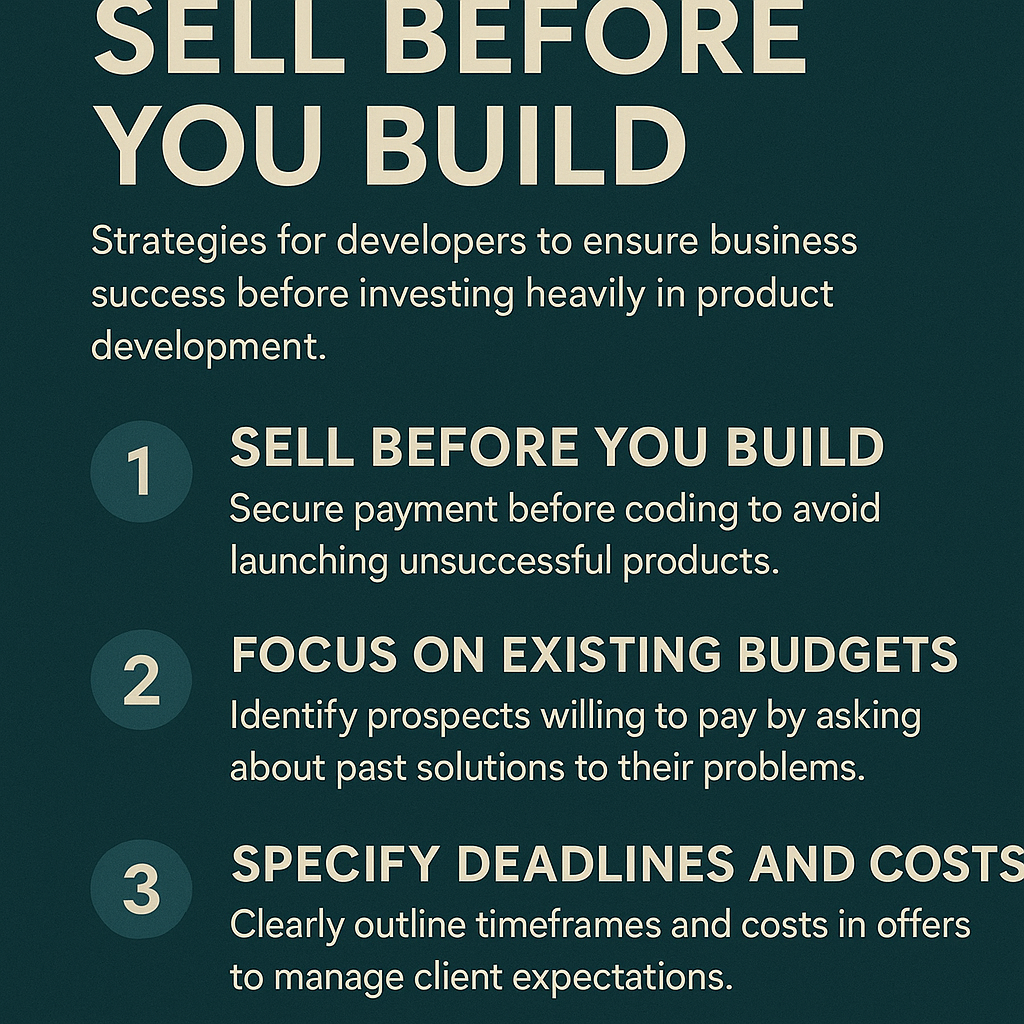
When it comes to building wealth as a developer, the real breakthrough isn’t just in technical skill or creativity; it's about the approach to sales. Bgo's analysis of over 1,000 successful solo developers reveals a compelling strategy that directly addresses the pitfalls many creators face: selling before building. This method not only establishes revenue before any product launch but also mitigates risks associated with development that leads to zero returns.
TL;DR
Developers can significantly improve their chances of success by securing payment for their products before development begins. This process involves identifying clients with existing budgets, providing clear offers with deadlines, and using guarantees to build trust. All of this should precede any investment in coding, setting a solid foundation for sustainable revenue.
The Problem
Many software developers fall into a common trap, they build products based on assumptions, invest significant time and resources into development, and then launch into silence. This results in frustration, wasted efforts, and financial loss. Developers often retreat into coding, which feels productive but can hinder active engagement in sales and client communication. This gap between coding and client acquisition is where many falter, leading to failed products and stagnated income.
The Strategy
Bgo emphasizes a simple yet major approach: sell before you build. Every successful developer in his study had secured payment before writing a single line of code. This strategy relies on validating demand through actual sales, addressing the critical issues of wasted time and resources associated with developing unwanted products. It shifts the mindset from creating in isolation to actively engaging with potential clients to understand their needs and willingness to invest.
How It Works (Step by Step)
1. Identify Existing Budgets
Successful developers ask potential clients about previous attempts to solve their problems. Identifying businesses that have already invested in solutions signals a willingness to pay.
2. Present Clear Offers
Define the outcome you can deliver, specifying both the time frame to resolve the issue and the associated costs. Clear communication prevents misunderstandings and aligns expectations.
3. Offer a Guarantee
Mitigate risk for clients by providing a money-back guarantee if you fail to resolve the issue by the agreed deadline. This boosts client confidence and encourages them to commit.
4. Build After the First Sale
Once you receive a commitment and payment from the first client, proceed to develop the solution. A paying customer motivates focused development.
5. Wait for Three Clients or $15,000 MRR
Avoid going all-in on a single client; wait until you have at least three clients or achieve around $15,000 in monthly recurring revenue. This approach minimizes risks and stabilizes your business.
6. Initiate Outreach and Marketing
After hitting the milestone, engage in cold outreach and content marketing to attract more clients centered around the successful offer.
7. Gather Feedback
Early client engagement provides critical feedback. Use it to refine your offerings and avoid months of wasted development time on unviable products.
Examples from the Source
"I analyzed over a thousand software developers from around the world who became wealthy through coding, and there's one key thing they all have in common. It wasn't about their technical talent or their personality traits. This same principle took me from having $250 in my bank account to generating over $6 million in annual recurring revenue as a software engineer."
"These developers prioritized securing money first and developing code second."
"Wealthy developers didn’t go all in after securing just one client... They maintained a lean operation and waited until three clients accepted the same offer or until they achieved around $15,000 a month in recurring revenue."
"The winning pattern is straightforward: hunt for an existing budget, sell the outcome with a deadline and a guarantee, build after receiving the first positive response, and go all in once you hit at least three clients or $15,000 a month in revenue."
Common Pitfalls
Here are some common missteps developers often make when applying these strategies:
- They hesitate to make sales calls, viewing them as uncomfortable or unnecessary. This leads to missed opportunities for validation.
- Focusing too much on perfecting the product before any interaction with potential customers, which can lead to wasted development time.
- Neglecting to clearly specify the outcomes and timelines in their offers, resulting in confusion or misaligned expectations with clients.
- Failing to follow up after securing a commitment, which can result in lost momentum and optimism.
- Going all-in on one client's project too soon, leading to financial vulnerability if that client doesn’t proceed.
Action Checklist
- Identify your target market and research existing budgets related to their problems.
- Craft a clear offer that includes specific outcomes, timelines, and costs.
- Implement a money-back guarantee to facilitate trust and commitment.
- Secure your first client before beginning any development work.
- Monitor client engagement to hit three clients or $15,000 monthly recurring revenue before scaling.
- Start cold outreach and use content marketing to attract additional clients.
- Solicit feedback early and often to ensure your product meets client needs.
- Continuously refine your strategy based on market responses and sales data.
Watch the Full Video
For an in-depth understanding of these strategies and to hear firsthand from Bgo, watch the full video here.
Want more like this?
The full archive of strategy + AI articles lives at strategythread.app, curated weekly, no fluff.