
If you're looking to capitalize on the booming world of AI and digital services, understanding how to strategically position yourself in a lucrative niche can set you apart from the competition. This isn't just about finding clients; it's about generating revenue that allows you to print money with the right framework.
TL;DR
Pavlo discusses a strategic framework that involves choosing profitable niches, creating attractive offers, and automating processes with AI, leading to monthly revenue streams for service providers. By focusing on client-centric solutions and efficient systems, practitioners can significantly enhance their profitability.
The Problem
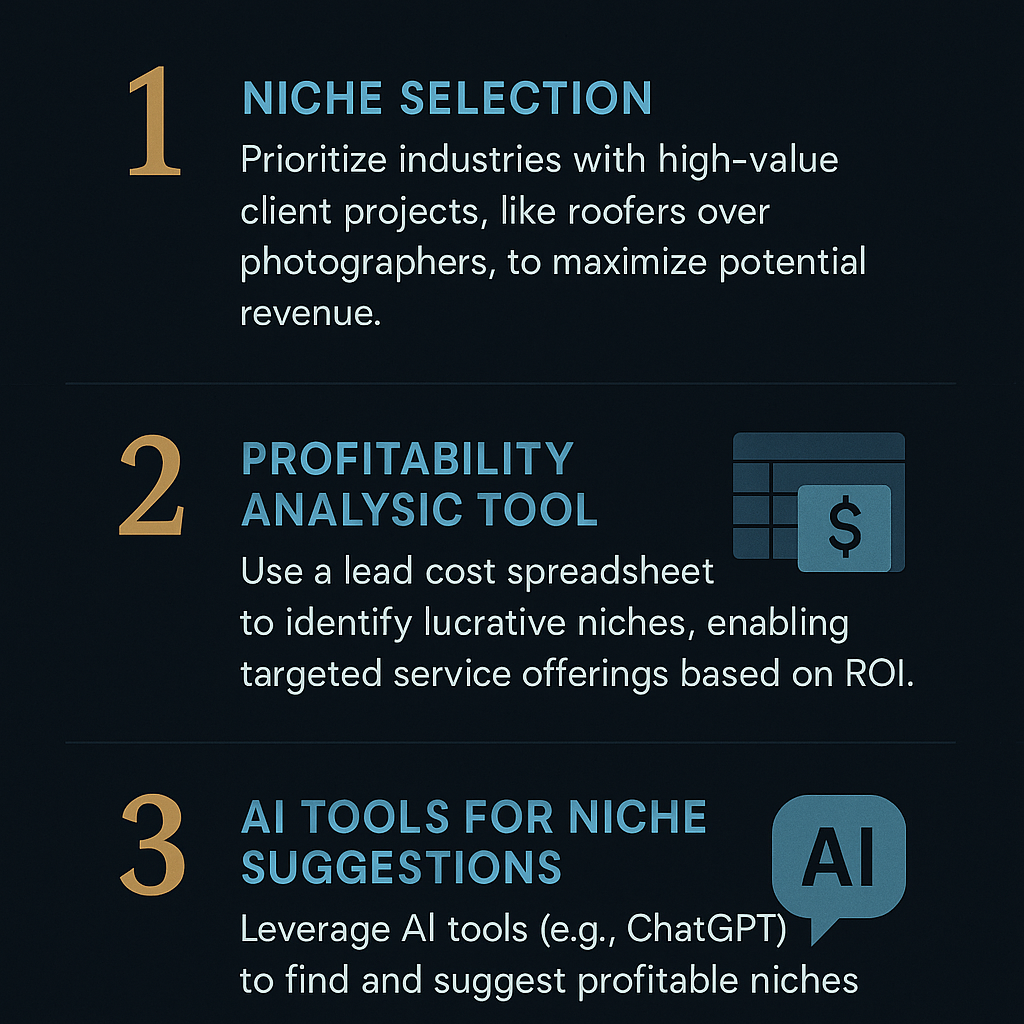
Many service providers struggle to understand which markets offer the best return on investment. Client expectations and revenue potential differ vastly among industries, leading to frustration and misplaced efforts. For instance, while a photographer might only see minor gains from additional clients, a roofer could secure significant profits from just one project. This variance can lead entrepreneurs to misallocate time and resources, ultimately hampering their business growth.
The Strategy
This framework revolves around three critical elements: niche selection, offer creation, and automation for operational efficiency. By narrowing down to high-potential niches, the strategy ensures that services are aligned with businesses that have the greatest need for client acquisition, thereby maximizing revenue potential. The goal is to establish a recurring monthly revenue model while minimizing manual input through AI-driven solutions.
How It Works (Step by Step)
1. Identify Profitable Niches
- Research industries with a high ROI per client, such as roofing, dental practices, and medical spas.
- Create a spreadsheet that lists these niches alongside their average lead costs to identify which ones are worth pursuing.
2. Use AI for Niche Suggestions
- Utilize AI tools like ChatGPT or Claude to generate ideas for niches if you're unsure of where to focus your efforts.
3. Create an Attractive Offer
- Develop a free AI website to get businesses started.
- Implement a backend system that manages their leads and clients, charging a monthly fee for access to these AI-driven systems.
4. Automate Social Media Management
- Use AI to generate content for a whole month by integrating social media pages and utilizing basic prompts.
- Include images and embedded reviews in your scheduled content.
5. Set Up Automated Response Systems
- Implement systems that respond to leads via SMS and email using AI tools.
- Simply paste the client's website or social media profiles to generate responsive systems quickly.
6. Build an Appointment Booking AI Bot
- Create an AI bot that enhances user engagement through SMS and email communications during the booking process.
7. Establish a Monthly Revenue Model
- Position your services so clients are paying monthly for the AI systems you've set up.
- This ensures predictable, recurring revenue for your business.
8. Simplify Lead Generation and Fulfillment Processes
- Employ automation strategies to streamline all aspects of client operations, ensuring high value and minimal manual input.
Examples from the Source
"In the past four weeks, my agency generated over $103,000 in revenue with impressive profit margins." - Pavlo
"For example, let's say we have two clients: a photographer and a roofer. The photographer, who charges around $200 per shoot, might be satisfied with gaining an extra one to three clients a month, potentially increasing his income by $1,000 to $1,500. In contrast, the roofer, who fixes roofs, would greatly benefit from just one extra project, which could net him $15,000." - Pavlo
"Fence installers might pay up to $78 just to speak to a potential customer, while other businesses, like barbershops or photographers, might not offer the same return on investment." - Pavlo
Common Pitfalls
Many entrepreneurs misjudge the potential of their chosen niches due to a lack of thorough research or an outdated understanding of market pricing. They may also fail to iterate on their offers based on client feedback, limiting their growth. Lastly, automation can be tricky; if not correctly set up, it can lead to more work instead of streamlining processes.
Action Checklist
- Create a comprehensive list of potential niches based on profitability.
- Use AI tools to validate niche ideas and explore new markets.
- Design a basic AI-driven website offer that attracts clients.
- Automate social media content generation for consistent engagement.
- Set up automated response systems for quick lead follow-ups.
- Develop a scheduling bot to streamline appointment bookings.
- Establish a monthly pricing structure for ongoing AI services.
- Continuously review and adapt your strategies based on client feedback and market changes.
Watch the Full Video
Want more like this?
The full archive of strategy + AI articles lives at strategythread.app, curated weekly, no fluff.