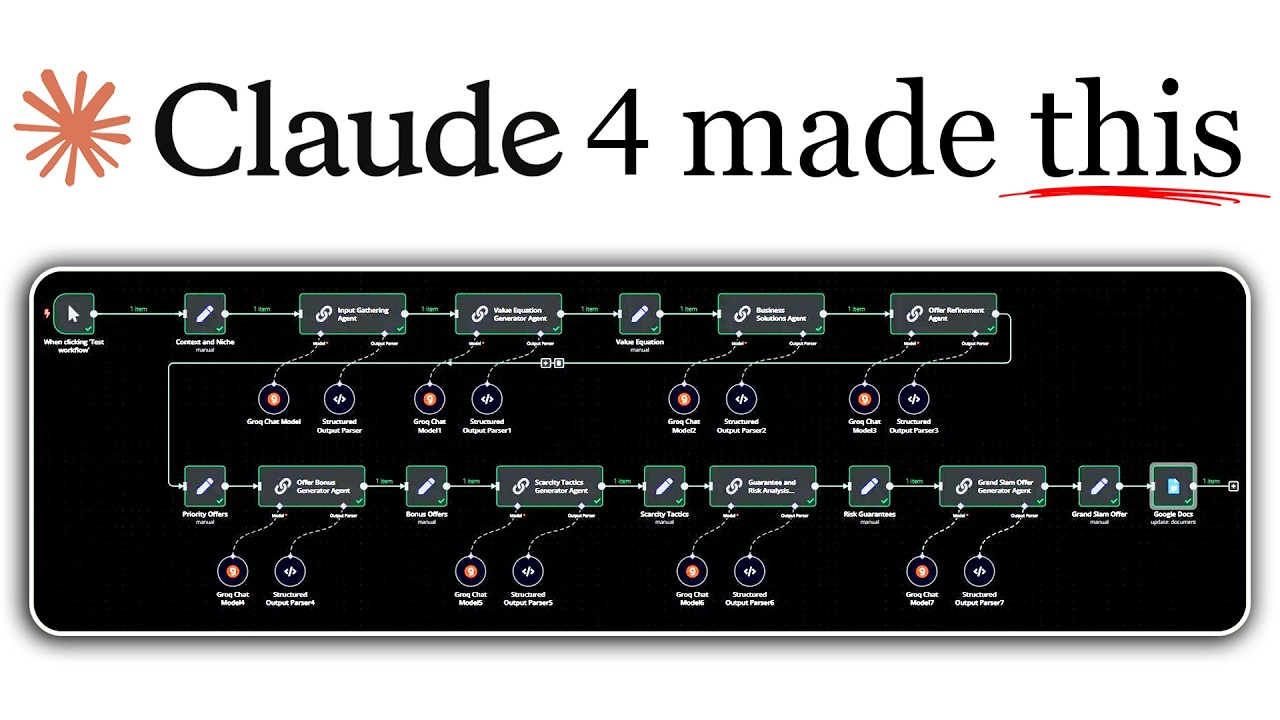
Valuable Insights from "How To INSTANTLY Build AI Agents Using Claude 4"

Are you ready to revolutionize the way you build AI agents? In a recent video by Jack Roberts, key insights were shared on how to effortlessly construct AI agents using Claude 4. This post will break down those insights, diving into efficient project setup, iterative improvements, and the importance of human oversight in this transformative process.
Key Points
- Quick Setup of AI Agents: Building AI agents with Claude 4 and NA10 has never been easier. The integration process is streamlined, enabling a Slack integration that can be set up in approximately 20 seconds.
- Resource-Rich Environment: Jack provides a wealth of resources, including JSON blueprints and comprehensive guides, that assist in creating efficient AI agents.
- Project Creation Process: A clear prompt for Claude and the requisite resources play a vital role in enhancing Claude's ability to generate precise outputs.
- Architectural Design Focus: The emphasis on architectural design rather than simple functionality signifies that Claude not only saves time but also helps to craft effective frameworks based on well-structured prompts.
- Iterative Improvement: Post-creation iterations and modifications are crucial. Even though Claude aids in automating tasks, human oversight is essential for finalizing outputs.
Insights
- Efficiency and Automation: The transition from manual creation to AI-assisted generation highlights a significant productivity boost, requiring only 10-15% of manual effort post-AI assistance.
- Error Handling and Validation: Comprehensive error handling and validation within prompts can significantly minimize implementation issues.
- Outcome-Based Prompting: Designing workflows focusing on desired outcomes followed by structured prompts enhances the relevance of AI outputs.
Actionable Advice
- Utilize Predefined Resources: Make sure to download and employ templates and guides to avoid unnecessary trial-and-error.
- Leverage Iterative Feedback: Continually test and refine outputs by providing Claude feedback to enhance functionality and deepen your understanding of its capabilities.
- Maintain a Clear Structure in Prompts: Clear, structured prompts with defined outcomes lead to higher-quality AI outputs.
- Incorporate JSON Validation Rules: Applying JSON validation rules ensures functional generated code and mitigates common errors.
Supporting Details
- The process of refining prompts and overseeing generated code yields tailored solutions to meet specific business needs.
- Jack shares experiences from initial failures, demonstrating the importance of user engagement in refining AI outputs.
Personal Reflections
The integration of AI in creating agents marks a transformative shift in tech workflows. These insights signify the need for a balanced blend of human creativity and oversight with AI efficiency. This approach not only enhances automation but redefines our interaction with AI tools, fostering a collaborative evolution between technology and human expertise. The encouragement to experiment with varying prompts aligns perfectly with the continuous learning mindset necessary in today's tech development landscape.
Explore More!
Don't miss out on the full experience! Watch Jack Roberts' video on how to build AI agents using Claude 4 here:
Join us on this learning journey! Follow on social media for more insights: