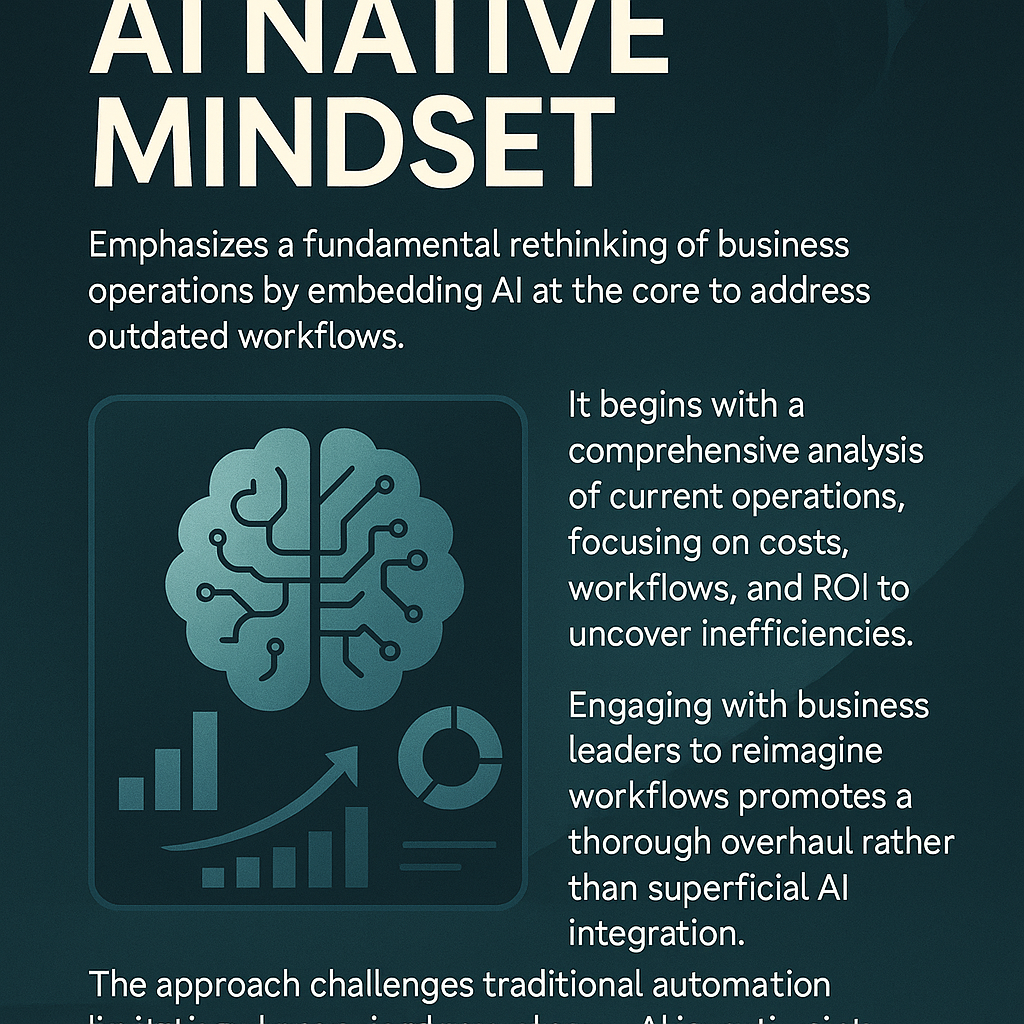
Is your business truly ready for AI, or are you just adding high-tech band-aids to outdated models? Dive into the concept of adopting an "AI native" approach, which is not merely about using AI tools but about fundamentally rethinking your business structure with AI as the foundation.
TL;DR
The strategy of becoming "AI native" focuses on reimagining business operations by fully integrating AI at the core. It addresses outdated workflows and inefficiencies, aiming to transform traditional capacity assumptions and open up new business opportunities.
The Problem
Businesses operating under traditional models often face the challenge of outdated workflows, incremental decision-making, and static capacity assumptions. These issues manifest as bottlenecks and inefficiencies, stifling innovation and hindering growth. The incremental approach to business decisions, albeit optimal at the time, eventually becomes a hurdle in adapting to the fast-paced, AI-driven market.
The Strategy
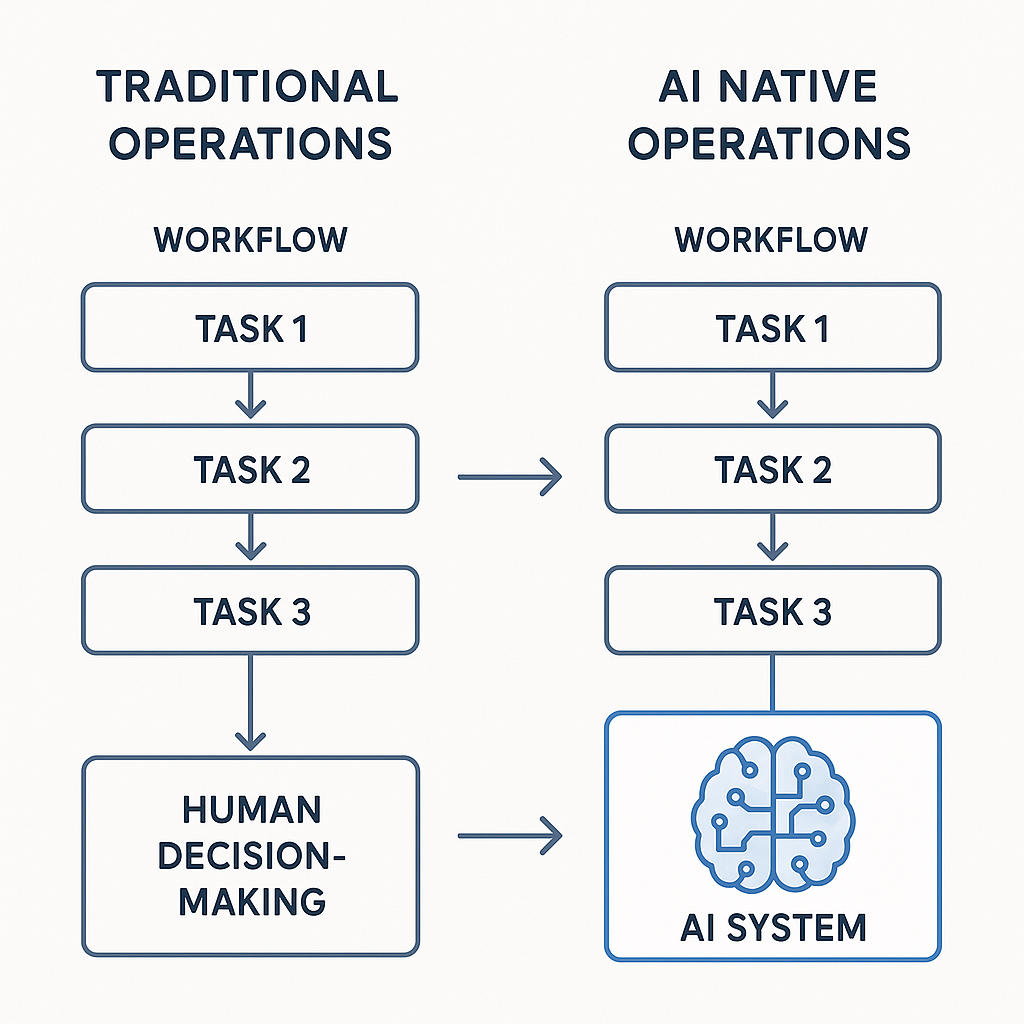
Adopting an "AI native mindset" is about much more than purchasing the latest technology; it is a strategic overhaul of business operations. The key is not to insert AI into existing processes in a piecemeal fashion but to reimagine those processes from the ground up, with AI as the cornerstone. This strategy invites leaders to critically assess their business structures, scrutinize inefficiencies in current workflows, and challenge traditional ways to optimize for AI-driven innovation.
How It Works (Step by Step)
Establish a Current State Analysis
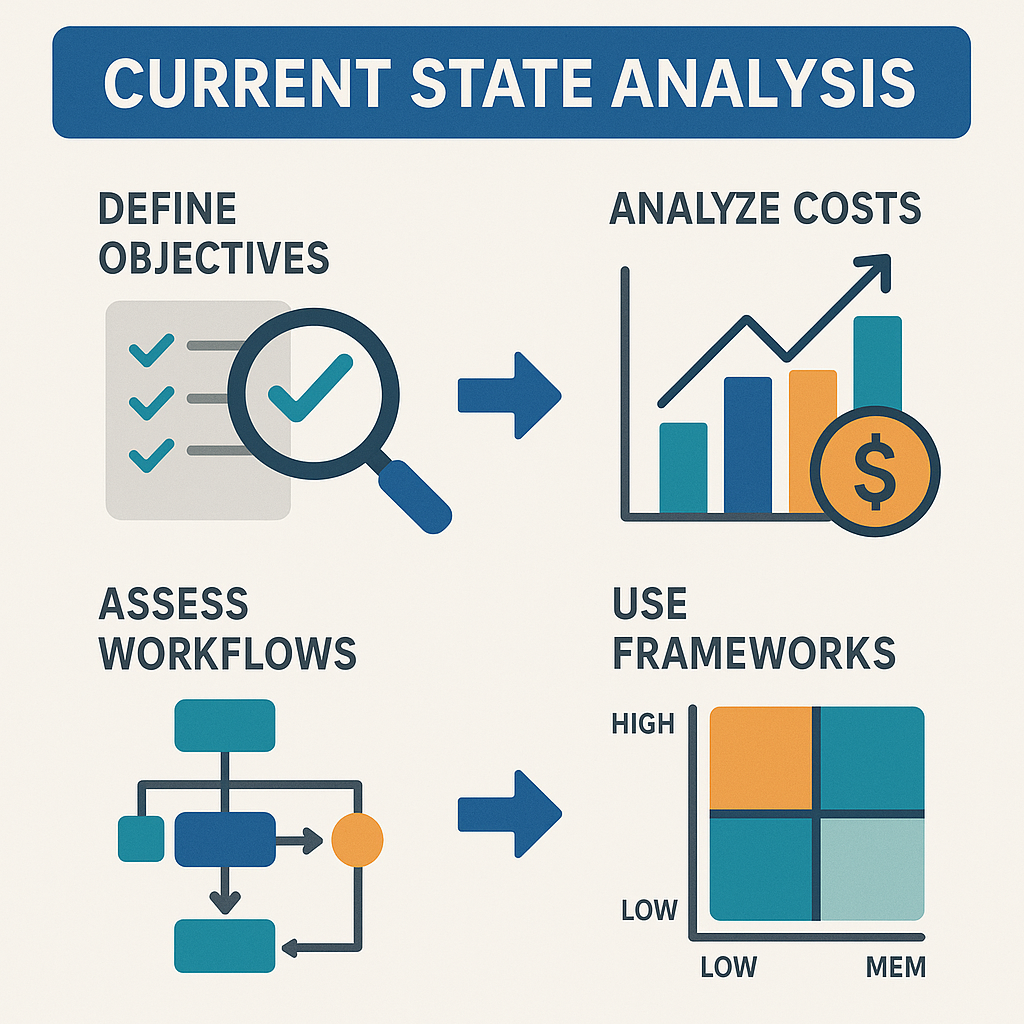
Develop a comprehensive framework to evaluate costs, workflows, and ROI. This provides a clear picture of the present operations and identifies areas ripe for AI-driven improvement.
Envision AI-Driven Workflows
Hold strategic discussions with leaders to envision what their workflows could look like if AI was integrated from scratch. This collaborative approach encourages departments to think beyond surface-level implementations.
Challenge Traditional Automation Approaches
Rather than simply inserting AI into existing structures, this step involves a complete reevaluation of how tasks are performed, with the aim of eliminating unnecessary or outdated processes.
Address Bottlenecks and Re-imagine Capacity
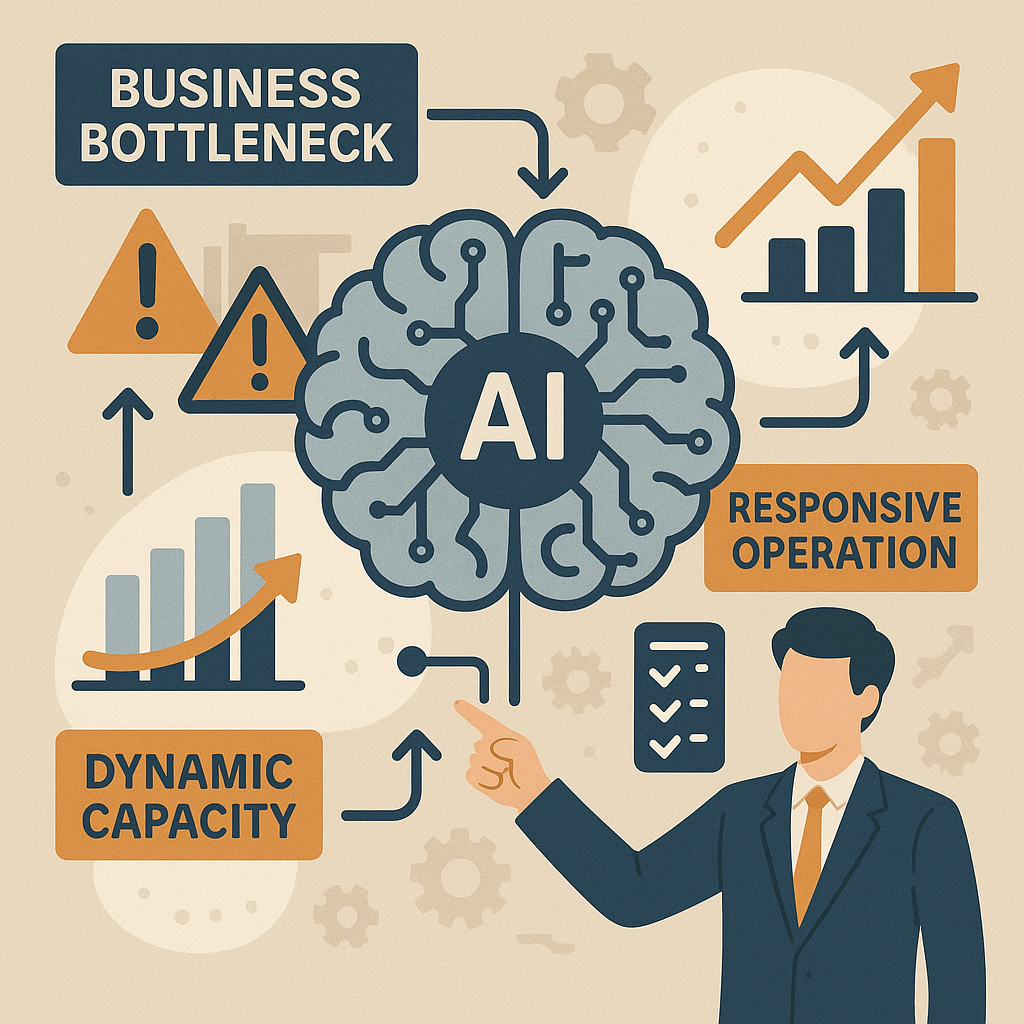
Identify pain points within the current structure that lead to bottlenecks. Use AI to rethink traditional capacity limits, allowing for more dynamic and responsive operations.
Reflect on Incremental Decisions
Conduct a reflective analysis of past business decisions to uncover practices that are now inefficient. This step helps align historical strategies with modern AI capabilities.
Examples from the Source
“Consider a traditionally run business with established workflows and a capable team. The question we pose is: if you were building this business today, knowing what AI can do, how would you construct it?”
The speaker emphasizes that the goal is to build a business from the ground up with AI as a central component, encouraging a mindset shift away from merely adapting existing processes.
Common Pitfalls
- Superficial Implementation: Failing to fully integrate AI by merely adding AI tools without restructuring workflows.
- Ignoring Bottlenecks: Overlooking existing bottlenecks when implementing AI, causing inefficiencies to persist.
- Static Thinking: Maintaining static capacity assumptions and not leveraging AI's potential to dynamically adjust operations.
Action Checklist
- Conduct a thorough analysis of current business operations to identify inefficiencies and opportunities for AI integration.
- Facilitate workshops with leadership to discuss and envision AI-driven major workflows.
- Evaluate and redesign workflows with AI capabilities as the foundation, eliminating outdated processes.
- Identify and address operational bottlenecks, considering AI innovations to enhance dynamic capacity.
- Reflect on past decisions to uncover outdated practices that could benefit from AI-enhanced strategies.
- Foster an organizational culture open to change and innovation for AI-driven transformation.
- Develop a roadmap for achieving AI-native transformation that includes clear timelines and milestones.
- Continuously monitor and evaluate the impact of AI-driven changes to ensure sustained business growth.
Watch the Full Video
Click here to watch the full video for deeper insights and a more comprehensive understanding.
Want more like this?
The full archive of strategy + AI articles lives at strategythread.app, curated weekly, no fluff.