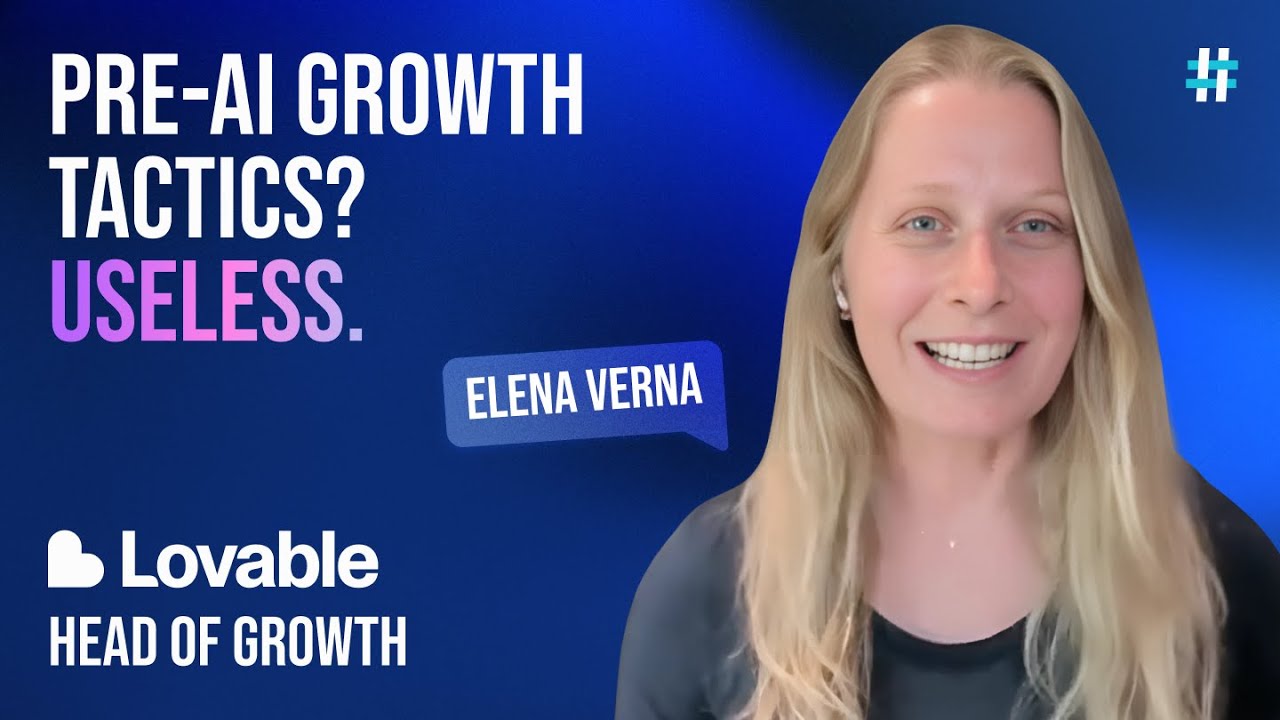
The Collapse of Pre-AI Distribution Moats and How to Build New Ones

Here are the valuable insights extracted from Elena Verna's presentation, "The Collapse of Pre-AI Distribution Moats, and How to Build New Ones":
Key Points
- Definition of Growth: Growth is defined not just by having an excellent product but by the combination of product and distribution. It encompasses acquiring, activating, monetizing, and retaining customers.
- Growth Loops vs. Funnels: Successful companies thrive through growth loops—closed ecosystems that continually generate outputs from inputs—contrasting traditional sales funnels that are often leaky and linear.
- The Evolution of B2B Growth: Traditional B2B growth models focused heavily on sales and marketing. However, there’s a shift where users have become buyers, leading to a demand for products that meet actual needs.
- Changing Channel Dynamics: Marketing teams face shorter lifecycle campaigns, making it hard to maintain effective top-of-funnel growth. There's an increasing need for product teams to share the responsibility for customer acquisition and engagement.
- AI's Impact on Distribution: The emergence of AI has significantly altered distribution channels. Traditional methods, such as SEO, are diminishing as AI systems (like ChatGPT) reshape user behavior and expectations.
- Customer Empowerment: With democratized software development capabilities, customers can now create software solutions themselves, often competing with existing products.
Insights
- Understanding User-Driven Growth: As the lines blur between users and buyers, companies need to create products that exceed user expectations, as users now have the power to drive market changes.
- Importance of Self-Service: Self-service B2B products have emerged due to users seeking alternatives that fit their immediate work needs.
Actionable Advice
- Build Sustainable Growth Models: Companies should develop products that create a sustainable growth loop rather than relying solely on traditional marketing and sales methods.
- Embrace AI Technologies: Companies must integrate AI functionalities into their offerings; failure to do so risks being outpaced by competitors adopting AI-native solutions.
- Create Defensible Moats:
- Development Velocity: Leverage AI to enhance the speed and efficiency of product development.
- Brand Differentiation: Cultivate a strong brand that resonates emotionally with users, enhancing word-of-mouth and engagement.
- Data Utility: Use data as a strategic asset, ensuring it provides real value and competitive advantage (e.g., using Slack data as Salesforce does).
- Ecosystem Investment: Build ecosystems around your product, creating integrations and partnerships that are difficult for competitors to replicate.
Supporting Details
- Parallel Examples: Dropbox’s growth loop illustrates a successful user sharing model that inherently drives new user signups through engagement.
- Case Studies: Companies like G2 suffered heavy losses in traffic due to shifts in user behavior towards AI chat solutions over traditional search engines.
Personal Reflections
The shift towards AI and customer empowerment in software development has significant implications for traditional growth strategies. There’s a clear need for companies to adapt quickly to maintain competitive advantages. The blurring of roles in tech teams signifies a progressive trend towards cross-functional expertise, fostering collaboration that can drive innovation and responsiveness to market changes.
Conclusion
In summary, businesses should rethink their distribution strategies, leveraging AI, fostering community ecosystems, and focusing on building defensible growth models while adapting to the ever-evolving technological landscape.
For a deeper dive into Elena Verna's insights, be sure to check out her full presentation on YouTube:
Join us on our journey through the world of growth strategies and innovation! Follow me on my social media platforms: