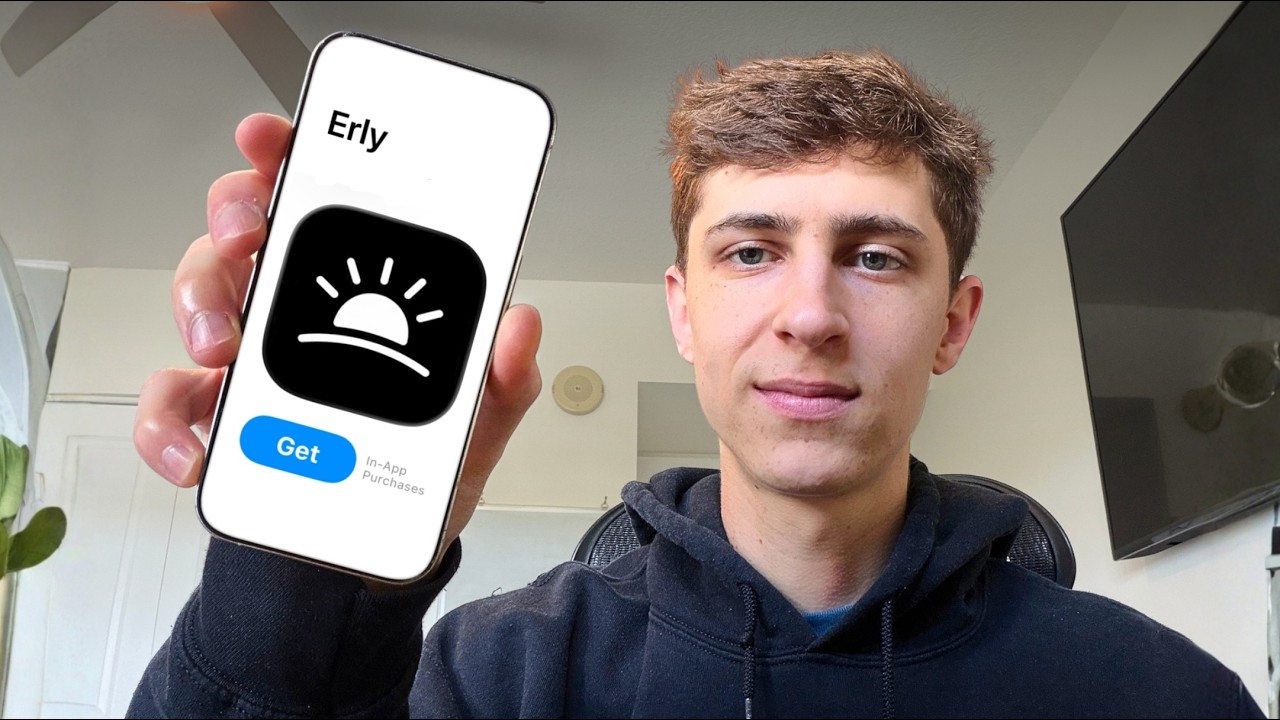
 Creating an app that brings in $50K a month might sound like a dream, but Jake's story shows it's entirely possible with a simple idea, a strategic approach, and effective execution. Here's how a straightforward alarm clock app, built to ease the struggle of waking up early, became a financial success.
TL;DR
Jake developed "Early," an app that forces users to perform push-ups to turn off the alarm, generating $50,000 per month in revenue. Key tactics included MVP development in just 19 days, strategic marketing with influencers, and leveraging iOS 26's new features to enhance reliability.
The Problem
Waking up early isn't easy for many, and existing alarm apps often fail to enforce user accountability. This gap in the market presented an opportunity to innovate with a tool that encourages discipline by making users perform a physical action to disable the alarm.
The Strategy
The core strategy was about rapid development and strategic marketing. By creating a Minimum Viable Product (MVP) in a short timeframe, Jake ensured that the app was ready for market testing with minimal delay and cost. The combination of a swift development cycle and focused marketing efforts enabled quick traction and visibility, crucial in the saturated app marketplace.
How It Works (Step by Step)
1. MVP Development
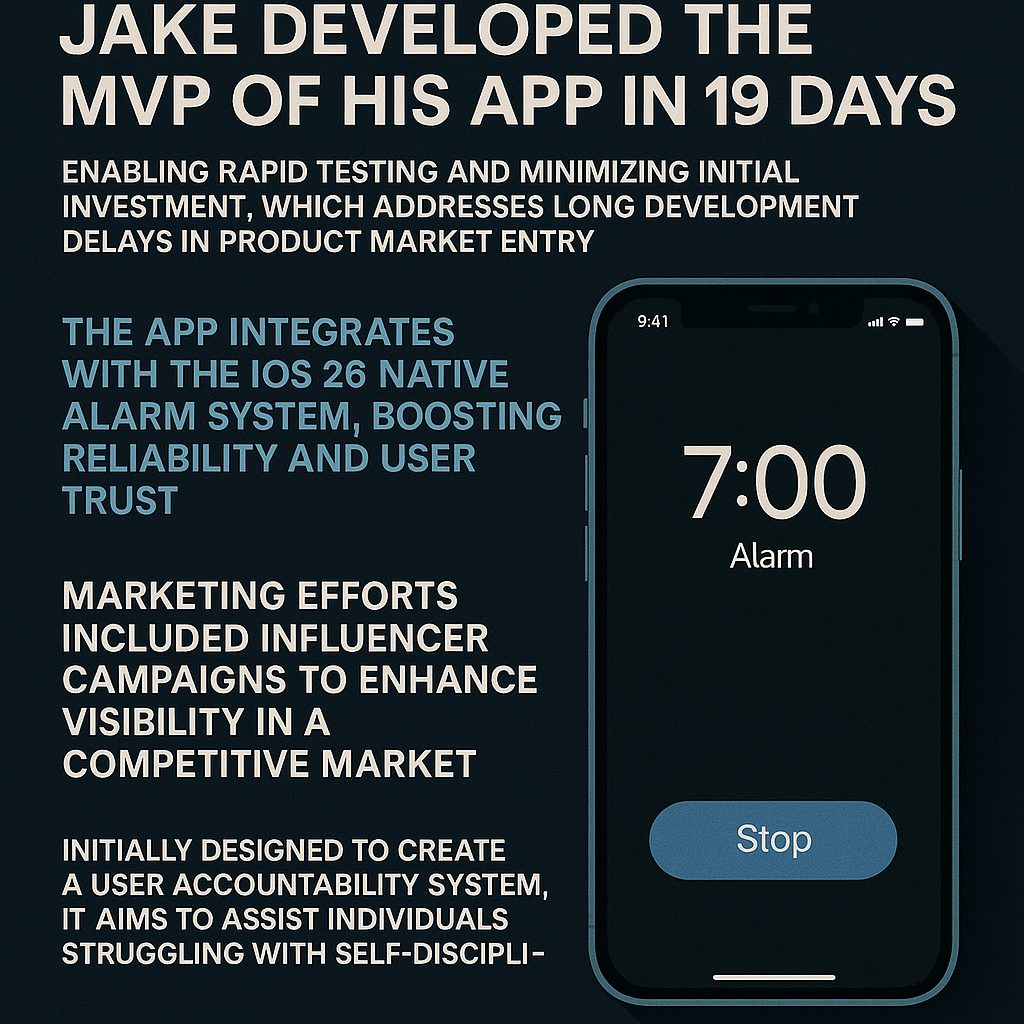
Jake focused on building an MVP within 19 days, allowing for expedited testing and reduced investment. This initial version was crucial for gathering user feedback and making necessary adjustments rapidly.
2. Technical Integration
The app integrated with iOS 26's native alarm system soon after its release, which significantly increased its reliability, solving a common user concern about alarm functionality and trustworthiness.
3. Marketing and Promotion
Also vital was the marketing strategy, emphasizing influencer marketing campaigns to reach a broad audience. This tactic addressed the challenge of gaining visibility in a crowded app market effectively.
4. User-Centric Features
The app's core feature is its accountability mechanism, initially developed as a concept focusing on user challenges in self-discipline. This was later paired with physical exercise to ensure waking up wasn't just a snooze button away.
Examples from the Source
"It took Jake about 19 days to create the MVP and another 19 days to add the alarm feature. His approach was to develop quickly and market effectively."
"The app, called Early, is an alarm clock app that requires users to do push-ups to turn off the alarm."
"In just four months, this app was downloaded over 200,000 times."
"Marketing was the priority."
Common Pitfalls
- Procrastinating Development: Delaying the MVP can result in missing market opportunities. Fast-track your development process to avoid this.
- Overlooking Market Research: Assuming there's a market for your app without researching can lead to poor results. Study existing successful apps to find your unique value proposition.
- Underestimating Marketing: Many developers focus too much on app development, neglecting proper marketing strategies that can make or break an app's success.
Action Checklist
- Create an MVP in under a month to swiftly test market reception.
- Integrate with existing and reliable technologies to enhance app functionality.
- Employ influencer marketing to rapidly expand your app's reach.
- Identify and address specific user pain points to ensure the app's utility.
- Keep the development cycle short to cater quickly to market needs and feedback.
- Stay informed about technical advancements, like new OS releases, that can benefit your app.
- Balance development and marketing efforts to maximize visibility and uptake.
- Foster community engagement for continuous feedback and improvement.
Watch the Full Video
Want more like this?
The full archive of strategy + AI articles lives at strategythread.app, curated weekly, no fluff.