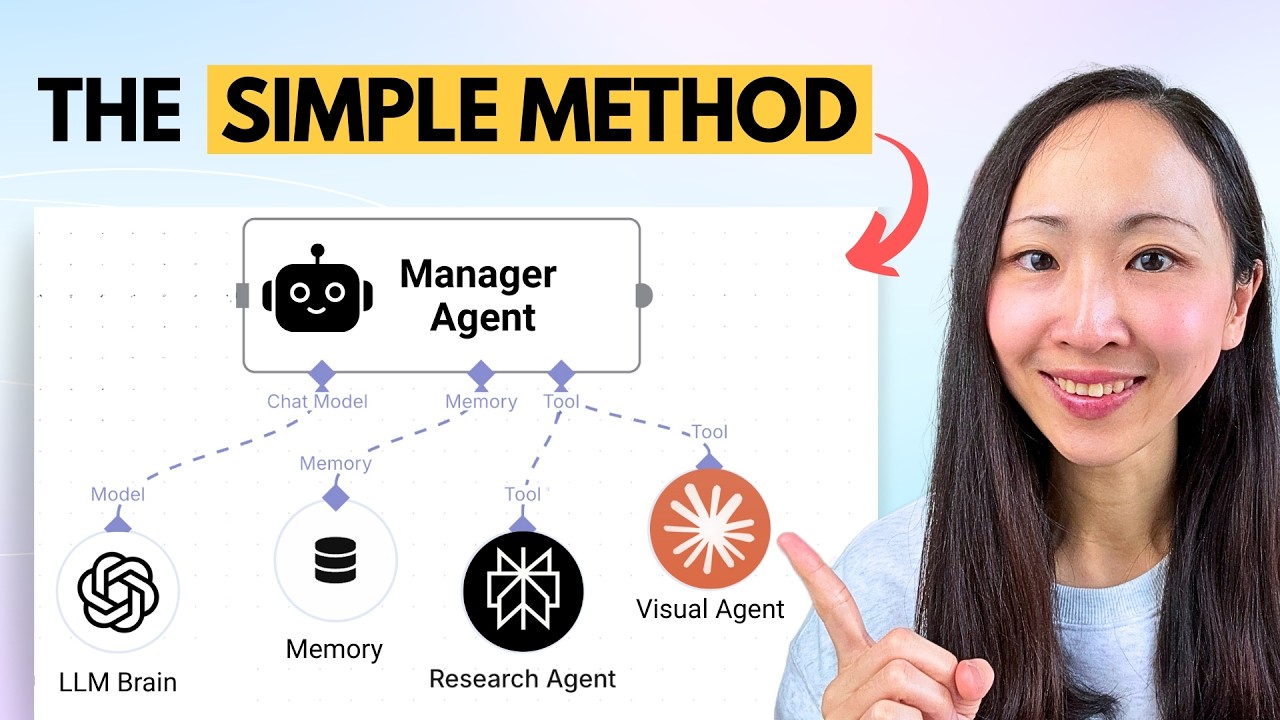
Building Your AI Agent Team in Under 30 Minutes

In the fascinating world of AI, simplicity often trumps complexity. In a recent presentation by Grace Leung, she outlines how anyone can build their own AI agent team in under 30 minutes without needing any coding skills. Below, we break down the key insights, actionable advice, and supporting details that can help you navigate this innovative process.
Key Points:
- Simplicity over Complexity: Avoid inefficiencies with a simpler structure that is more effective and scalable.
- Defined Elements of AI Agents:
- Role and Responsibility: Clarify the AI agent's purpose.
- Tools: Specify tools and data accessible to the agent.
- Input and Output: Define the required input and expected output formats.
- Guardrails: Set clear boundaries and rules for agent behavior.
- Framework for Building AI Teams:
- Map Workflow: Identify repetitive tasks.
- Design AI Agents: Use an AI designer for task-specific agents.
- Add a Manager Agent: Centralize delegation among AI agents.
- Importance of API Keys: Essential for connecting agents with external AI models.
- Free Resources: Check out the free ebook, "Master AI Agents," for strategic insights.
Insights:
- AI Agents and Reasoning: Unlike standard automation, AI agents make decisions based on reasoning.
- Iterative Development: Building should be viewed as an iterative process, with adjustments based on performance and outcomes.
Actionable Advice:
- Workflow Mapping: Identify 2-3 repetitive tasks to streamline.
- Use of No-Code Platforms: Leverage no-code platforms for accessible AI capabilities.
- Iteratively Improve Agents: Test and refine agents continuously based on feedback.
Supporting Details:
- A case study demonstrates building agents like a comparative research agent and a data visualization agent.
- Proven effectiveness through real task demonstrations, such as generating reports and visualizing data.
Personal Reflections:
The insights shared highlight the growing significance of AI in simplifying workflows, enhancing productivity, and promoting broader engagement with AI tools. The emphasis on simplicity validates the idea that effective solutions do not need to be complex.
By adopting a manageable approach to AI, we can foster innovative applications across various professional fields. If you follow these principles, you can successfully integrate AI into your own operations.
For a more in-depth understanding, be sure to check out Grace Leung's video here:
Join the Journey!
To stay updated with the latest insights and join our learning journey, follow me on social media: