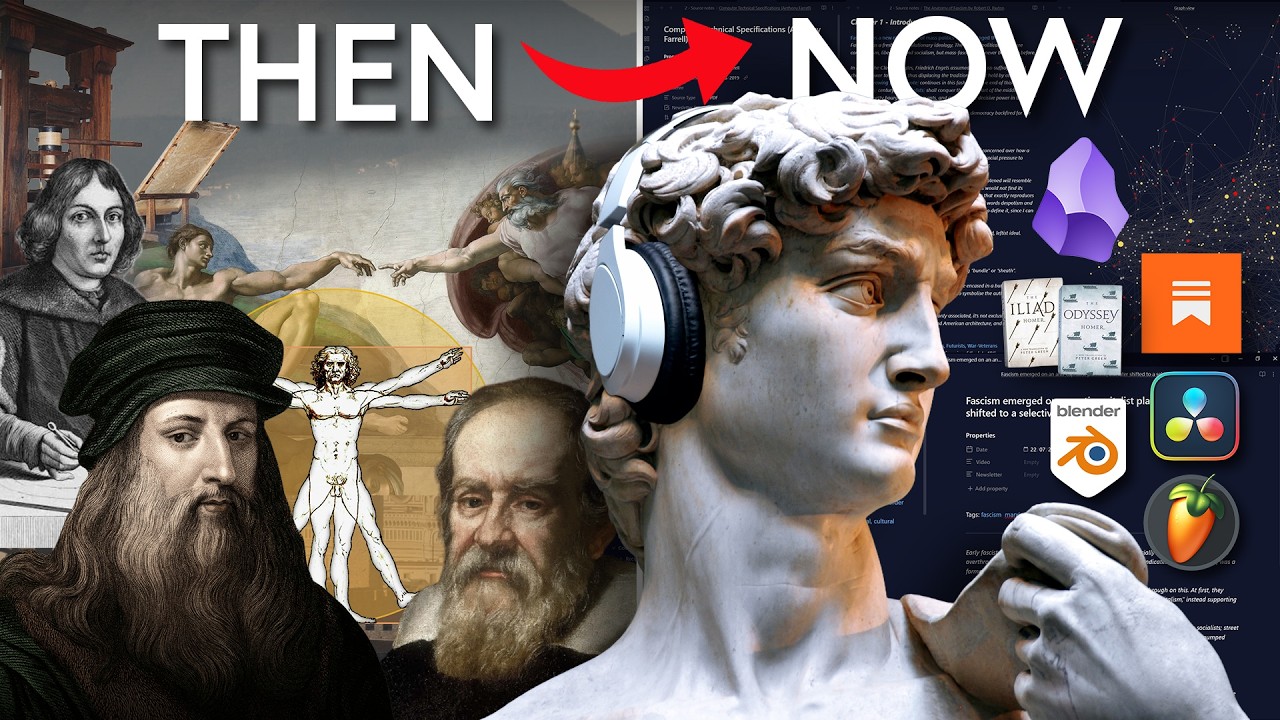

Are you ready to embrace a new era of creativity and innovation? In our fast-moving digital landscape, mastering the skills of a polymath could be your greatest asset. Odysseas's video, "How Polymaths Win in the Information Age," presents a compelling strategy for thriving amid the complexities of our information-rich society.
TL;DR
Dupree emphasizes that adapting to new technologies is crucial for success in the digital age. Drawing lessons from the original Renaissance, he encourages a cultural and intellectual revival, leveraging wealth, globalization, and a focus on humanities education to foster innovation.
The Problem
As we advance into the information age, many face the risk of becoming obsolete, trapped in outdated modes of thinking. Without the ability to adapt to emerging technologies and ideas, individuals risk stagnation in creativity and thought leadership. The challenge lies in cultivating a mindset that embraces continual learning and adapts to the rapid changes surrounding us.
The Strategy
Dupree's framework centers on a digital renaissance approach. This requires an understanding of historical contexts, seeking inspiration from the original Renaissance to guide how we adapt to today’s challenges. He advocates for a multidimensional approach to education, integrating humanities to promote well-rounded thinking and effective problem-solving. By understanding the dynamics of wealth, globalization, and the necessity of cultural and intellectual revival, individuals can position themselves for innovation and success.
How It Works (Step by Step)
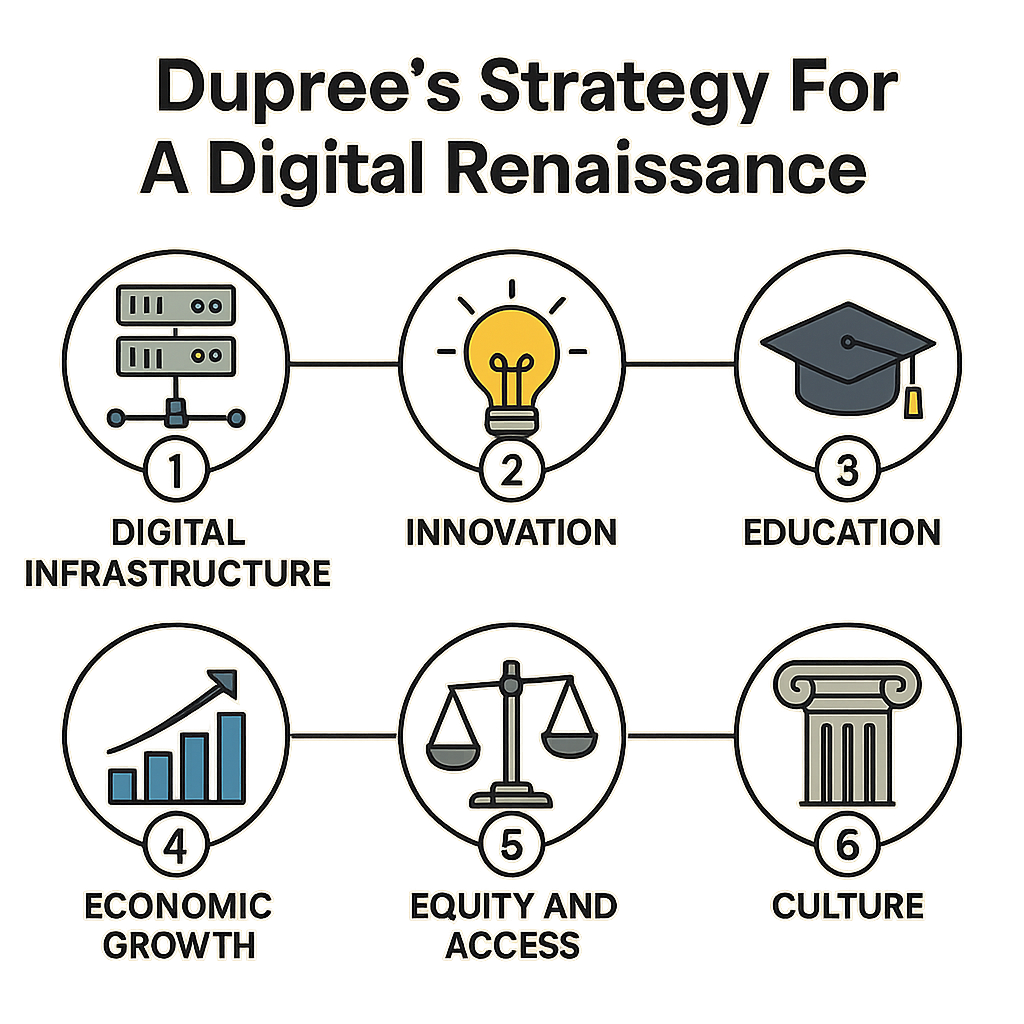
1. Digital Renaissance Adaptation
Begin by identifying new skills and technologies relevant to your field. Regularly update your knowledge base to avoid obsolescence.
2. Understanding the Original Renaissance

Research historical developments from the Renaissance period. Note how societal shifts influenced cultural rebirth and consider what parallels exist in your current context.
3. Leveraging Wealth and Globalization
Analyze how economic forces shape innovation today. Engage with global networks that foster creative exchanges, making the most of available resources.
4. Cultural and Intellectual Rebirth
Promote environments that challenge conventional thinking and embrace cultural revival. Attend workshops, forums, or discussions that encourage fresh ideas and intellectual debate.
5. Role of Wealthy Patrons
Explore opportunities to find sponsors or patrons who share your vision. Develop pitches that clearly articulate your goals to attract financial backing for innovative projects.
6. Rediscovery and Integration of Classical Texts
Make a deliberate effort to study classical texts and philosophies. Use these insights to deepen your understanding of contemporary issues and enhance your discourse.
7. Promotion of Humanities Education
Invest time in humanities subjects, grammar, rhetoric, history, philosophy. Use these studies to cultivate critical thinking skills, which are essential in any field.
8. Encouragement of Inquiry and Critical Thought
Foster a climate that values questions over answers. Intentionally create spaces where challenging assumptions is encouraged and celebrated.
9. Inclusive Approach to Religion and Humanism
Embrace a blend of faith and humanism in your pursuits. Recognize how these areas can complement each other in the quest for excellence and self-fulfillment.
10. Art as Reflection of Everyday Life
Support and participate in artistic endeavors that reflect genuine human experiences. Seek authenticity in art to better connect with audiences.
11. Competitive Rivalry Among City-States
Create settings where friendly competition spurs innovation. This could be through collaborative projects, hackathons, or community challenges that push creative limits.
12. A Framework for Cultural Shift
Establish a structured plan that outlines how you will respond to cultural and technological changes. Regularly assess and adjust to ensure continuous improvement and relevance.
Examples from the Source
Dupree points out that the Black Death profoundly affected people's worldviews, as it led to a shift from religious fatalism towards a renewed interest in human potential. He cites how wealth and globalization played a critical role in fostering innovation during the Renaissance, stating, "Italian city-states became central hubs for trade, which fostered innovation in banking and improved shipbuilding technologies." Furthermore, he mentions that wealthy patrons, like the Medici, sponsored artists, enabling a remarkable cultural evolution. The speaker notes that this model of patronage is still relevant today, addressing the ongoing funding challenges faced by creators and innovators.
Common Pitfalls
Many people fall into the trap of overly romanticizing the past, believing that trying to emulate figures like Da Vinci or Franklin will yield similar results. The speaker emphasizes that such an approach does not recognize the unique challenges and opportunities of the modern age. Others may focus too narrowly on technical skills at the expense of broader humanistic education, resulting in a lack of critical thinking. Finally, failing to engage with the global community may limit one's access to new ideas and innovations.
Action Checklist
- Identify key technologies in your field and commit to regular learning about them.
- Study historical contexts of the Renaissance to draw relevant lessons for today.
- Network with creative individuals globally to exchange innovative ideas.
- Seek out patrons or sponsors for your projects or initiatives.
- Integrate classical philosophical texts into your interpretation of modern issues.
- Engage in humanities education to develop critical thinking and civic responsibility.
- Encourage inquiry in your workplace or community to challenge norms.
- Participate in projects that reflect authentic human experiences through art.
Watch the Full Video
Want more like this?
The full archive of strategy + AI articles lives at strategythread.app, curated weekly, no fluff.