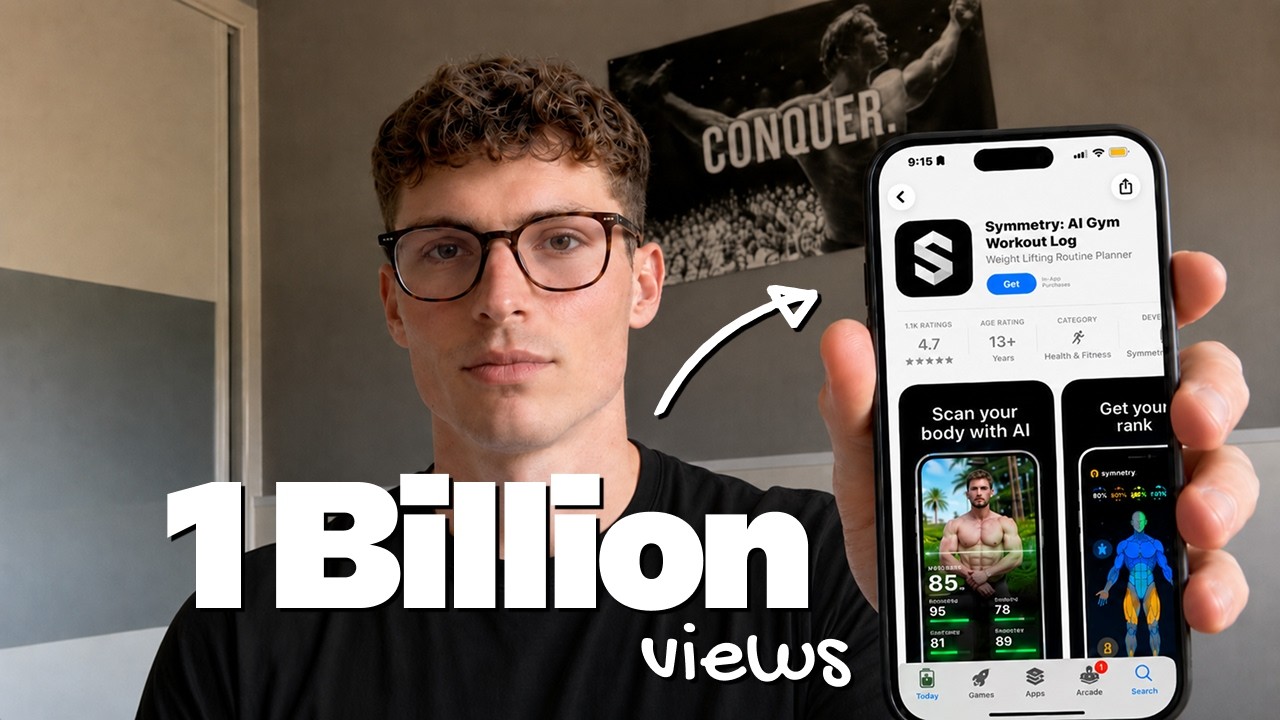
What if you could generate 1 billion views for your app without spending a single dollar on advertising? Enter the world of Symmetry, a fitness app paving its path to success through an ingenious organic growth strategy that shuns costly ads and embraces the power of creator networks. Discover the secrets behind their method.
TL;DR
Symmetry thrives on an organic growth strategy, bypassing traditional paid advertising. Their success hinges on user-generated content (UGC) and leveraging personal brands, especially in Spanish-speaking markets. This approach reduces customer acquisition costs and taps into untapped potential, securing a consistent flow of app downloads.
The Problem
High customer acquisition costs can obliterate startup budgets before they yield profitable returns. For apps, especially in saturated markets like the United States, standing out demands resources many startups can't spare. The challenge lies in effectively reaching and engaging a target audience without falling into the financial pitfalls of ad spend.
The Strategy
Symmetry's strategy discards traditional paid advertising in favor of organic tactics. Focused on UGC and tapping into personal brand networks, it minimizes costs while maximizing engagement. By targeting underappreciated Spanish-speaking markets, the strategy exploits market gaps often overlooked by competitors.
How It Works (Step by Step)
1. Implementing an Organic Growth Model
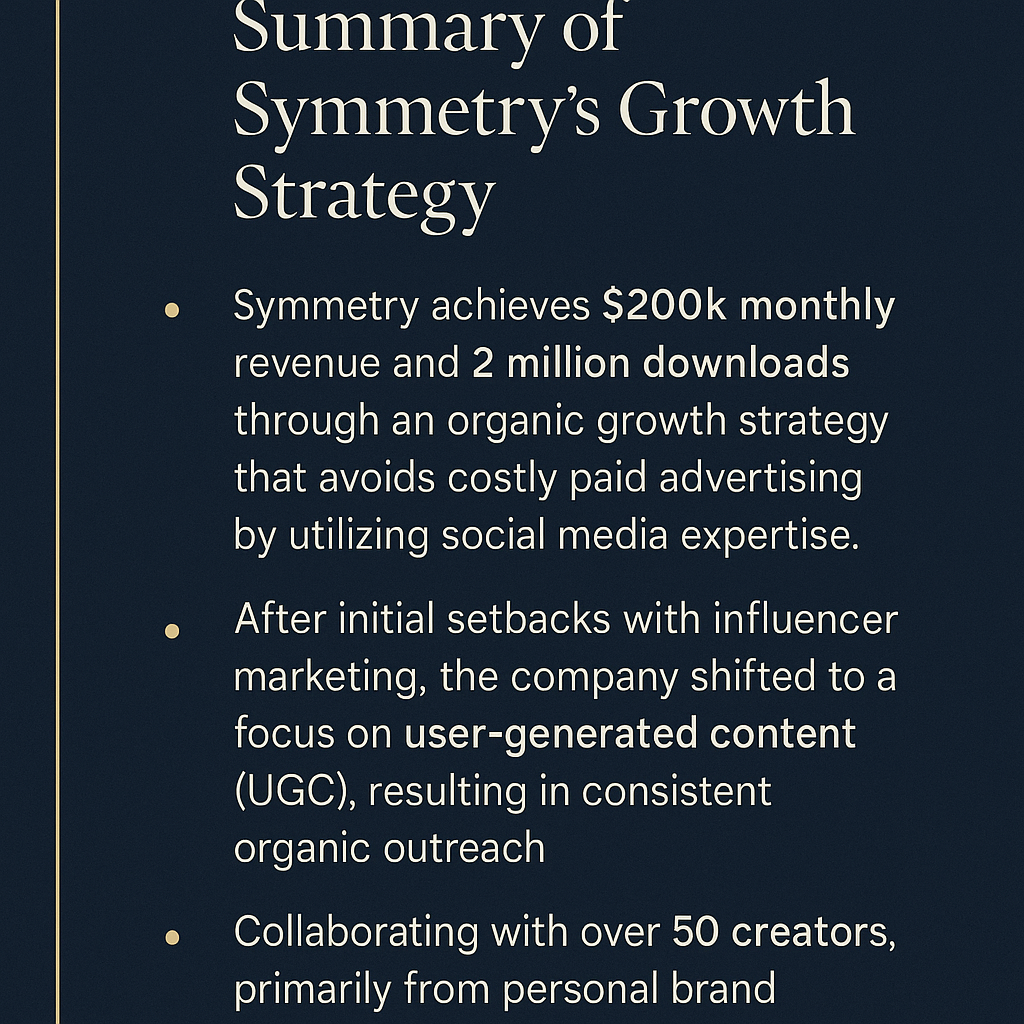
Symmetry achieves its remarkable monthly revenue of $200,000 and 2 million downloads entirely through organic methods, avoiding the financial drain of paid ads.
2. Shifting from Influencer Marketing to UGC
Initially attempting influencer marketing, Symmetry found it inconsistent and shifted focus to UGC, which now keeps the content fresh and engaging without relying on paid promotion.
3. Recruiting a Network of Creators
Symmetry recruits over 50 creators from their brand followers, ensuring cultural alignment and motivation through alignment with the brand ethos.
4. Tracking Creator Recruitment
Mauro stresses treating creator recruitment like managing B2B SaaS leads, ensuring a systematic, measurable process that optimizes recruitment efficiency.
5. Targeting the Spanish-Speaking Market
The app targets Spanish Gen Z users due to lower costs, avoiding saturated markets like the U.S. This not only uses existing audience potential but also reduces overall costs compared to traditional markets.
Examples from the Source
"Currently, Symmetry generates $200k monthly and has achieved 2 million downloads solely through organic growth."
"They then experimented with influencer marketing, which proved ineffective, before testing UGC, which significantly paid off."
"Mauro emphasized the importance of thoroughly tracking this recruitment process, akin to how a B2B SaaS company manages their leads."
Common Pitfalls
- Expecting immediate results from UGC without allowing time for content to organically gain traction.
- Neglecting market nuances, particularly in less-saturated areas, which can lead to missed growth opportunities.
- Ignoring the importance of a robust tracking system for creator recruitment, leading to inefficiencies.
Action Checklist
- Adopt an organic growth strategy, emphasizing UGC over paid advertisements.
- Build a network of creators from existing brand followers for cultural alignment.
- Track creator recruitment meticulously, resembling a B2B lead management system.
- Focus on under-tapped markets, such as Spanish-speaking regions, to lower acquisition costs.
- Continuously assess and tweak strategy using tools like App Tweak for competitive analysis.
- Maximize and replicate successful strategies until they are no longer effective.
- Employ personal brands to expand reach and maintain engagement with the target audience.
Watch the Full Video
Want more like this?
The full archive of strategy + AI articles lives at strategythread.app, curated weekly, no fluff.