Building a business that generates $1 million in revenue without employees sounds like a pipe dream. Yet, Hassan Bazzi presents a compelling case that suggests this is not only possible but highly achievable with a "boring" business model focused on AI and niche communities. Cancel the flash and glamour associated with startup culture; instead, get ready to build something that may seem unexciting but offers less competition and proven demand. Here’s a deep dive into how you can implement this approach.
TL;DR
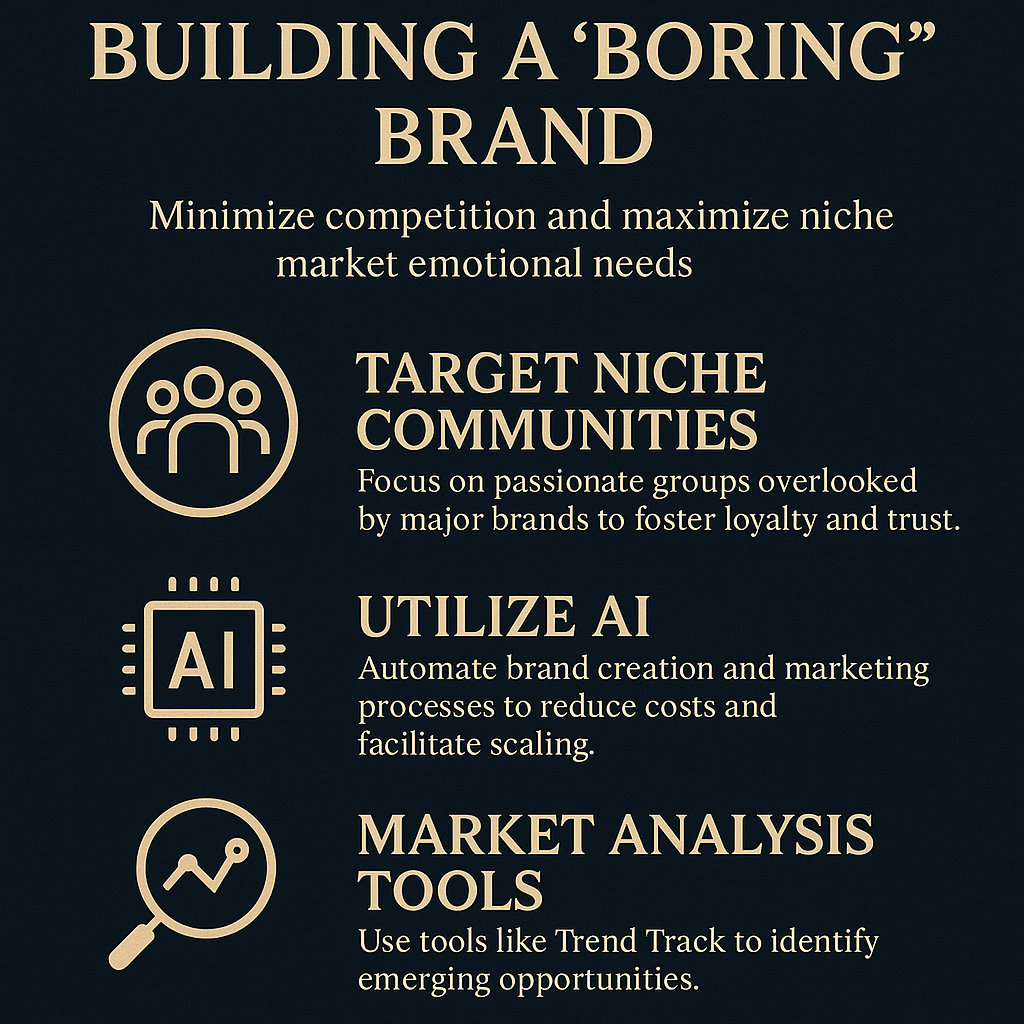
Focus on creating a "boring" brand that targets specific, passionate communities largely ignored by larger companies. Use AI to streamline brand development and marketing, ensuring efficient processes with lower costs. This allows you to tap into proven markets and foster strong customer loyalty through emotional connections.
The Problem
The startup landscape is saturated with flashy apps, automation solutions, and viral models, leading many entrepreneurs to overlook simpler yet potentially lucrative business opportunities. The focus on appealing to as many consumers as possible results in entities like Nike or Amazon losing touch with niche communities eager for products that solve specific problems or fulfill emotional needs. As a result, many miss the chance to build a brand that establishes deeper connections with customers. This strategy addresses the pitfalls of broad competition by stressing the importance of "boring" brands that cater to specific community needs.
The Strategy
Isaiah advises creating a business that adopts a "boring" brand mentality, which consists of several strategic layers:
- Emotionally Driven Branding: Craft a brand that resonates deeply with a specific community.
- AI Integration: Utilize AI to streamline operations from product development to marketing, making the process efficient and cost-effective.
- Community Targeting: Focus on a passionate demographic often overlooked by mainstream brands, thereby fostering trust and loyalty.
This strategy emphasizes smaller, well-defined markets over broad, competitive landscapes, maximizing potential and profitability.
How It Works (Step by Step)
To build your "boring" AI-driven brand successfully, follow these steps:
Step 1: Identify the Community
- Find a passionate community that existing brands overlook.
- Assess their emotional needs, desires, and pain points.
Step 2: Utilize Trend Track Tool
- Use tools like Trend Track to identify trending products.
- Ensure these products solve a specific problem for your identified community.
Step 3: Evaluate Product Profitability
- Confirm that each product yields a 20 to 30% net profit margin after all costs.
Step 4: Conduct Market Size Analysis
- Measure market size and assess whether strong emotional connections exist related to the product.
- Validate the potential for successful market entry.
Step 5: Train AI for Customer Insights
- Utilize AI to gain insights about your product and ideal customer profile, focusing on demographics and aspirations.
- Refine your marketing strategy based on this data.
Step 6: Build Brand Perception
- Focus on managing brand perception to transform generic products into premium offerings.
- Ensure that customers see the value in your branding strategy.
Step 7: Develop an Effective Marketing Strategy
- Craft a marketing plan that complements the product and ensures maximum visibility.
Step 8: Plan for Long-Term Growth
- Establish long-term goals, ideally aiming for an eight-figure sale of your brand.
Examples from the Source
Isaiah shares his personal experiences and practical examples:
- He built a business at age 16, reselling simple products, and sold it for $50,000 by 18.
- Three years ago, he sold another brand for a high six-figure sum.
- He aims to build a new brand with plans to achieve an eight-figure sale within the next few years.
- Examples like 24/7, which sells running gear and makes $100 million a year, demonstrate the profitability of niche products.
- Dynamic Discs, focusing on disc golf gear, manages around $6 million annually, proving the viability of niche markets.
Common Pitfalls
Even with a solid foundation, here are common mistakes to avoid:
- Trying to appeal to everyone, like Nike or Amazon, diminishes brand loyalty.
- Neglecting emotional connections can result in a lack of customer engagement.
- Underestimating the importance of market size and emotional resonance can lead to failed products.
- Failing to price products for the perceived value can impact profitability.
- Overlooking customer insights that AI can provide risks missing key marketing opportunities.
Action Checklist
- Identify a niche community and evaluate their specific needs.
- Use Trend Track to find trending products aligned with the community.
- Conduct a profit analysis to ensure sustainable margins.
- Analyze the size of the market and emotional connections present.
- Train AI tools for valuable customer insights.
- Focus on building a strong brand perception around your products.
- Develop a clear and effective marketing strategy.
- Set long-term growth and exit goals to guide your business strategy.
Watch the Full Video
For a comprehensive breakdown of this strategy, watch Hassan Bazzi's full video here.
Want more like this?
The full archive of strategy + AI articles lives at strategythread.app, curated weekly, no fluff.