Valuable Insights on Context Engineering in Voice AI

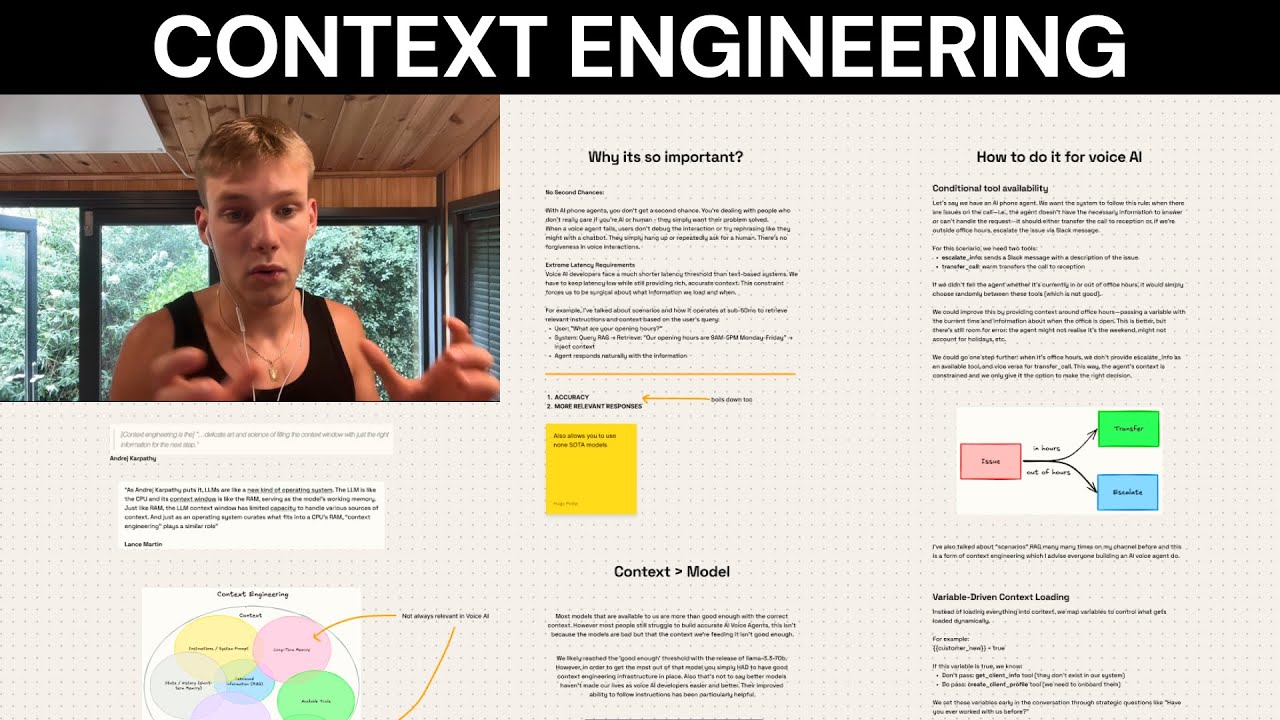
In today's rapidly evolving technological landscape, understanding the nuances of context engineering can significantly enhance the efficacy of Voice AI systems. This post distills key insights from the enlightening discussion in the YouTube video titled **"Context Engineering is the KEY to human-like voice AI"** by Hugo Pod.
Key Points
- Definition of Context Engineering:
Context engineering is the process of optimizing information fed into a Language Learning Model (LLM) to enhance decision-making. Andrej Karpathy describes it as the art and science of filling the context window correctly. - Importance of Context:
The effectiveness of LLMs, such as GPT-4 or Claude, is heavily dependent on the context provided. Proper management of context—encompassing long-term memory, system prompts, state history, and user prompts—can significantly impact performance, often more than the model choice itself. - Challenges with Voice AI:
Voice interactions pose unique challenges. Users do not typically troubleshoot failed voice interactions as they might with text, making it critical to ensure accuracy. Moreover, voice systems are more susceptible to user perception of errors due to the inherent nature of spoken communication. - Time Sensitivity:
Speed is crucial in voice AI applications. Any noticeable lag in response times can negatively affect user experience, underscoring the need for efficient context management to facilitate quick interactions.
Insights
- Impact of Context on Model Performance:
The discussion emphasizes that even less advanced models can succeed in voice AI tasks if provided with the appropriate context. This insight shifts the focus from solely relying on advanced models to understanding how context can enhance existing technologies. - Strategies for Context Improvement:
The adoption of strategies such as conditional tool availability, variable-driven context loading, and intent-specific context switching can dynamically tailor the context for voice interactions, leading to more effective and accurate responses.
Actionable Advice
- Implement Conditional Tool Availability:
Use tools that become accessible based on the user's requests to streamline interactions and reduce unnecessary context clutter. - Adopt Variable-Driven Context Loading:
Load context based on specific variables that reflect the user’s current needs or queries, ensuring relevance and accuracy. - Utilize Intent-Specific Context Switching:
Design systems that can switch context based on the user's intent, allowing for a more fluid and responsive interaction experience.
Supporting Details
- The emphasis on context engineering highlights its relevance in developing voice agents that not only perform well but also enhance user satisfaction. There is a critical balance between the advanced capabilities of models and the thoughtful application of context to meet user expectations.
- By studying and implementing context engineering principles, developers can design more efficient voice AI systems that better accommodate user interactions and foster engagement.
Personal Reflections
This exploration of context engineering resonates with the ongoing evolution of AI technologies. It underscores the value of a holistic approach where context becomes a critical pillar for successful AI applications. The insights encourage a rethink of design strategies that prioritize user experience through effective context management in voice-based interactions. This perspective inspires further investigation into innovative methods of enhancing AI interactions, particularly in environments where user communication is paramount.
Watch the full discussion for a deeper understanding:
Join the Journey!
If you found these insights valuable, follow me to stay updated and engaged as we explore more about technology together! You can connect with me on: