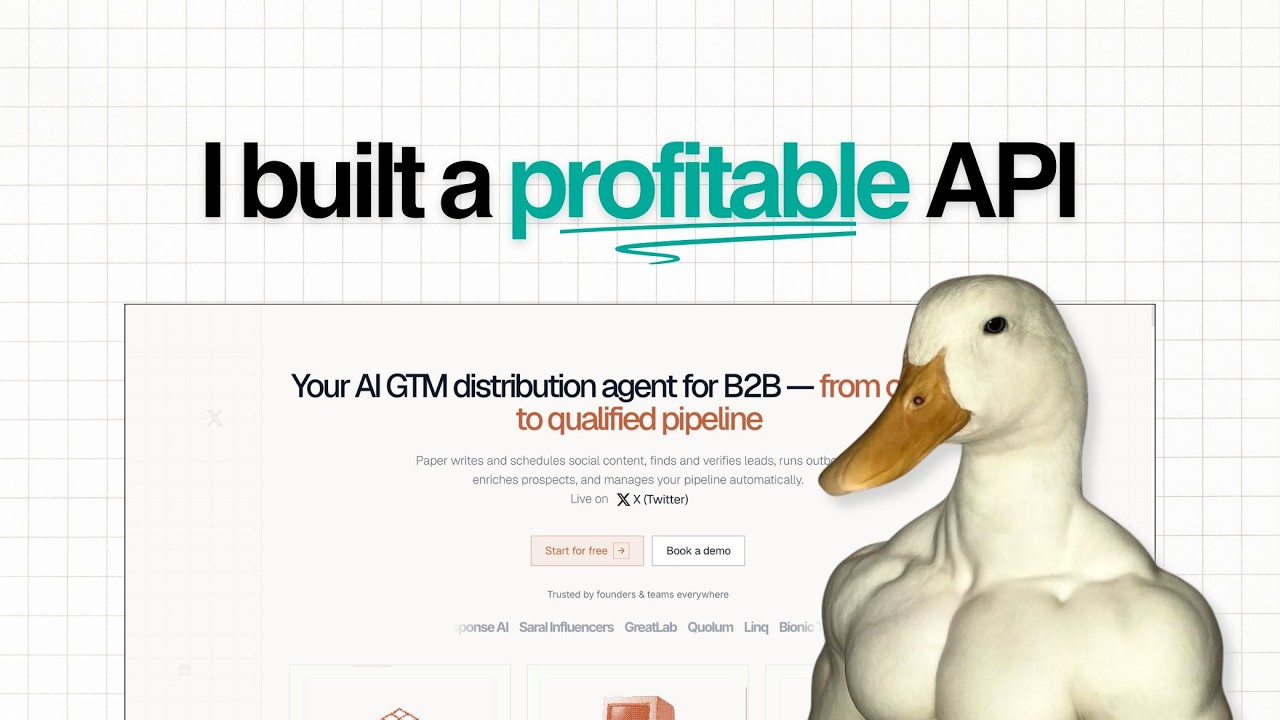
Many solo founders rack their brains trying to conjure the next big idea, but sometimes the easiest way forward is right in front of them: mimic what's already working. Dive deep into the blueprint that turned a simple concept into a successful exit, and learn how you too can replicate its success without reinventing the wheel.
TL;DR
To build and exit a profitable API SaaS, copy successful ideas, utilize a waitlist strategy, engage customers through demo calls, and reach potential users via personalized channels. Understanding unit economics and seeking genuine customer validation are crucial for ensuring financial viability.
The Problem
Solo founders often face the daunting task of identifying viable business concepts without substantial startup capital. The pressure to innovate can lead to unnecessary complexity, while bootstrapped budgets exacerbate the challenges of scaling, acquiring customers, and ensuring profitability.
The Strategy
The strategy hinges on copying proven ideas rather than striving for innovation. By doing so, founders can avoid the unnecessary complexity of creating entirely new concepts and instead focus on refining and marketing an idea that has already achieved success. Oliver emphasizes learning from what's already received investment and understanding existing market dynamics to mitigate risk.
How It Works (Step by Step)
Create a Waitlist
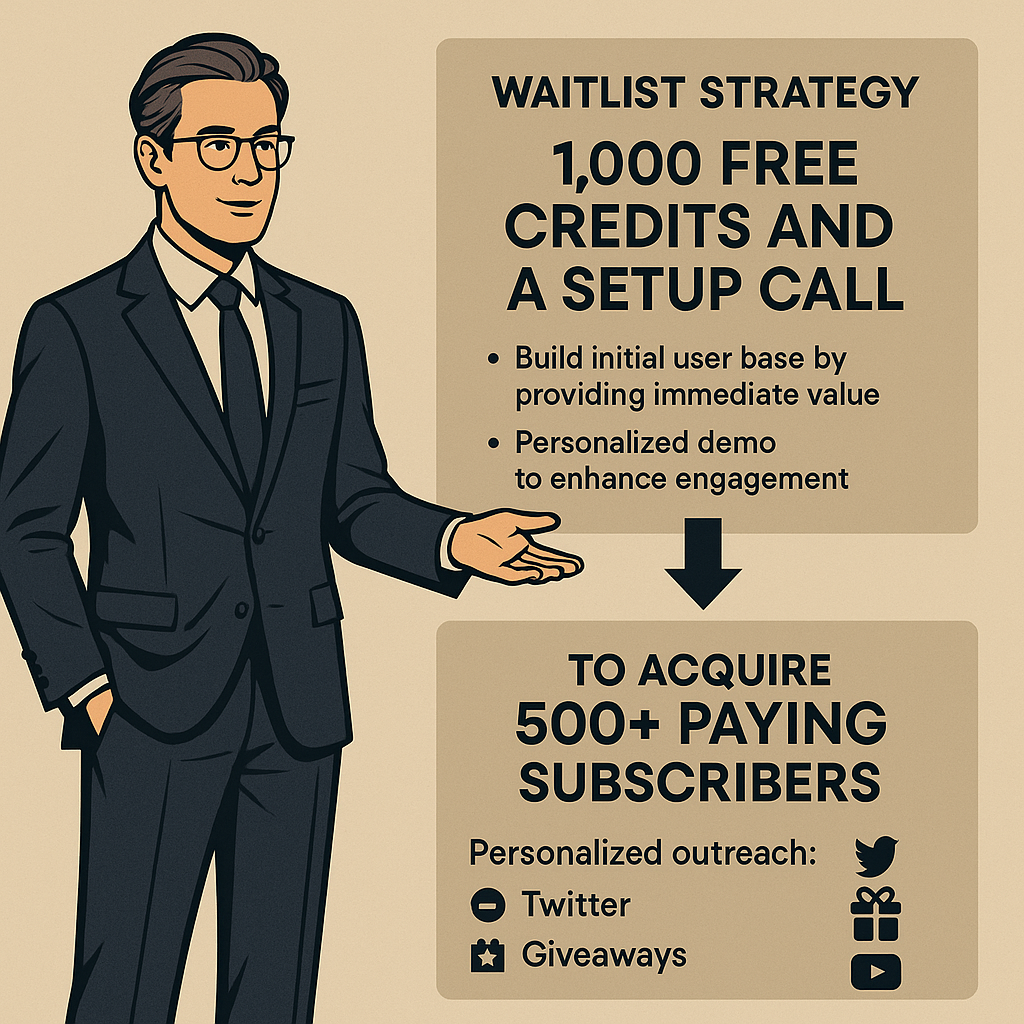
Oliver initiated a waitlist that offered potential customers 1,000 free credits and a setup call. This not only provided immediate value but also incentivized sign-ups by presenting a tangible benefit right from the start.
Demo Calls for Engagement
The setup call doubled as a demo, effectively engaging users by offering personalized interaction. Demo calls help address low initial engagement and create a direct connection with potential customers.
Utilize Personalized Outreach Channels
Oliver reached over 500 paying subscribers through a combination of personalized Twitter outreach, giveaways, YouTube videos with specific intent titles, and cold emails. This multi-channel approach enhanced visibility in a crowded market.
Understand Unit Economics
Understanding the cost implications of using third-party APIs and AI technology is crucial, as these factors directly affect profit margins. Oliver underscores that this knowledge is vital to assessing financial viability.
Seek Genuine Customer Validation
Instead of relying solely on expressed interest or sign-ups, focus on obtaining payments from customers. This ensures that the product addresses actual user needs and highlights true market demand.
Analyze Competitor Reviews
By examining competitor reviews, founders can identify market gaps and adapt their product offerings accordingly. This ongoing adaptation helps maintain relevance and appeal in a saturated market.
Examples from the Source
Oliver, previously from Response AI, is now involved in several new software tools and manages roswell.dev, where he educates people on building software, developing SaaS, and making profitable exits.
Response AI, the AI-based video outreach tool Oliver created, personalized emails by adding customized video messages. This strategy increased engagement by making the communications feel more personal to recipients.
His outreach strategies through personalized channels led to acquiring over 500 paying subscribers.
The primary reason for selling Response AI was the high cost of AI technology, which impacted profit margins.
Common Pitfalls
- Assuming innovation is always required. Many founders overcomplicate their journey by trying to innovate, instead of refining and adopting existing successful ideas.
- Overlooking the importance of unit economics. Not fully understanding the costs associated with third-party tools can result in razor-thin profit margins.
- Focusing only on sign-ups rather than actual customer validation through payments. Interest without financial commitment often leads to misguided product development.
- Neglecting the importance of competitor reviews and market data, which can provide invaluable insights for product refinement and marketing strategies.
Action Checklist
- Identify successful business ideas that resonate with your skills and market understanding.
- Implement a waitlist strategy to generate early interest and offer immediate value incentives.
- Schedule demo calls to engage potential customers and establish a personal connection.
- Expand your user acquisition efforts through personalized outreach on multiple channels.
- Analyze your unit economics to ensure profitability, particularly when using third-party APIs.
- Seek genuine customer validation by prioritizing payments over mere interest or sign-ups.
- Continuously assess competitor reviews and market feedback to refine your product and proposition.
Watch the Full Video
Want more like this?
The full archive of strategy + AI articles lives at strategythread.app, curated weekly, no fluff.