Streamline Your Research with Automated Workflows

Have you ever wished you could generate comprehensive research reports effortlessly? In his latest video, Nate Herk dives into a cutting-edge automated workflow that allows you to create detailed research reports using Google Sheets. Let’s explore the key points, insightful takeaways, and practical steps you can take to optimize your research process!
Key Points:
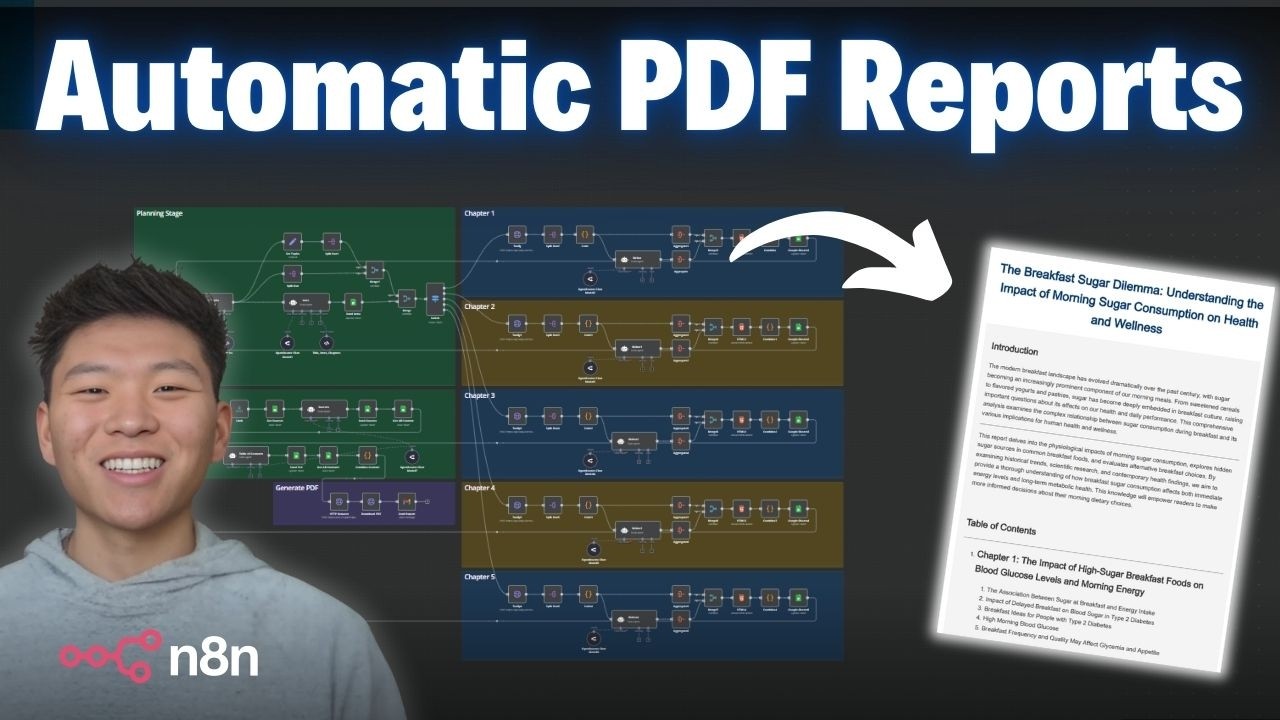
- Automated Workflow for Research Reports: The video demonstrates a workflow for generating deep research reports using automated agents and Google Sheets. The process starts by entering a search topic (e.g., "sugar for breakfast") and yields a comprehensive report with multiple chapters.
- Structure of the Report: The report is divided into five chapters, each exploring distinct aspects of the main topic. Generated by independent agents, it includes an introduction, table of contents, and hyperlinks to sources.
- Efficiency and Cost-effectiveness: This automated method is considerably faster and cheaper than traditional methods, completing in approximately six minutes and costing less than a dollar per report, making it an ideal scalable solution for regular in-depth analysis.
Insights:
- Holistic Research Methodology: The workflow emphasizes breaking broader topics into sub-topics, ensuring a well-rounded understanding through structured research.
- Leveraging Technology: Utilizing AI agents to automate research illustrates how technology can streamline workflows, reducing time and resource investment.
- Collaboration with Tools: Using Google Sheets for dynamic data storage is crucial, as it organizes information for easy retrieval during the final report compilation.
Actionable Advice:
- Utilizing AI Tools for Research: Investigate and implement automated workflows with AI and tools such as Google Sheets to efficiently create structured reports.
- Joining Supportive Communities: Engage with community forums to enhance your learning about building automated systems, providing collaboration opportunities and shared resources.
- Experimentation and Optimization: Optimize workflows by experimenting with parallel processes for reduced output times, and understand different agents for customized configurations.
Supporting Details:
- Source Inclusion: Each chapter includes hyperlinks to credible sources, adding credibility and depth to individual topics.
- Template Resources: Access to templates is provided in the video for users to replicate the demonstrated workflow seamlessly.
Personal Reflections:
The insights shared resonate with current automation and AI trends, highlighting their growing role in research. Engaging with these technologies allows researchers to boost productivity and focus on analysis rather than data collection. Moreover, the emphasis on structured workflows underscores that efficiency arises not only from tools but also from thoughtful content structuring. From my experiences, having clear frameworks facilitates meaningful insights and substantial quality improvements in output.
Conclusion:
Employing an automated research workflow as outlined can significantly enhance your research capabilities. By implementing these insights and taking the recommended action steps, you'll empower yourself to produce in-depth reports efficiently!
Check out Nate Herk's full video for a deeper understanding:
Join Us on This Learning Journey!
Follow me on social media to stay updated with the latest insights and resources:
- TikTok: isaiah_dupree
- Instagram: the_isaiah_dupree
- YouTube: TechMeStuff Channel
- Email: isaiahdupree@techmestuff.com
- Discord: Join our Discord community
- Twitter: @isaiahdupree7
- Facebook: Connect on Facebook
- Snapchat: yourbeautifulvv
- Pinterest: isaiahdupree33
- Visit: TechMeStuff