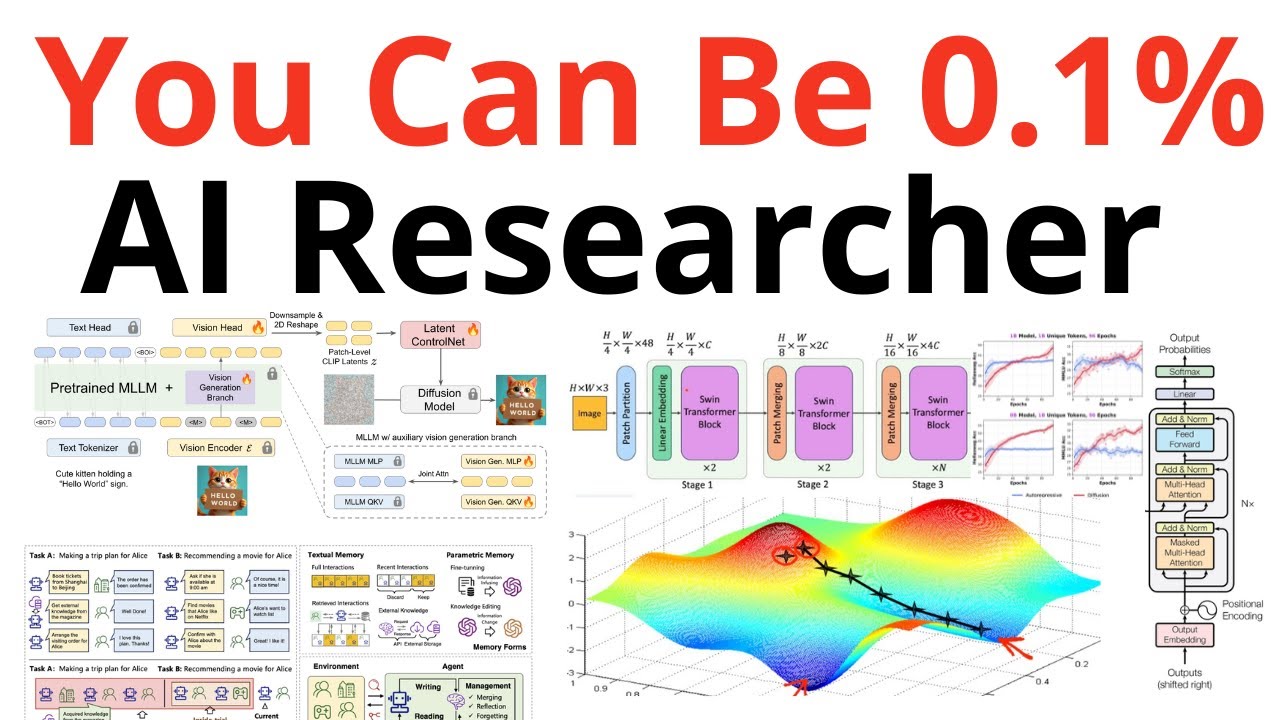
This Will Make You Top 0.1% AI Researcher
Today, we’ll explore valuable insights extracted from the summarized transcript of the video "THIS Will Make You Top 0.1% AI Researcher" by Vuk Rosić. This presentation addresses transformative developments in AI and encourages a collaborative approach within the research community.
Key Points:
- Byte-Based Processing: The central argument is that AI intelligence should focus on raw bytes instead of tokens, aligning with the digital world's inherent byte-based nature. This could enable more efficient data generation and processing across various formats such as images and text without needing convoluted conversion steps.
- Challenges of Tokenization: Current token-based methodologies struggle with long sequences, making it difficult to manage extensive data. Byte processing could help unify data modalities and simplify the complexities associated with tokenization.
- Byte Latent Transformers: This innovative concept addresses the long sequence issue by clustering bytes according to their predictive complexity. By doing so, it directs computational power to where it’s needed the most, enhancing efficiency.
- Open-Source Collaboration: The speaker calls for the open-source community to spearhead advancements in byte-focused AI. They suggest that collective efforts could surpass corporate initiatives, fostering a collaborative environment that spurs rapid innovation.
- GitHub Repository: The mention of a dedicated GitHub repository signifies a move toward open development. It serves as a platform where ideas can be shared, and participants can contribute to advancing the field of AI research.
Insights:
- Transformative AI Development: Shifting towards byte-based processes could revolutionize how AI interacts with data, providing a holistic approach that merges different data types seamlessly.
- Efficiency in Complexity: Recognizing that not all data holds the same complexity allows for more strategic allocation of computational resources, which could lead to significant performance improvements in AI tasks.
- Empowerment through Community: The emphasis on open-source collaboration reinforces the idea that leveraging diverse talents and perspectives can accelerate the pace of innovation in artificial intelligence.
Actionable Advice:
- Engagement with Open-Source: Individuals interested in AI research should consider participating in this open-source initiative. Engaging with the GitHub repository can foster personal growth and contribute to the larger AI community.
- Explore Resources: The speaker invites listeners to utilize the shared resources and educational materials to enhance their understanding of AI, suggesting that continuous learning is crucial for anyone aiming to become a top researcher.
Supporting Details:
- The speaker’s proposal for byte-oriented processing stems from the need to simplify the data handling challenges posed by current methodologies. By focusing on raw bytes, the complexity and inefficiency of tokenization can be mitigated.
- The example of "Byte Latent Transformers" illustrates a concrete method for addressing the long sequence issues in data processing, showcasing a real-world application of the proposed byte-based approach.
Personal Reflections:
The insights resonate strongly with current trends in AI where efficiency and collaboration are key. The transition from token-based to byte-based processing seems both timely and necessary given the rapid growth in data complexity.
Emphasizing community-driven development is inspiring, as it suggests that significant advancements in AI do not solely rely on big corporations but can emerge from grassroots efforts.
Conclusion:
In conclusion, the transformative approach of focusing on byte-based AI processing, alongside the call for collaborative engagement in open-source projects, represents a progressive step forward for researchers and practitioners in the field.
If you're eager to join us on this learning journey, be sure to follow me on my social media platforms:
Check out the full video and learn more about this transformative perspective on AI: