Think building solo apps that generate income is out of reach? Think again. Erik Cupsa shares his secrets to creating profitable apps quickly and independently, turning ideas into revenue within weeks.
TL;DR
Isaiah focuses on rapidly shipping apps by utilizing proven frameworks, prioritizing real human pain points, and leveraging the right tech stack. His strategy has led to a personal app generating $1,400 in monthly recurring revenue.
The Problem
Many aspiring app developers struggle with identifying viable app ideas that can monetize effectively. The issue often lies in overvaluing originality and overlooking practical strategies and tools that address market-validated needs.
The Strategy
Isaiah's approach focuses on shipping apps fast by choosing ideas rooted in real user pain points and capitalizing on existing successful concepts. By using resources like Y Combinator’s “Request for Startups” and Trust MRR for validated core ideas, developers can bypass the guesswork involved in startup success.
How It Works (Step by Step)
1. Identifying an App Idea
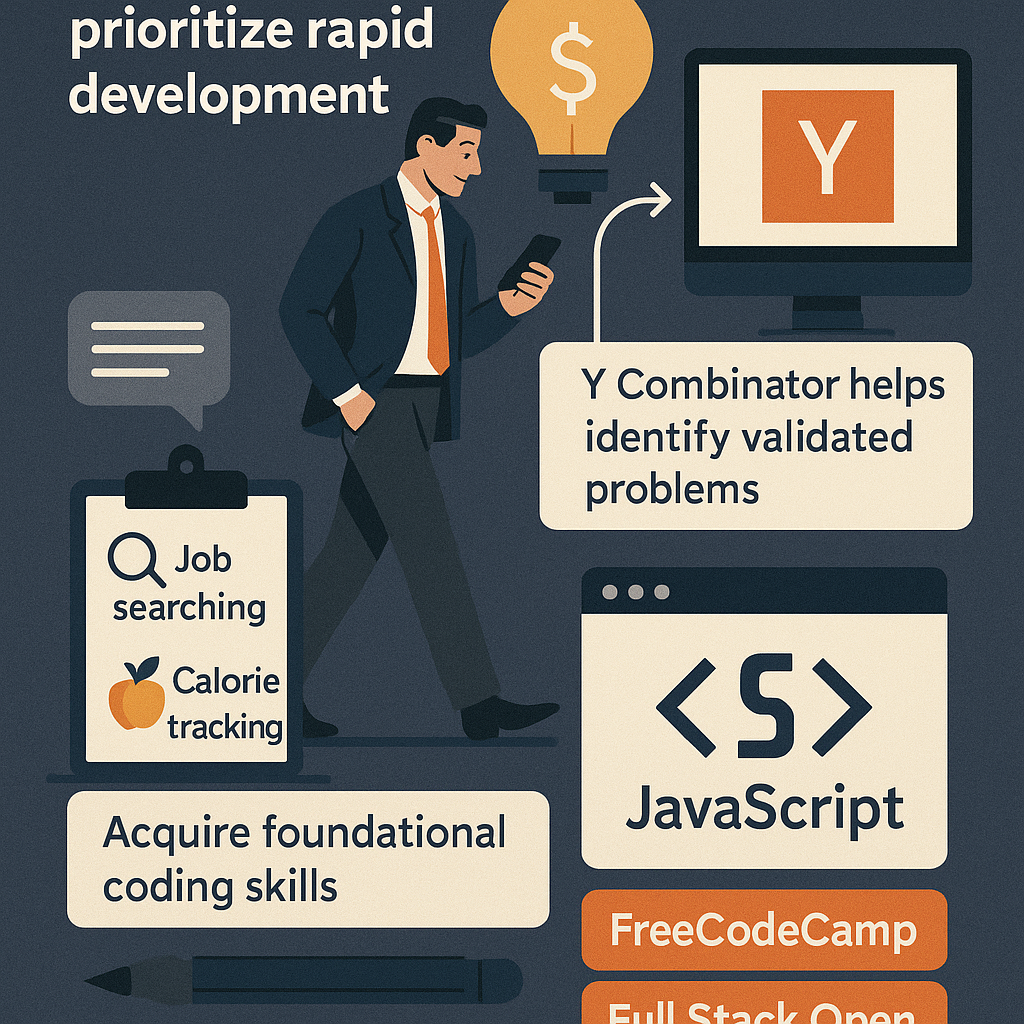
Start by examining Y Combinator's “Request for Startups” to find validated market needs. Pair this with Trust MRR, which showcases apps and their revenue, providing insights into what works. Avoid striving for originality; instead, aim to effectively capture a fraction of an established market.
2. Learning Core Development Skills
Master JavaScript to cover both front-end and back-end development. Begin with the JavaScript crash course on FreeCodeCamp, then enhance your skills through project-based learning with Full Stack Open.
3. Building the Web App
Utilize Next.js for its robust full-stack capabilities, ensuring seamless integration of client and server-side functionalities.
4. Developing Mobile Apps
For mobile, start with React Native paired with Expo Go, focusing on Apple devices for optimal reach and performance.
5. Database and Security
Implement Superbase for database management to ensure scalability and reliability. For authentication, choose between Clerk or Firebase to secure user data effectively.
6. Processing Payments
Integrate Stripe for payment processing, creating a seamless financial transaction system within your app.
7. Maintaining App Stability
Ensure the app's security and performance through rate limits, protecting against excessive traffic and potential abuses.
Examples from the Source
"Live coding is incredibly addictive in 2026 because it allows you to build anything you can imagine in just a few days. I experienced this firsthand when I created my own app four months ago in only 23 days. Now, four months later, the app has generated $123 daily, $16.5k lifetime, and $1,400 in monthly recurring revenue without any updates or marketing since November."
Isaiah's successful AI resume generator and review tool demonstrates the power of fast shipping, focusing on solving a critical problem faced by job seekers.
Common Pitfalls
- Overemphasizing originality at the expense of practicality.
- Neglecting foundational skills in coding, leading to inefficient app development.
- Choosing complex solutions over viable, proven systems like Next.js and React Native.
- Ignoring critical security measures jeopardizing app integrity and user trust.
Action Checklist
- Explore Y Combinator's "Request for Startups" and Trust MRR for app ideas.
- Complete JavaScript Fundamental courses on FreeCodeCamp and Full Stack Open.
- Build web apps with Next.js for full-stack development.
- Develop mobile apps using React Native and Expo Go.
- Set up databases with Superbase for scalability.
- Implement secure user authentication using Clerk or Firebase.
- Incorporate Stripe for streamlined payment processing.
- Apply rate limits to ensure app stability and security.
Watch the Full Video
Want more like this?
The full archive of strategy + AI articles lives at strategythread.app, curated weekly, no fluff.