
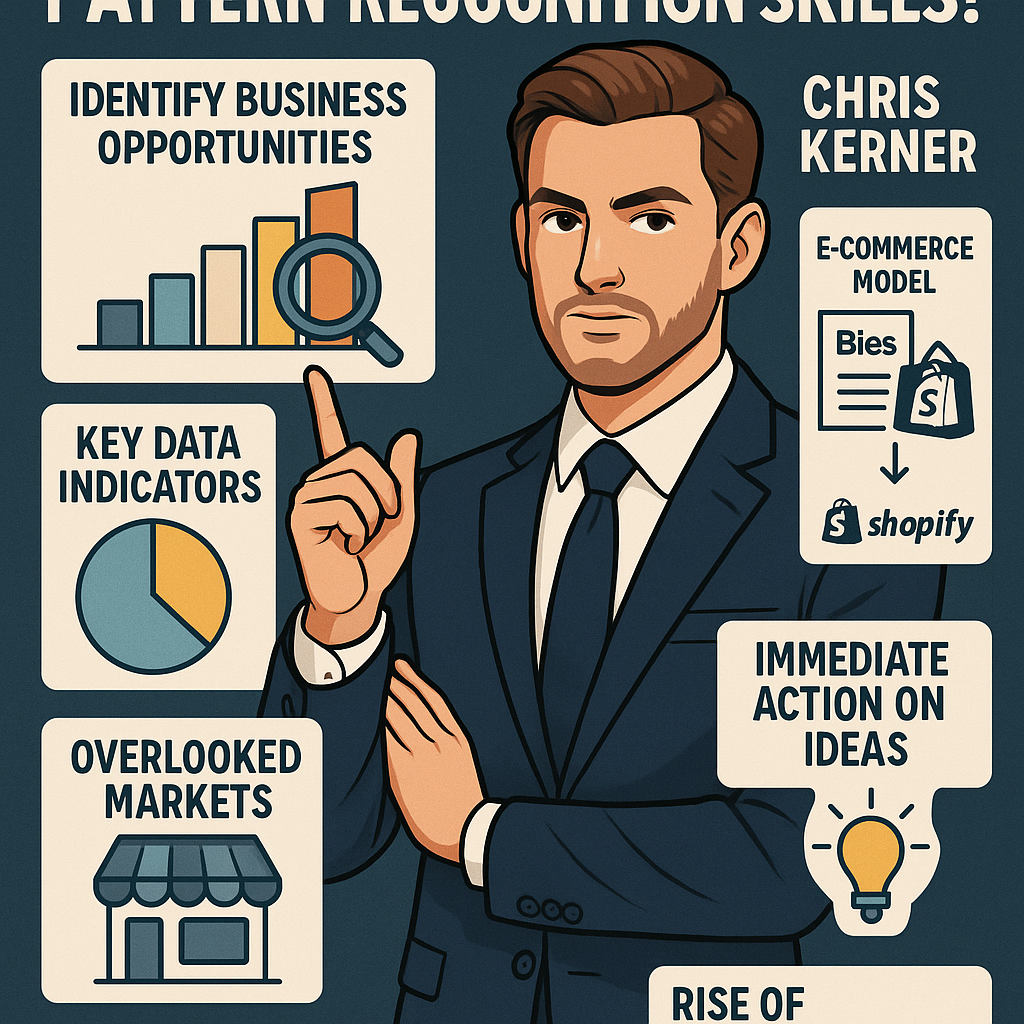
Every day, opportunity knocks in the form of emerging markets, consumer trends, and untapped niches. Yet, many entrepreneurs struggle to identify which doors to open and how to turn those insights into profitable ventures. Chris Kerner's approach shines a torch on this very dilemma, maximizing potential in overlooked opportunities through effective pattern recognition and a data-driven strategy. Buckle up, as we explore actionable insights from his methodology that could help you kickstart an AI-driven e-commerce business today.
TL;DR
Chris Kerner emphasizes developing strong pattern recognition skills to identify profitable business ideas, particularly in saturated markets. He advocates for leveraging existing brands with no online presence, such as Bies, to establish an outsourced e-commerce store. This approach allows entrepreneurs to quickly scale businesses without the typical overhead of product creation.
The Problem
Entering the entrepreneurial landscape can be daunting, especially when faced with saturated markets and endless competition. Many aspiring business owners get trapped in analysis paralysis, struggling to pinpoint profitable ideas or differentiators that can set them apart from the crowd. Additionally, the struggle to find viable business models that minimize startup costs often discourages potential entrepreneurs from taking initial steps. Chris Kerner addresses these pain points, providing a roadmap for navigating this challenging environment.
The Strategy
The core of Chris Kerner's strategy lies in honing strong pattern recognition skills. By looking for specific data indicators, entrepreneurs can identify strengths and weaknesses in existing markets and brands. Kerner focuses on a simple yet effective model: create an outsourced e-commerce store leveraging existing successful brands that lack online sales channels. This strategy not only taps into unexploited markets but minimizes startup risks by avoiding product creation and extensive marketing development from scratch.
How It Works (Step by Step)
1. Develop Pattern Recognition Skills
Strengthen your ability to identify business opportunities by studying market trends, consumer behavior, and existing brands.
2. Gather Data Indicators
Focus on a few critical indicators that reveal business potential. Examples include:
- Brands with no online presence
- Emerging consumer needs
- Market demand for specific products
3. Identify Unique Selling Propositions
Analyze the brands you’re interested in, focusing on what sets them apart, service quality, market penetration, or lifestyle appeal.
4. Establish Partnerships
Build relationships with local or regional brands that could benefit from online exposure. Offer to resell their products through your e-commerce store.
5. Launch Your Online Store
Create a Shopify store or similar platform to begin selling products sourced from partnered brands.
6. Utilize Influencer Marketing
Capitalize on social media trends by collaborating with influencers to expand brand visibility; gas station food influencers, for instance, have contributed significantly to the popularity of brands like Bies.
7. Measure and Optimize
Regularly analyze performance data to identify areas for improvement and optimize marketing strategies for growth and profit.
Examples from the Source
“I noticed Bies was a strong brand with no online store, which sparked the idea for my business.”
“We go to the Bies store, load up on products, and then take it back to our warehouse to sell on our Shopify store. It’s essentially an outsourced e-commerce store for a brand that doesn’t sell online.”
Chris's own e-commerce business has seen success through this model, demonstrating the feasibility of this strategy. By taking advantage of existing brands' strengths while filling their marketplace gaps, entrepreneurs can achieve substantial profits without bearing the burdens traditionally associated with starting an e-commerce business.
“The key to developing those skills is to take action on your ideas immediately; it reinforces the connection in your brain.”
Kerner’s tangible skills have allowed him to start 75 businesses, showcasing that experiential learning is crucial for success in entrepreneurship.
Common Pitfalls
- Failing to take action based on identified opportunities, leading to missed chances and stagnant business growth.
- Overcomplicating business models instead of embracing simple, proven methods like outsourcing sales.
- Ignoring the importance of branding and the unique selling propositions of existing products, which can dilute your e-commerce offerings.
- Neglecting the power of social media and influencer marketing, particularly in niches that are visually driven or where recommendations heavily influence purchasing decisions.
- Not continuously analyzing and optimizing business performance which can impede growth.
Action Checklist
- Start observing market trends and noting brands that lack online presence.
- Gather data on consumer preferences in your identified niche.
- Reach out to potential local brands for partnership opportunities.
- Set up a Shopify store and list the sourced products for sale.
- Engage with influencers relevant to your niche to promote your store.
- Develop a system for tracking sales and customer feedback for ongoing optimization.
- Regularly examine competitors and seek out gaps in their offerings that you can fill.
Watch the Full Video
You can explore in greater depth the strategies discussed by Chris Kerner in the original video. Watch it here!
Want more like this?
The full archive of strategy + AI articles lives at strategythread.app, curated weekly, no fluff.