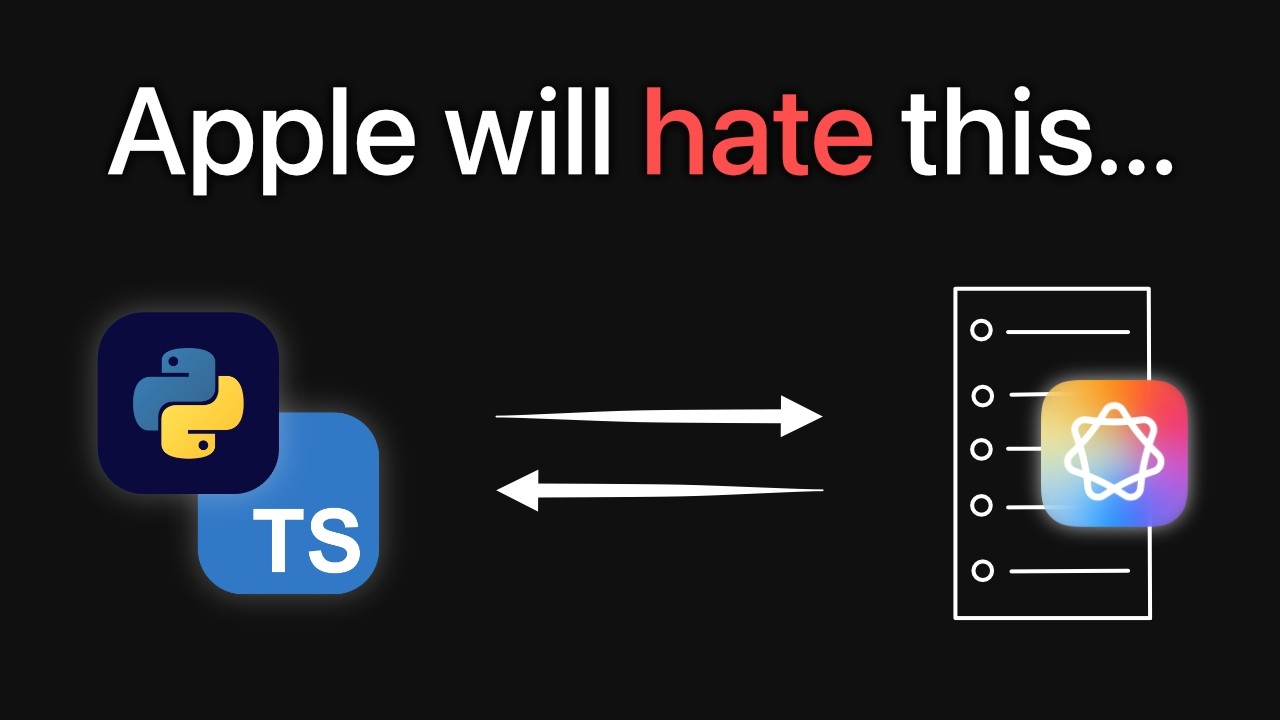
Access to Apple Intelligence has long been restricted to Apple Silicon devices, limiting its potential use across other platforms. However, a new API development changes this landscape by enabling users to tap into Apple's AI capabilities from Windows, Linux, and beyond. This innovation is particularly significant for developers and companies that rely on diverse AI models across various applications.
One of the primary challenges with Apple Intelligence is its confinement to Swift and Apple Silicon, which limits accessibility for non-Apple devices. To overcome this, the API was developed using the Vapor framework to emulate OpenAI's API standards, providing a seamless integration path for users accustomed to other AI platforms.
Development and Testing
The API leverages the strengths of Swift while ensuring compatibility with existing API frameworks. Stress tests on a MacBook Air demonstrated it could manage up to ten concurrent requests, making it ideal for personal or small-scale applications. This development marks a significant step in making Apple's local AI model available to a broader audience without sacrificing much of its speed and privacy benefits.
Future Prospects
Open-sourced on GitHub, the project invites contributions for enhancements such as authentication and rate limiting. While large-scale commercialization remains uncertain, the API presents a unique opportunity for developers to integrate Apple's AI into multi-platform environments, thus catering to a wider range of applications and use cases.