
Can you really run a successful business single-handedly and pull in $50,000 a month? The answer is yes. Thanks to advancements in technology, especially artificial intelligence, solopreneurs can automate and streamline operations, making high-revenue business models not just possible but achievable. Pablo Milandu's video on building a one-person business with AI employees offers a robust framework for navigating this landscape. Here’s a deeper dive into the strategies and learnings outlined in the video.
TL;DR
Dive into a streamlined approach for building a one-person business capable of generating $50,000 per month using AI tools. The strategy features high-ticket offers, digital products, and recurring revenue models to create a diversified income stream while emphasizing client-centric values and efficient time management.
The Problem
Many entrepreneurs face the dual challenges of establishing a consistent cash flow and managing their time effectively. Traditional models of making money, especially in service-based industries, often lead to burnout and instability, creating a cycle of anxiety over unpredictable revenue. Additionally, many solopreneurs struggle with poor market fit, offering services that do not resonate with clients. This results in wasted time and resources, ultimately stunting business growth.
The Strategy
The framework Dupree discusses focuses on combining multiple income streams to solidify financial stability while automating tasks through AI. The core elements of this strategy include:
- High-ticket offers that yield significant revenue
- Digital products that are easy to scale
- Recurring subscription models to ensure a steady cash flow
- A mindset shift towards delivering value rather than merely aiming for profit
This multi-model approach not only simplifies income generation but also addresses the common pitfalls of traditional entrepreneurship, uncertainty, inconsistent cash flow, and time mismanagement.
How It Works (Step by Step)
Implementing Dupree's strategy requires a tactical approach:
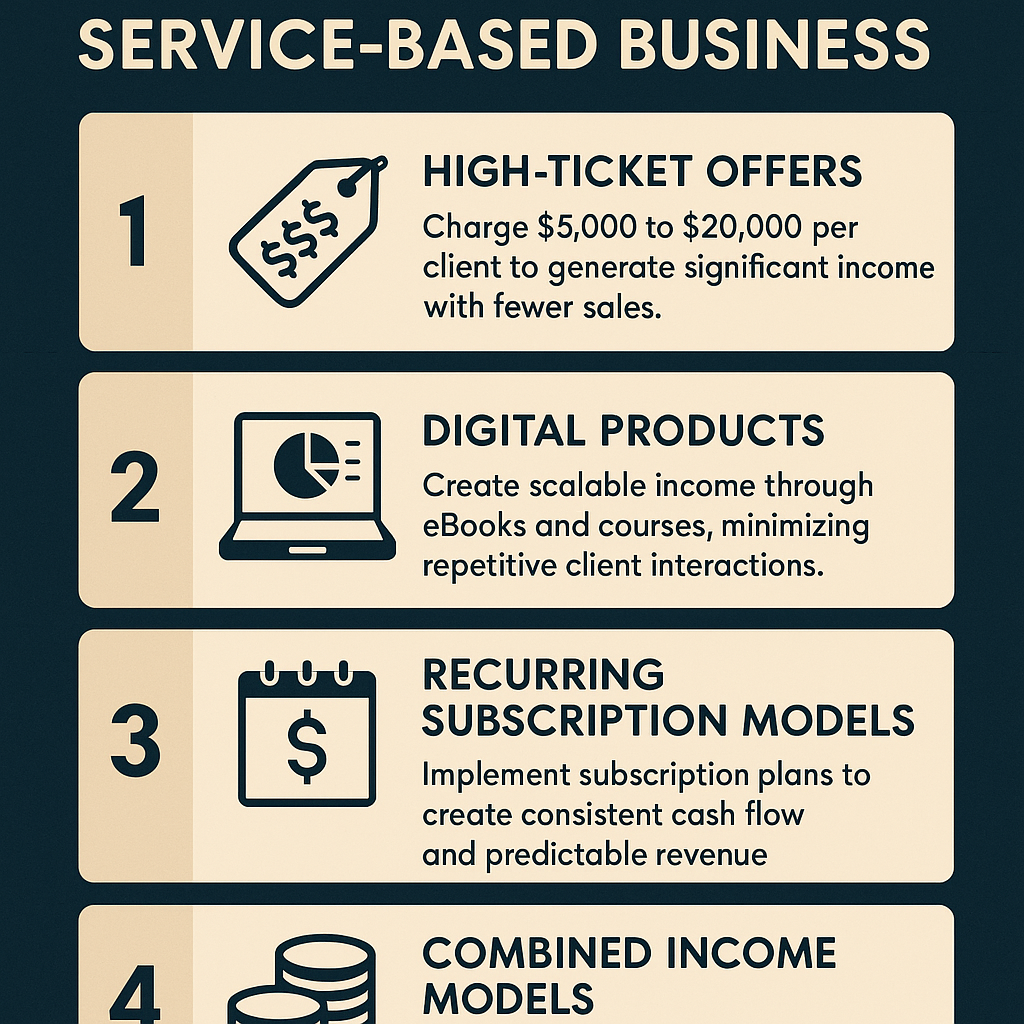
1. Create High-Ticket Offers
Start by designing premium services priced between $5,000 and $20,000. These should be personalized or offer significant value to your clients. Understanding your client’s needs is key.
2. Develop Digital Products
Consider creating scalable products such as eBooks, courses, or other resources that can be sold without extensive involvement. This reduces time constraints while keeping income flowing.
3. Introduce Recurring Subscription Models
Offer both low and high-ticket subscription services. This creates a consistent monthly income stream that can smooth out financial peaks and valleys.
4. Combine Income Models
Mix high-ticket offers with low-ticket recurring subscriptions. This flexibility allows you to address varying client needs while enhancing your revenue potential.
5. Focus on Client-Centric Design
Ensure your offers are based on genuine value to clients. This builds trust and fosters relationships that lead to repeat business and referrals, mitigating the risk of poor market fit.
6. Shift Mindset
Reframe your focus from earning money to delivering value. This approach helps differentiate you in a crowded marketplace and attracts clients who appreciate your authentic offering.
7. Use AI to Automate Tasks
Employ AI tools to handle routine activities, allowing you to concentrate on strategic planning and relationship building. This not only saves time but also lets you enjoy your work more.
8. Aim for Recurring Revenue
Build your business model around a strategy that ensures steady income. This approach supports sustainable growth and offers financial security.
Examples from the Source
“You can charge anywhere from $5,000 to $20,000 for a single client. This strategy solves the problem of generating substantial income with a single sale, making it a lucrative option for service-based businesses.”
Dupree emphasizes that high-ticket, one-time payments are often the most profitable route, and recurring revenue can be generated through additional subscription services. He notes that the combined income from various models allows for greater flexibility.
“If you’re starting out, high-ticket one-time payments are often the most profitable route.”
This blend of offerings supports financial stability and reduces the stress of inconsistent cash flow.
Common Pitfalls
Even with a sound strategy, pitfalls can arise:
- Over-reliance on a single income stream can lead to instability. Diversifying through multiple models can mitigate this risk.
- Failing to align your offerings with what clients truly value can result in poor sales performance.
- Neglecting the automation aspect can lead to burnout and overwhelm, counteracting the benefits of the business model.
- Focusing solely on profit without building genuine client relationships can diminish customer loyalty and referrals.
Action Checklist
- Identify and design your high-ticket offers, ensuring they are tailored to client needs.
- Create at least one digital product that complements your services.
- Set up a recurring subscription model to establish predictable revenue.
- Combine multiple income streams for a balanced financial approach.
- Gather feedback from clients to refine your offerings and ensure value alignment.
- Implement AI tools that can automate manual tasks in your workflow.
- Shift your mindset to prioritize customer value over immediate profit.
- Regularly assess your revenue model to ensure consistency and sustainability.
Watch the Full Video
For more insights and detailed explanations, check out the full video by Pablo Milandu on building a one-person $50k/mo business with AI employees.
Want more like this?
The full archive of strategy + AI articles lives at strategythread.app, curated weekly, no fluff.