
Is your organization truly leveraging the potential of AI, or are you just skimming the surface? Being "AI native" is more than a trending buzzword, it's a transformation. Companies must move beyond basic AI tools and embedding AI strategically to open up new efficiencies and opportunities.
TL;DR
To become AI native, companies must embrace a strategic approach that integrates AI as a co-pilot in enhancing productivity. It's about establishing metrics, considering revenue potential, critically evaluating workflows, and adopting a first principles mindset to use AI's full capabilities. Awareness of AI's costs, risks, and strategic implementation is crucial in realizing a significant return on investment.
The Problem
Despite the proliferation of AI tools, a key issue persists: Only a fraction of businesses truly embed AI at their core. Devin Kearns | CustomAI Studio highlights that while 75% of small businesses use AI, just 15% have managed to integrate it deeply within their operations. Over 85% of AI pilot projects fail, suggesting a need for better execution and strategic foresight. Companies face challenges in adopting AI effectively due to a lack of clear metrics, insufficient understanding of AI integration costs, and potential legal ramifications.
The Strategy
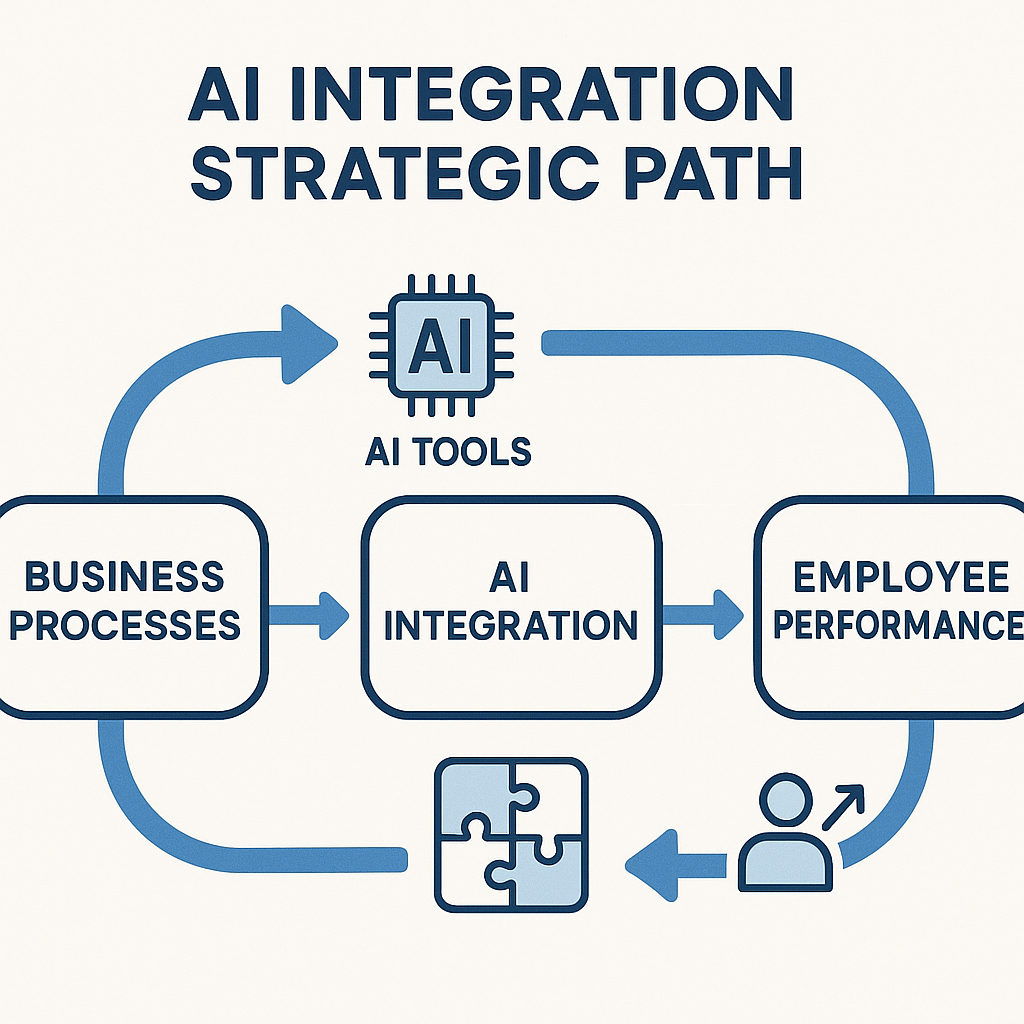
The path to becoming AI native involves strategic embedding, not just deploying AI tools at a superficial level. Dupree suggests adopting AI as a co-pilot for enhancing employee performance and encourages companies to rethink workflows from a first principles perspective. This approach prioritizes embedding AI smoothly into daily operations, focusing on enhancing productivity and evaluating potential revenue gains per employee while being mindful of legal and data privacy concerns.
How It Works (Step by Step)
Encourage AI Tool Subscriptions
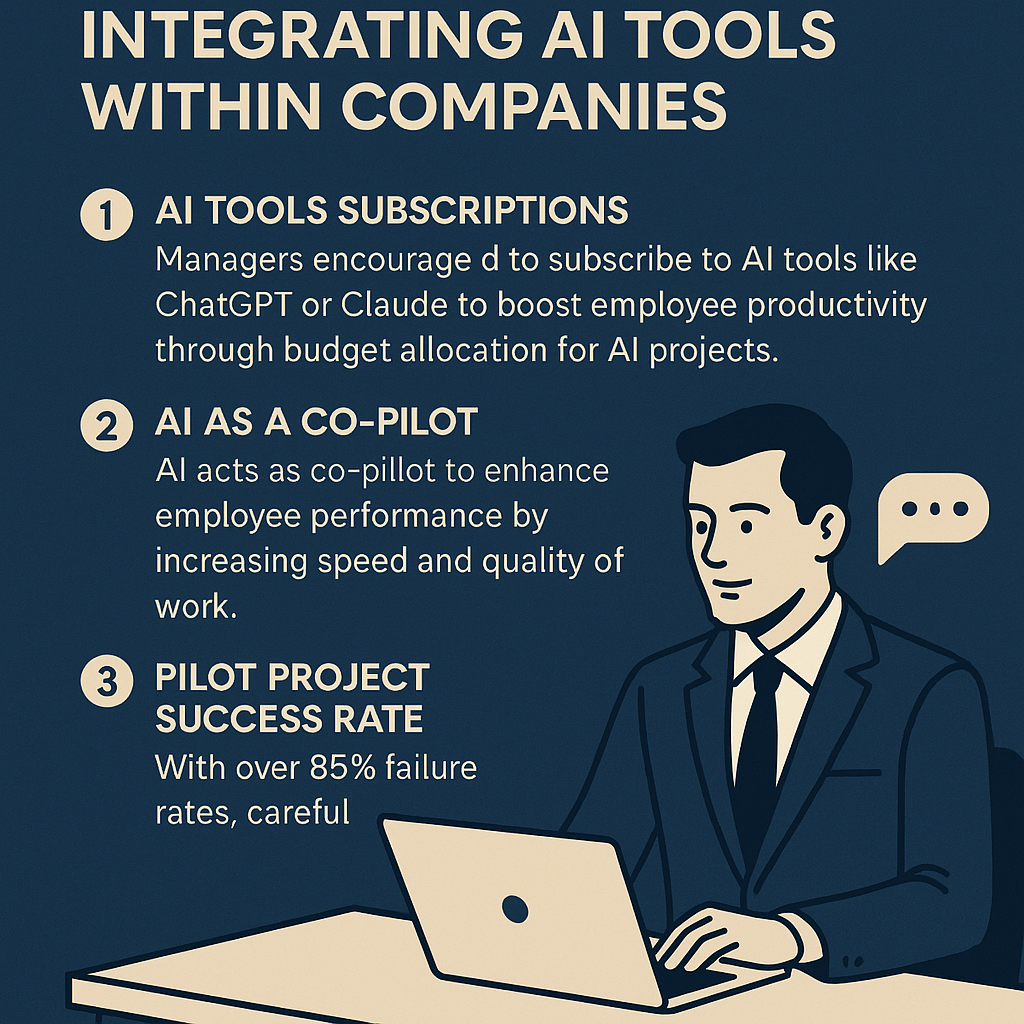
Managers or department leaders should subscribe to AI tools such as ChatGPT or Claude, which allows budget allocations for AI projects and experiments. This enables employees to use these tools to enhance productivity effectively.
Integrate AI as a Co-Pilot
Position AI as a co-pilot that supports employees in increasing their capacity, speeding up processes, and enhancing the quality of output. This co-piloting role of AI aims to address employee performance issues by expanding their scope of capabilities.
Pilot Project Success Analysis
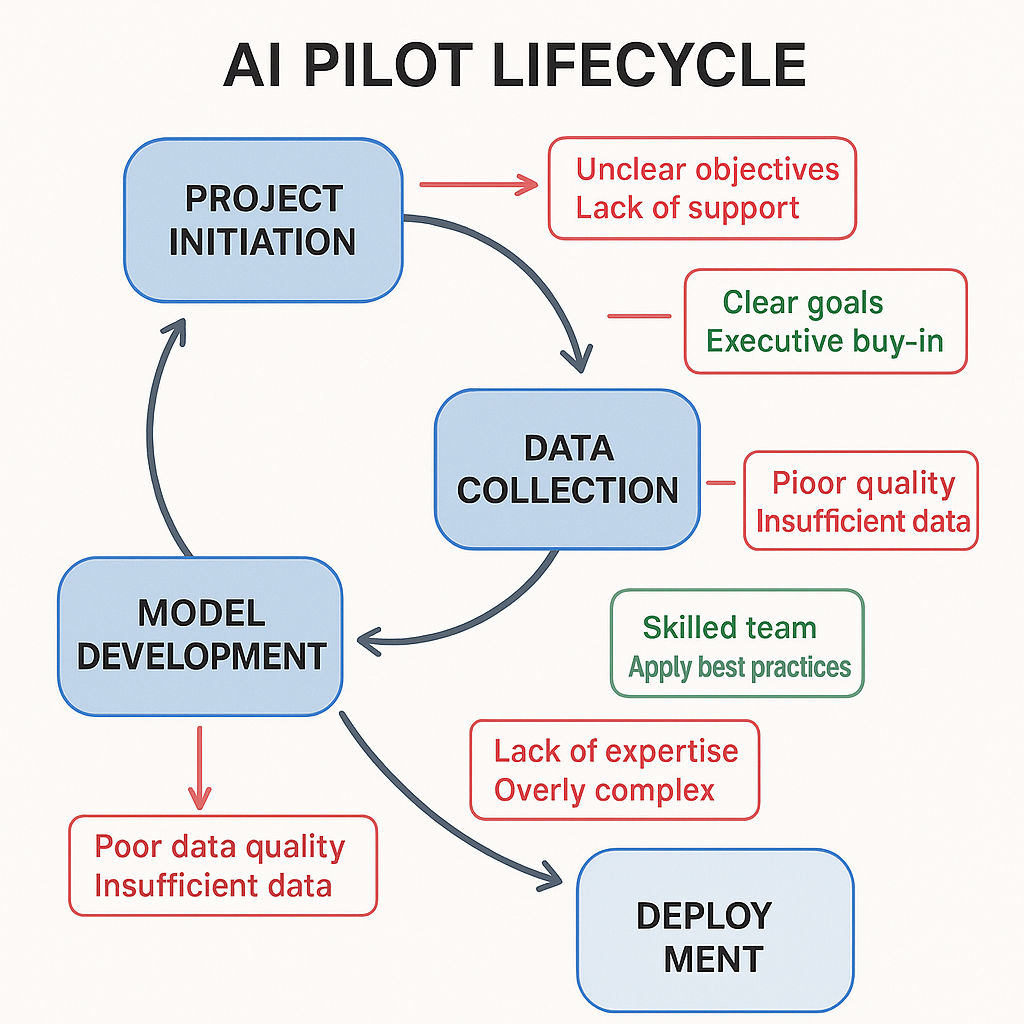
With over 85% failure in AI pilot projects, focusing on robust execution and strategic implementation is essential. Companies need to derive learnings from past failures and apply more advanced models wherever possible.
Metric-Driven Evaluation
Deploy clear metrics to evaluate AI's impact on employee productivity accurately. By analyzing the productivity of power users versus non-users, companies can understand the efficiency benefits AI offers.
Revenue Per Employee Analysis
Balance AI tool costs against potential revenue per employee increases. This involves understanding actual cost implications, akin to adding a workforce layer, and ensuring financial planning accounts for these costs.
Critical Workflow Evaluation
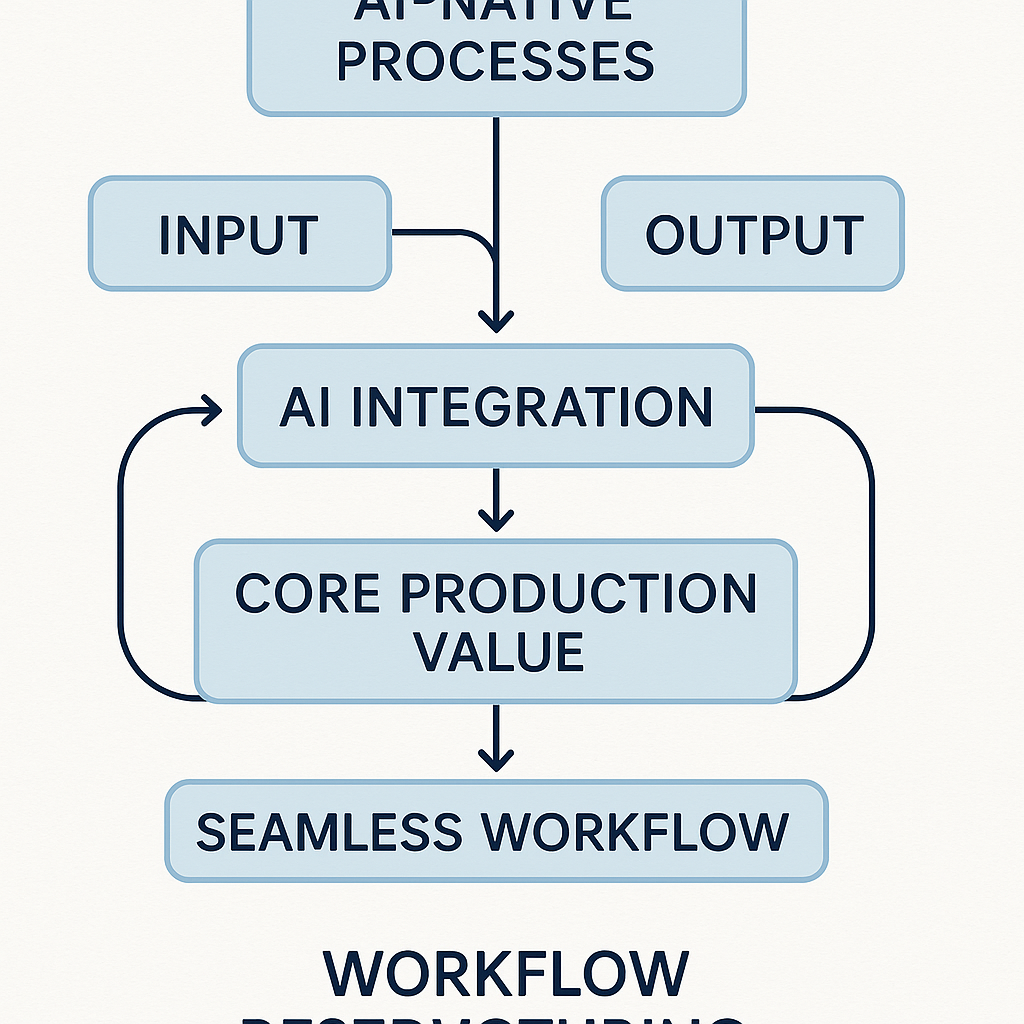
Critically assess and restructure workflows with an AI-native mindset. This involves considering goals and restructuring to maximize the core production value, facilitating seamless AI integration.
Examples from the Source
"You've likely come across the term 'AI native' by now, but what does it actually mean to have an AI native company? ... Essentially, what does it look like to be AI native?"
As Dupree points out, most AI pilot projects, over 85%, and 91% about a year ago, fail. These figures illustrate the crucial need for refined execution strategies. Furthermore, only 15% of small businesses utilize AI in their core operations, despite 75% adopting some AI tools, indicating significant room for deeper integration.
Common Pitfalls
- Lack of clear metrics to gauge AI productivity leaves many companies unable to demonstrate ROI effectively.
- Underestimating the hidden costs of AI systems can lead to budget overruns similar to adding new workforce layers.
- Ignoring legal implications, such as data privacy issues and attorney-client privilege risks, may expose companies to legal vulnerabilities.
- Failing to move beyond basic AI tool utilization can result in missed opportunities for strategic growth and innovation.
Action Checklist
- Encourage department leaders to subscribe to AI tools and allocate budgets for experimentation.
- Position AI as a co-pilot to enhance employee performance and productivity strategically.
- Utilize concrete metrics to evaluate the impact of AI on productivity and demonstrate clear ROI.
- Critically assess and restructure workflows for seamless AI integration with a first principles perspective.
- Analyze the true costs of AI tools, considering them a new layer in the workforce.
- Be aware of legal risks and establish clear policies around data privacy and attorney-client privilege.
- Move beyond surface-level AI use to strategic embedding, especially in content organization and generation.
Watch the Full Video
Want more like this?
The full archive of strategy + AI articles lives at strategythread.app, curated weekly, no fluff.