
TL;DR
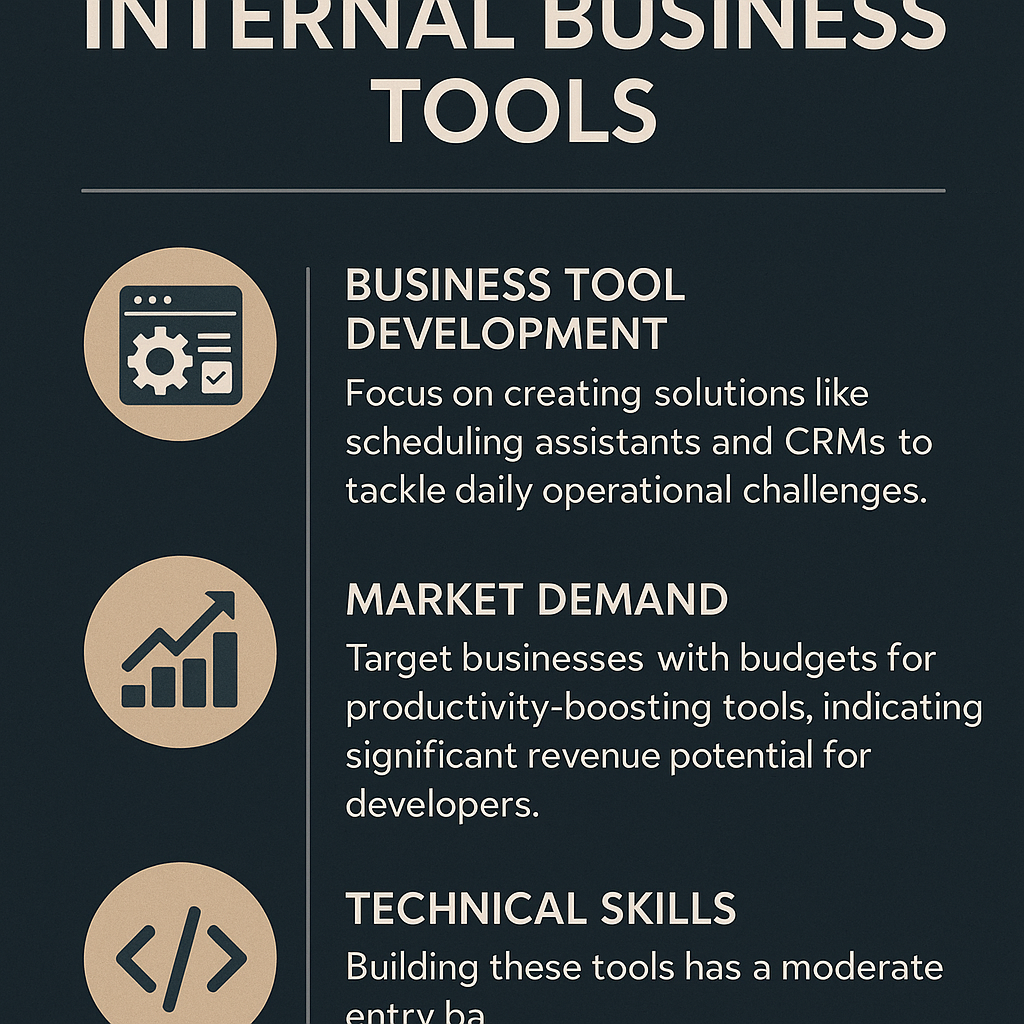
Solo developers can generate significant income by creating internal business tools that address operational challenges. Focusing on productivity solutions for businesses with budgets for such tools offers a promising revenue opportunity, especially when aligned with personal skills and interests.
The Problem
Businesses face daily operational challenges that impact their productivity and efficiency. Despite having allocated budgets for tools that can solve these issues, many organizations struggle to find dedicated solutions tailored to their specific needs. This gap presents an opportunity for developers to create tools that address these pain points and improve overall business performance.
The Strategy
This strategy revolves around building internal business tools such as scheduling assistants, dashboards, CRMs, or automation solutions. These tools directly solve problems faced by businesses, making them highly valuable in markets where there is significant demand for productivity improvements. The strategy emphasizes understanding both the technical skills required to create such tools and the importance of aligning development with personal interests to enhance the likelihood of success.
How It Works (Step by Step)
1. Identify Common Business Challenges
Research and analyze various industries to determine recurring operational challenges. Engaging with potential users can reveal needs that aren’t met by existing products.
2. Align with Personal Skills and Interests
Select a domain that matches your expertise and passions. This alignment ensures not only more enjoyable development but also a better understanding of the user's needs.
3. Develop a Prototype
Create a minimal viable product (MVP) that addresses the identified business challenge. Focus on essential features that showcase the tool’s value.
4. Gather Feedback
After deploying the prototype, solicit user feedback. This step is vital for understanding how well your tool meets user needs and what areas require improvement.
5. Iterate and Improve
Make enhancements based on feedback received. Iteration helps refine the product, ensuring better market fit and increased satisfaction among users.
6. Implement Effective Marketing Strategies
Create a marketing plan to promote your tool. Identify your target audience, use social media and other platforms, and ensure visibility in relevant business circles to maximize sales potential.
Examples from the Source
“Building internal business tools can be a great avenue for income because you're often solving problems that businesses face daily. Whether it's a scheduling assistant, a dashboard, a CRM, or some form of automation, there’s a strong market for these types of tools.”
“I would rate this a three out of five for barriers to entry. It does require technical skills, but many developers can build these tools relatively easily with the right knowledge.”
“In terms of time required, I'll give it a three out of five as well. While the development might take a bit of time, once you have a prototype, the focus will shift to gathering feedback and making improvements.”
“The income potential, however, is a solid five out of five. Many businesses are willing to pay substantial amounts for effective tools that can save them time and money. If you can create something that truly meets a business need, the payoff can be significant.”
Common Pitfalls
Many developers make crucial mistakes when venturing into building internal business tools. Here are some common pitfalls to avoid:
- Neglecting user feedback: Developers sometimes feel too attached to their initial idea and ignore valuable user insights that can enhance the product.
- Underestimating marketing: Failing to effectively promote the product can significantly limit visibility and, therefore, sales potential.
- Creating features that don't add value: Developers may over-complicate tools with unnecessary features instead of focusing on core solutions that directly address business needs.
- Not aligning with target audience: Failing to understand the specific industry or business challenges can lead to creating tools that do not resonate with potential users.
Action Checklist
- Research common operational challenges faced by businesses in your target industry.
- Reflect on your technical skills and personal interests before selecting a tool to develop.
- Create a minimal viable product that directly addresses the identified business needs.
- Gather feedback from early users and incorporate their insights into improvements.
- Implement a strategic marketing plan to reach your target audience effectively.
- Iterate on your tool to enhance its usability and effectiveness based on user input.
- Continuously evaluate market trends and user needs to ensure your tool remains relevant.
Watch the Full Video
For more insights and detailed explanations from Courtz Corner, watch the full video here.
Want more like this?
The full archive of strategy + AI articles lives at strategythread.app, curated weekly, no fluff.