
TL;DR
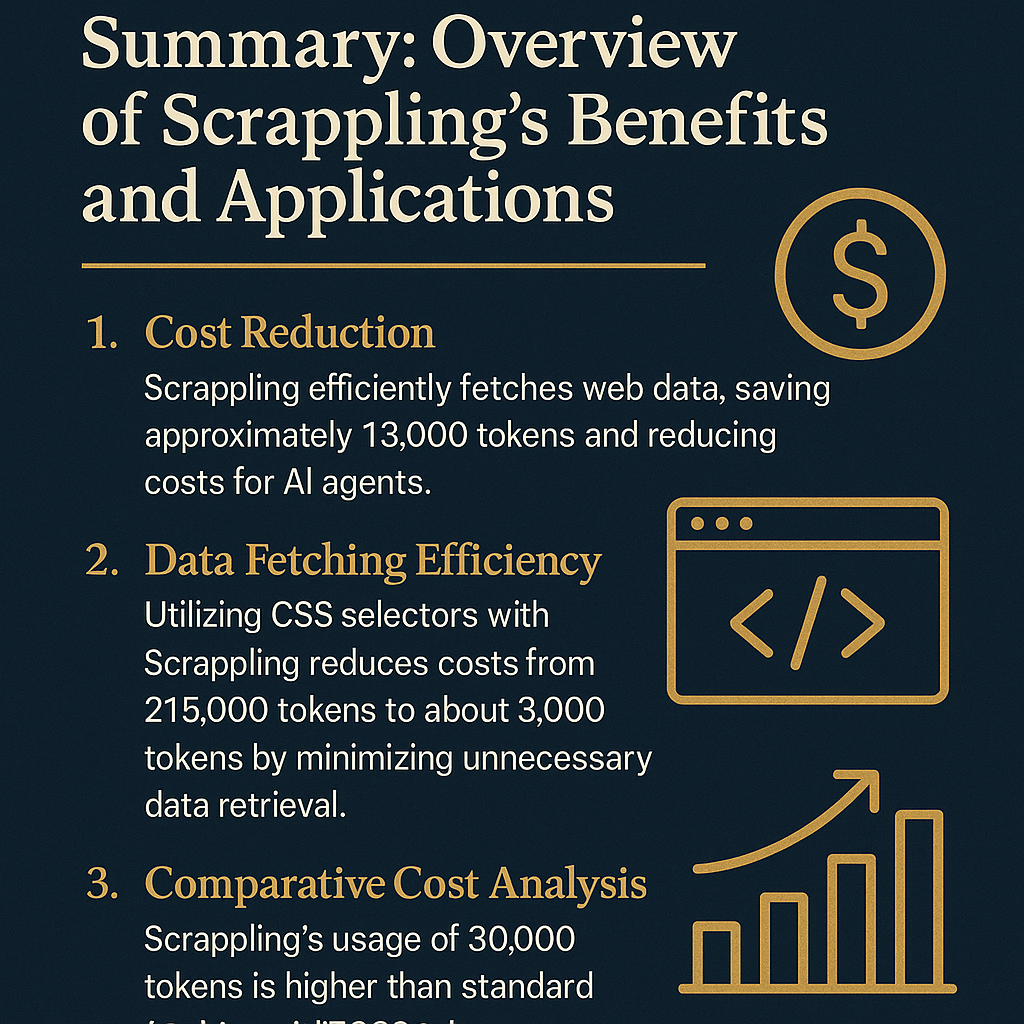
Sacppling is a Python library that enables AI agents to scrape web data efficiently, drastically reducing costs compared to traditional web scraping methods. Its strategic use of targeted fetching through selectors can save significant tokens, making it an ideal choice for developers and businesses looking to optimize web data retrieval.
The Problem
Web data extraction is a critical task for many applications, but traditional methods often lead to high costs and inefficiencies. With the growth of automated web scraping, developers face the challenge of ensuring their AI agents operate cost-effectively while still fetching valuable data. This results in substantial expenses, particularly when processing unnecessary information or relying on inefficiency scraping methods.
The Strategy
Scrappling presents a robust strategy for reducing costs associated with web scraping by efficiently targeting web data using CSS selectors. The primary goal is to minimize token usage during the web scraping process, allowing developers to maintain their budgets while accessing accurate and relevant information. By comparing Scrappling with existing methods like Firecrawl and standard web fetching, users can identify the most effective tools for their specific scraping needs.
How It Works (Step by Step)
1. Understanding Web Scraping
Web scraping involves extracting information from web pages, which are primarily designed for human consumption. By converting this data into a machine-readable format like tables or JSON files, developers can automate data collection.
2. Identifying the Challenges
Many websites lack APIs or have restrictive API usage policies, making traditional scraping solutions less effective. The high token usage associated with indiscriminate data fetching often leads to unnecessary costs.
3. Setting Up Scrappling
Start by installing Scrappling, which can be connected to cloud code for streamlined operations. Ensure that the environment is configured for use with AI models like those from OpenAI to fully benefit from Scrappling's capabilities.
4. Targeted Fetching
Utilize CSS selectors to specify precise information needed, which drastically reduces the amount of data fetched and subsequently processed.
5. Comparative Analysis of Tools
Assess the efficiency of Scrappling against other tools like Firecrawl and traditional fetch methods based on token usage. This insight leads to more informed decisions on which tool best meets project needs.
Examples from the Source
Kacper Rutkiewicz | AI Made Simple presents several compelling examples demonstrating Scrappling's effectiveness:
"Using Scrappling, I fetched the same data from OpenAI’s pricing page, increasing the token usage to about 30,000 tokens, which shows a difference of around 13,000 tokens."
"When dumping raw HTML directly into the cloud code, it cost around 215,000 tokens. In contrast, using Scrappling without any selector was only 13,000 tokens, and using a CSS selector narrowed it down to the price tables, costing about 3,000 tokens in total."
"I found that while web-fetch was free, it summarized data with limited details, and Scrappling was also free but fetched local full data. Firecrawl used one credit and took about two seconds, resulting in detailed pricing with tier labels."
Common Pitfalls
When using Scrappling or other web scraping tools, several common mistakes can hinder efficiency:
- Neglecting to use CSS selectors can lead to fetching extraneous data, dramatically increasing costs.
- Failing to compare different scraping tools may result in missed opportunities for cost savings.
- Not understanding the limitations of web scraping techniques could result in extracting incomplete or inaccurate data.
- Overlooking the importance of maintaining updated scraping methods can lead to issues with changes in web page structures.
Action Checklist
- Install Scrappling and configure it with your cloud code.
- Assess your current web scraping processes and identify cost-draining areas.
- Employ CSS selectors to specify the exact data needed for your projects.
- Conduct a comparative analysis of Scrappling against other scraping tools like Firecrawl to determine efficiency.
- Test Scrappling's performance in practical workflows to understand its capabilities and limitations.
- Document findings to optimize future data scraping efforts.
- Stay informed about updates or changes in web scraping best practices to maintain ongoing efficiency.
Watch the Full Video
For a deeper understanding and practical demonstrations, watch the full video here.
Want more like this?
The full archive of strategy + AI articles lives at strategythread.app, curated weekly, no fluff.