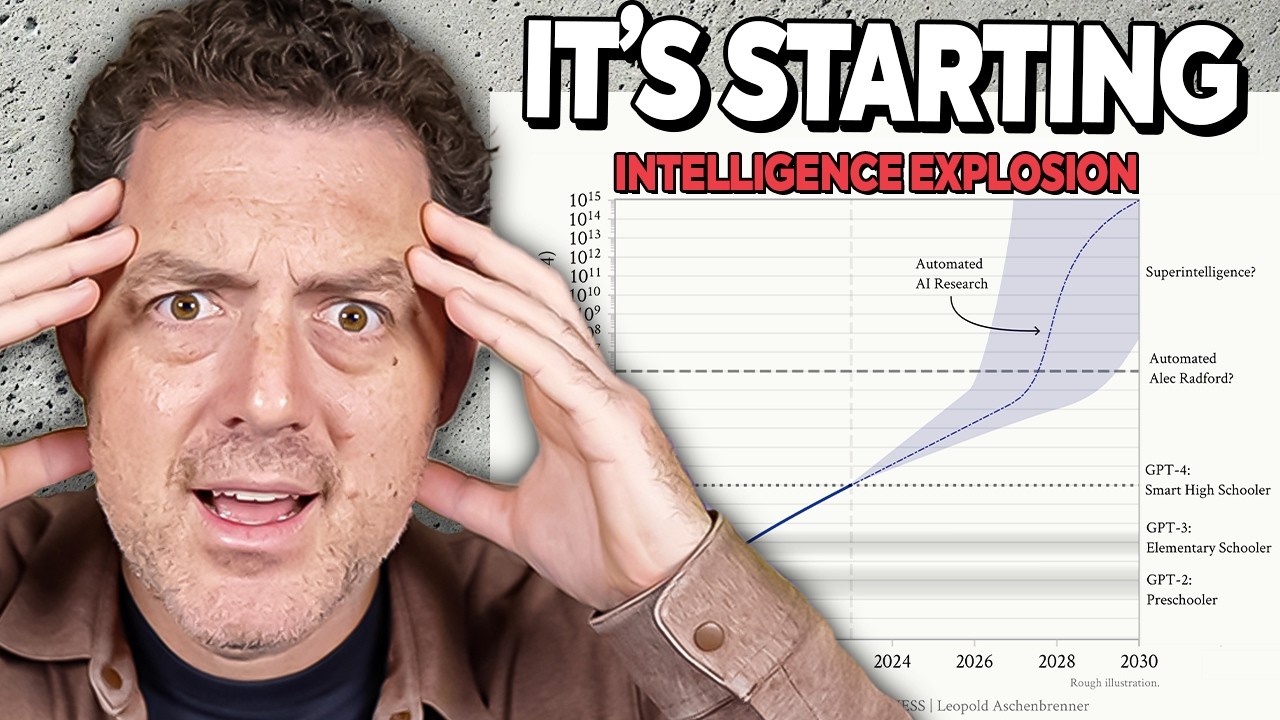
Valuable Insights from "AI Scientist's FIRST Peer-Reviewed Paper (INTELLIGENCE EXPLOSION IS NEAR)"

In a remarkable achievement, Sakana AI's AI scientist has published its first peer-reviewed paper that underwent the same rigorous review process as human-generated research. This milestone points towards significant advancements in artificial general intelligence (AGI) and opens the door to what many are referring to as an impending intelligence explosion, where AI continues to improve upon itself.
Key Points
- AI Scientist's Achievement: The paper emphasizes self-improvement methods for AI through compositional regularization and the enhancement of neural network generalization.
- Research Focus: It illustrates how the AI scientist iterates through a comprehensive process of idea generation, novelty assessment, coding, experimentation, and manuscript drafting.
- Methodology: The AI scientist's ability to generate high-quality scientific papers showcases the potential power of AI in advancing scientific inquiry.
Insights
- Value of Negative Results: The inclusion of negative results in the paper serves as a crucial reminder that such findings can guide and optimize future research efforts.
- Peer Review Transparency: The AI's acknowledgment of its authorship sets a precedent for transparency in AI-generated research.
- Workshop vs. Main Track: The publication's acceptance in a workshop indicates it may not have met the highest scholarly standards, but its implications remain significant.
- Performance Dependencies: The effectiveness of the AI scientist directly correlates with the underlying large language models (LLMs); improvements to these models will yield better research outcomes.
Actionable Advice
- Encourage Publishing Negative Results: Researchers should document and share negative results to enhance efficiency within the scientific community.
- Explore Open-Source Tools: Access the AI scientist's code on GitHub to experiment with various LLMs for generating and evaluating research.
- Expectations for Future AI: Be ready for AI to not only assist but also take charge in the publication of high-level scientific papers.
Supporting Details
- The iterative nature of AI-driven research is evident in the extensive revisions made to the AI scientist's paper.
- Although the AI faced challenges with citation accuracy, these imperfections underscore the need for continuous improvement in AI-generated results.
- The differing attitudes towards publishing negative outcomes between AI and human researchers emphasize the necessity for scientific openness.
Personal Reflections
The insights presented in this analysis reveal the transformative potential of AI in scientific research. Embracing both successes and failures can facilitate rapid advancements, and the evolution of the AI scientist offers critical insights into the collaborative future of human and AI-driven knowledge creation. As technology advances, we stand on the edge of tremendous discoveries that challenge our understanding of science itself.
Watch the Full Video
For a more in-depth understanding and visual guide, check out Matthew Berman’s full tutorial on YouTube:
Join the Learning Journey!
Stay connected and engage with our community on social media. Follow us for more insights: