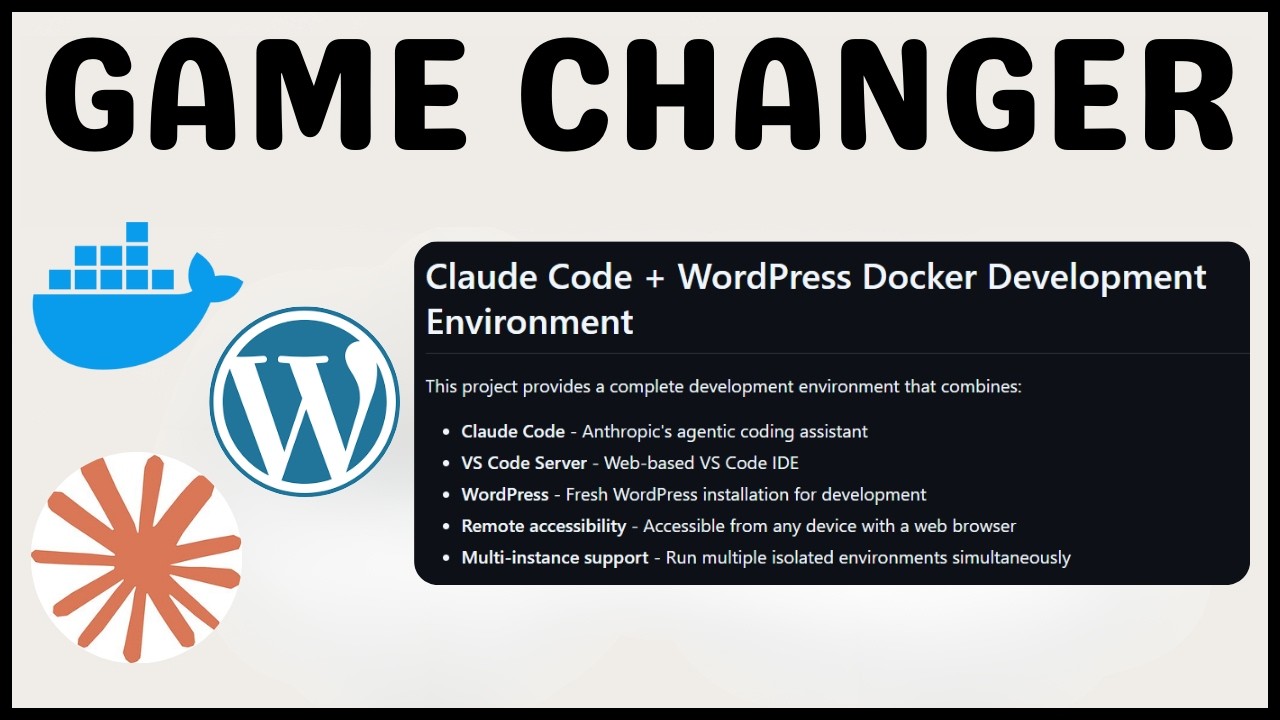
Streamlined WordPress Installation Using Docker and Claude Code

In today’s fast-paced digital landscape, efficiency is key. Have you ever wanted to simplify your WordPress installations? This post breaks down valuable insights from the video "Claude Code With WordPress inside Docker: INSANE" by Income Stream Surfers, revealing an innovative approach to local WordPress development.
Key Points
- Introduction of a New System: The speaker presents a novel method for installing WordPress using Docker, Linux, and Claude Code. This approach aims to streamline the process and enhance efficiency.
- Requirements: Essential tools include Docker Desktop and Windows Subsystem for Linux (WSL), emphasizing the importance of adding these tools to the system path for functionality.
- Docker as a Template: Docker serves as a templating tool, ensuring consistent experiences across different systems and allowing easy replication of the setup.
- Use of Git: The installation process involves using Git to clone a repository containing necessary configurations for setting up WordPress within Docker.
- Instance Management: Users can run multiple WordPress instances simultaneously by assigning unique instance numbers, facilitating the operation of different versions on separate ports.
- Claude Code Automation: Claude Code automates conversation management when the token limit is reached, improving workflow efficiency with large datasets.
- Local Development: This system supports local WordPress development, providing developers full control over their installations without relying on external services.
Insights
- Efficiency of Automation: Integrating automation allows for rapid development cycles, enabling users to focus on creativity rather than setup.
- Flexibility and Scalability: The ability to create multiple WordPress instances supports scalability, allowing developers to manage different projects without overlap.
- Research Capabilities: Claude Code can perform effective research, proving beneficial for generating relevant content based on user prompts.
Actionable Advice
- Getting Started: Ensure Docker and WSL are installed and configured correctly by following guided tutorials or seeking help from Chat GPT.
- Cloning the Repository: Clone the GitHub repository containing the necessary files and instructions for setup, as indicated by the speaker.
- Using the Prompt Effectively: To maximize Claude Code’s utility, input niche-specific prompts to generate well-researched content and designs for your WordPress sites.
- Managing Context: Utilize context management within Claude Code for coherent conversation threads, enhancing user experience.
- Troubleshooting: Document any errors encountered to improve the setup process and share solutions within the community.
Supporting Details
- Examples of potential uses include generating websites for varying niches such as golf courses and spas, illustrating the system's versatility.
- Some limitations, particularly in custom theme and plugin development, are acknowledged; users should remain aware of potential challenges.
Personal Reflections
This approach signifies a notable advancement in simplifying development processes. For those acquainted with coding, it has the potential to transform how WordPress websites are created and managed. Moreover, this method aligns with the growing trend of containerization in software development, providing robust solutions for developers seeking efficiency.
Watch the Full Tutorial
For a more in-depth understanding and a visual guide, check out the full video tutorial below:
Conclusion
In summary, this innovative approach to local WordPress development using Docker and Claude Code emphasizes automation, scalability, and user-friendliness. Armed with the necessary tools and methods, you can integrate this system into your workflow with ease.
Join us on this learning journey and follow me on social media for more insights: