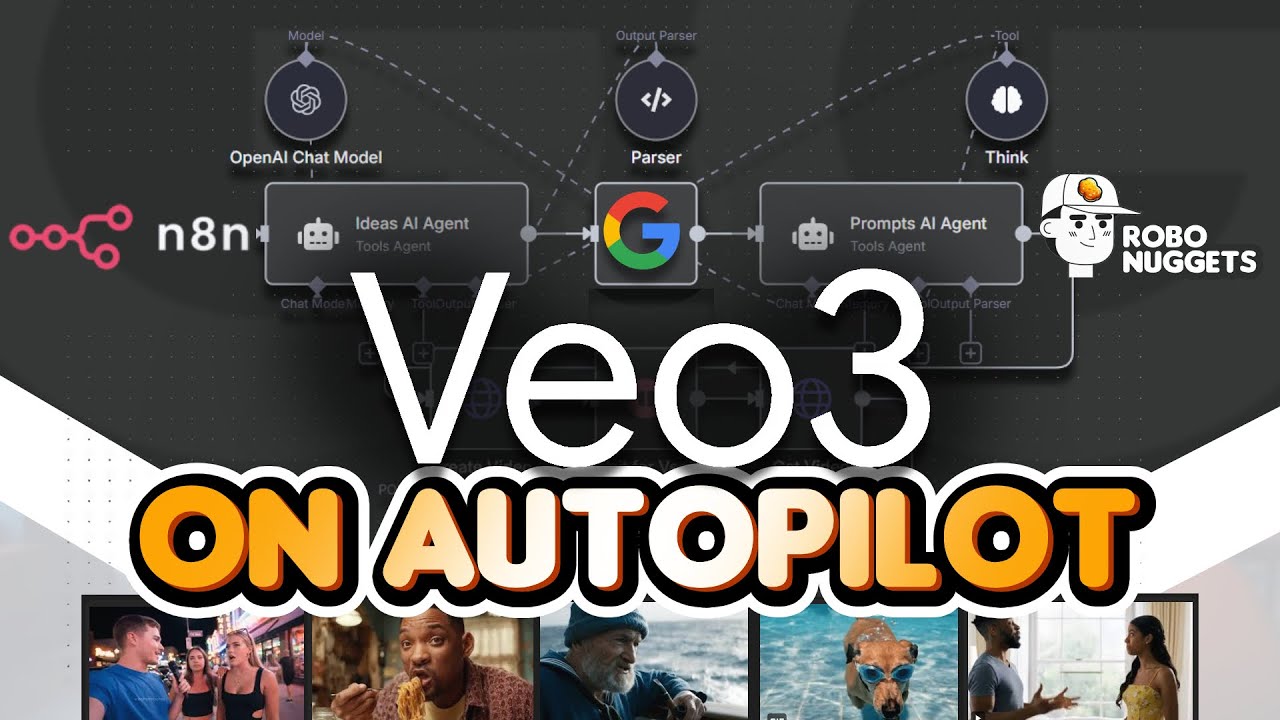
Valuable Insights from Google’s V3 Model in N8N
In the world of AI video generation, Google’s integration of the V3 model within N8N is a significant development, making advanced capabilities accessible at a reduced cost. Let’s break down the key takeaways from the insightful video from RoboNuggets.
Key Points
- Introduction of Google's V3 Model in N8N: This integration democratizes AI video generation, allowing users to create videos without hefty subscription fees.
- N8N as a No-Code Automation Tool: N8N empowers users with a visual interface that facilitates the automation of workflows, making advanced AI technology accessible to all.
- AI Video Automation for Content Creators: Generate engaging, automated videos that mimic trending social media formats, a must-have skill for both emerging and seasoned content creators.
Insights
The video highlights the rapid pace of AI technology evolution, showcasing its potential to transform social media marketing and content creation strategies. Furthermore, it stresses the increasing balance between affordability and accessibility as AI becomes a mainstream tool.
Actionable Advice
- Workflow Setup: Use the provided template to configure a workflow in N8N that automates video generation with Google’s V3 model. Adjust scheduling triggers to suit your needs.
- Prompt Crafting: Recognize the significance of both user and system prompts in generating quality AI outputs. Tailor these prompts to enhance relevance and effectiveness.
- Video Autopublishing: Investigate auto-publishing features for distributing generated videos across various social media platforms, improving engagement and reach.
Supporting Details
- Cost Consideration: Each generated video clip of 8 seconds costs about $6, significantly lower than a full subscription. Keep financial implications in mind as you create content.
- File.AI Integration: Streamlines access to multiple AI models, likening this functionality to the convenience of Uber Eats, simplifying user experience.
Personal Reflections
The insights shared reflect the growing accessibility of AI tools in content creation. For content creators and marketers, understanding these technologies is vital for maintaining a competitive edge. The emphasis on community collaboration and continuous learning showcases the importance of networking and adaptation in the ever-evolving landscape of AI.
Conclusion
This presentation not only illustrates practical applications of N8N and Google’s V3 model for automating video creation but also highlights the necessity of ongoing education in the face of advancing technologies. Engaging with communities and leveraging these tools can substantially boost efficiency and creativity in content production.
To dive deeper into this innovative process, check out the full video by RoboNuggets:
Join Our Learning Journey!
Stay connected and follow our journey on social media: