
The Future of Self-Adapting Language Models
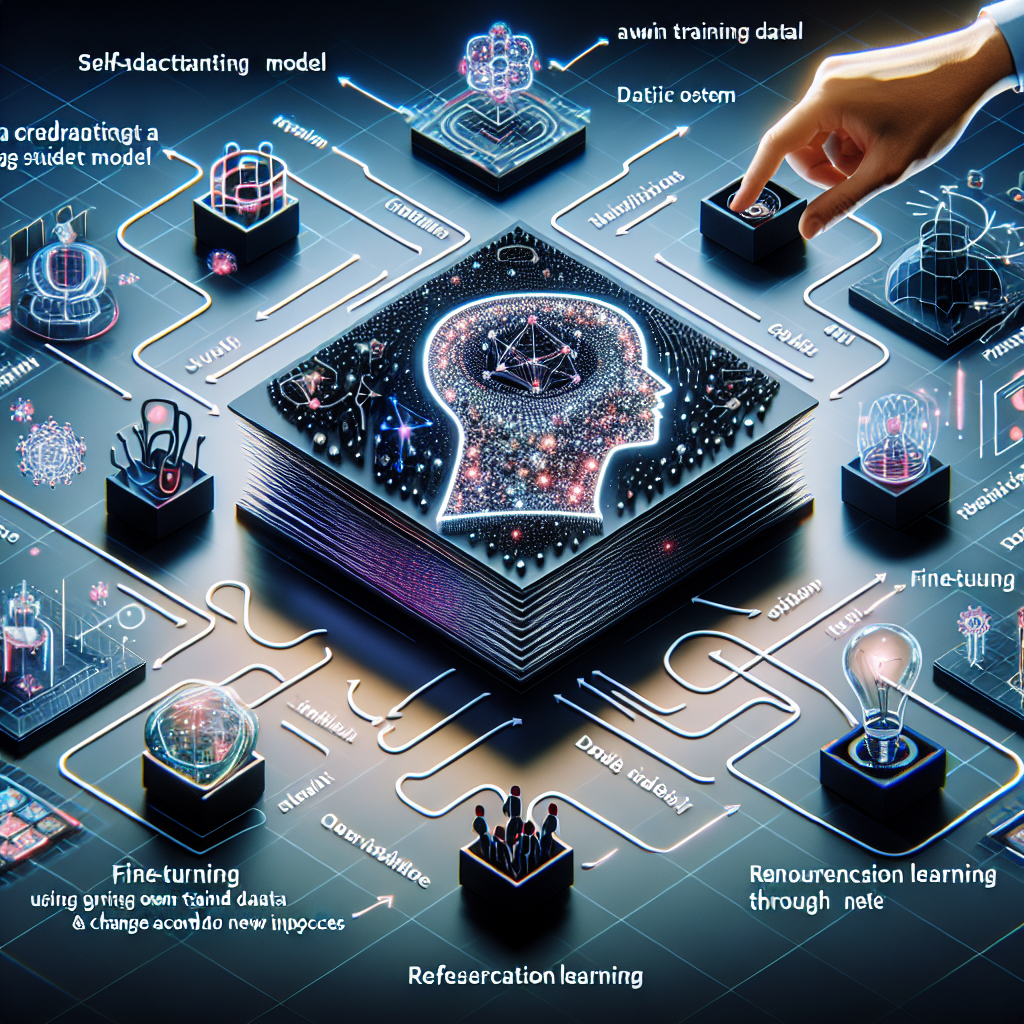
MIT's recent paper introduces ground-breaking insights into self-adapting language models (LLMs) that can autonomously generate their own training data and update their parameters based on new inputs. This blog post will summarize key takeaways from the video MIT's New AI "REWRITES ITSELF" to Improve Its Abilities | Researchers STUNNED! featuring Wes Roth.
Key Points to Consider
- Self-Adapting Language Models: These models enhance their performance independently by creating training data and adjusting their weights.
- Teacher-Student Model Analogy: The paper outlines a framework with distinct training pipelines for teacher and student models for optimized learning.
- Evolution of AI: AI has achieved a level where models can self-improve, moving away from static models.
- Neural Network Structure: Neural networks are compared to human cognition, with weights functioning similarly to synapses.
- Fine-Tuning Process: Existing models are optimized for specific tasks by retraining on smaller, specialized datasets.
- Reinforcement Learning Loops: These models utilize feedback to continually improve their accuracy.
Key Insights
- Human Learning Parallel: Just as students prepare for exams through note synthesis, self-adapting LLMs optimize learning by creating internal structures.
- Content Generation as Learning: Generating content aids in understanding, paralleling the personalized learning approach.
- Synthetic Data Creation: The role of synthetic data can significantly enhance AI question-answering capabilities.
Actionable Advice for Researchers and Developers
- Focus on Self-Evaluating Models: Develop models that can continuously learn and adapt, fostering environments similar to human learning.
- Leverage Reinforcement Learning: Incorporate feedback loops for continuous model improvement.
- Create Personalized Training Data: Adapt datasets based on unique user interactions for real-world relevance.
Supporting Details
- Analogy to Education: Models should assimilate information effectively just like students use notes for exam preparation.
- Comparison with Current LLMs: Current models lack personalized learning capabilities, a gap that self-adapting models are set to address.
Personal Reflections
The evolution of AI towards self-adaptive learning mirrors the concepts of personalized education, highlighting the potential benefits for both AI and human learning strategies. The advancements discussed prompt consideration of how AI can further imitate human cognitive processes, shaping the future of artificial intelligence.
Watch the Full Discussion
For an in-depth overview, check out Wes Roth's full tutorial here:
Conclusion
The transformative potential of self-adapting LLMs marks a significant breakthrough in AI development. By continually evolving and mimicking human learning processes, these models pave the way for more effective and personalized interactions with technology.
Join us on this learning journey and stay connected! Follow me on my social media: