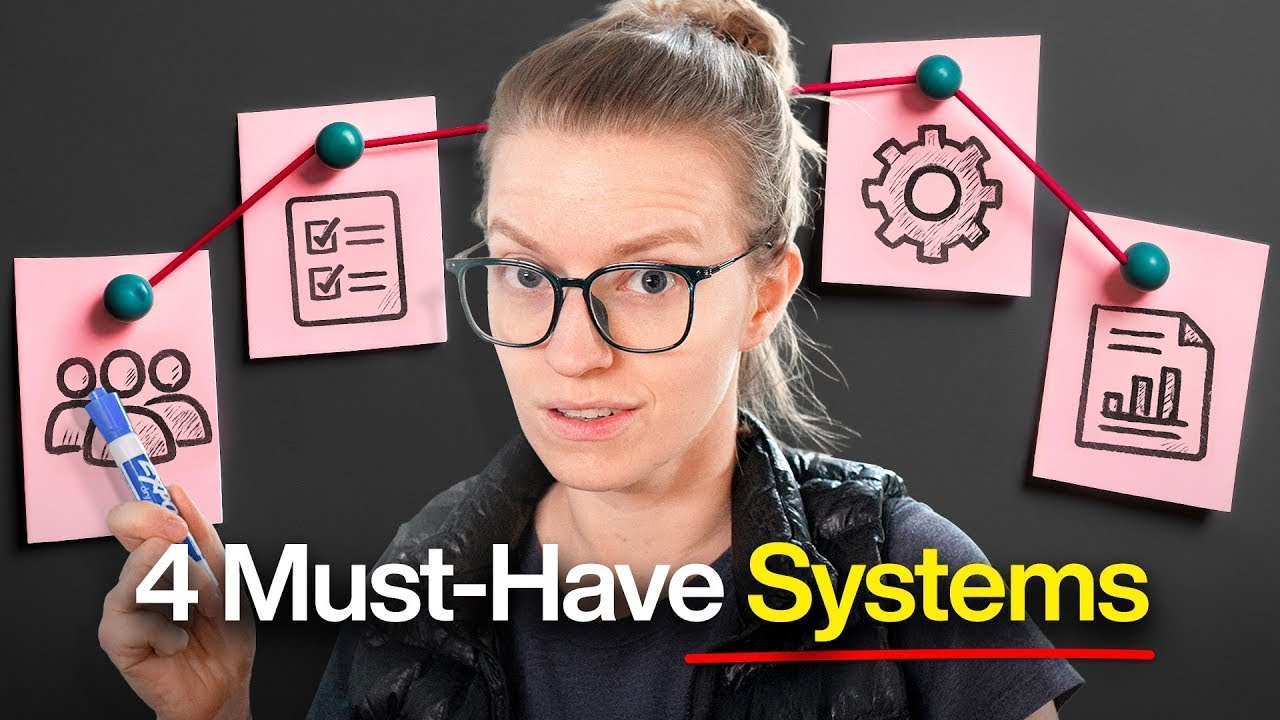
Valuable Insights from "These 4 Systems Are the Secret to A Business That Runs Without You"

The speaker outlines four essential systems crucial for a lean team to operate effectively: Execution, Documentation, Ideas, and Team. Let’s delve into these systems and the insights they offer for improving business efficiency.
Key Points
- Four Essential Systems: Execution, Documentation, Ideas, and Team.
- Execution: Focus on getting tasks done efficiently within budget by ensuring a clear definition and maintaining a centralized area for tracking.
- Documentation: Keep documentation simple; use tools like bullet points or templates to enhance efficiency instead of cumbersome SOPs.
- Ideas System: Prioritizes tasks and manages workloads through two questions: What’s next? Why would we do that now?
- Team System: Emphasizes engagement and involvement in daily conversations around these systems.
Insights
- Simplicity Over Complexity: Streamlined approaches focusing on execution and practical documentation lead to better outcomes.
- Experience-Driven Improvement: Like “keeping your favorite socks,” businesses should document and refine successful practices instead of discarding what works.
- Balancing Workloads: The Ideas system relieves pressure and manages tasks based on current capacity and energy levels.
Actionable Advice
- Create a Central Task List: Develop a shared space for task tracking to enhance visibility and accountability.
- Define Tasks Clearly: Assign every task with a single owner and a specific deadline.
- Use Documentation Wisely: Encourage team members to document effective practices immediately after completion.
- Implement Regular Reviews: Conduct weekly or bi-weekly reviews to adjust priorities based on team capacity.
- Cultivate Team Engagement: Foster a culture that values contributions to system improvements.
Supporting Details
- The speaker shares insights from surveying over 4,000 companies, demonstrating the positive impact of these systems.
- The analogy of "sock reviews" emphasizes the importance of evaluating processes through experiential learning rather than theoretical models.
Personal Reflections
This approach resonates with my experiences in project management, highlighting that simplicity leads to clarity. By emphasizing effective documentation and regular reviews, friction in workflows can significantly decrease. A focus on continuous improvement and clear task ownership can transform team operations, yielding greater efficiency and satisfaction.
Watch the Full Video
For a deeper understanding of these systems, check out Layla's video on YouTube:
Conclusion
With these insights and actionable strategies, you can create a business environment that runs smoothly without overwhelming complexity. Simplifying processes and fostering team engagement will set the stage for success.
Join us on our learning journey by following us on social media for more insights: