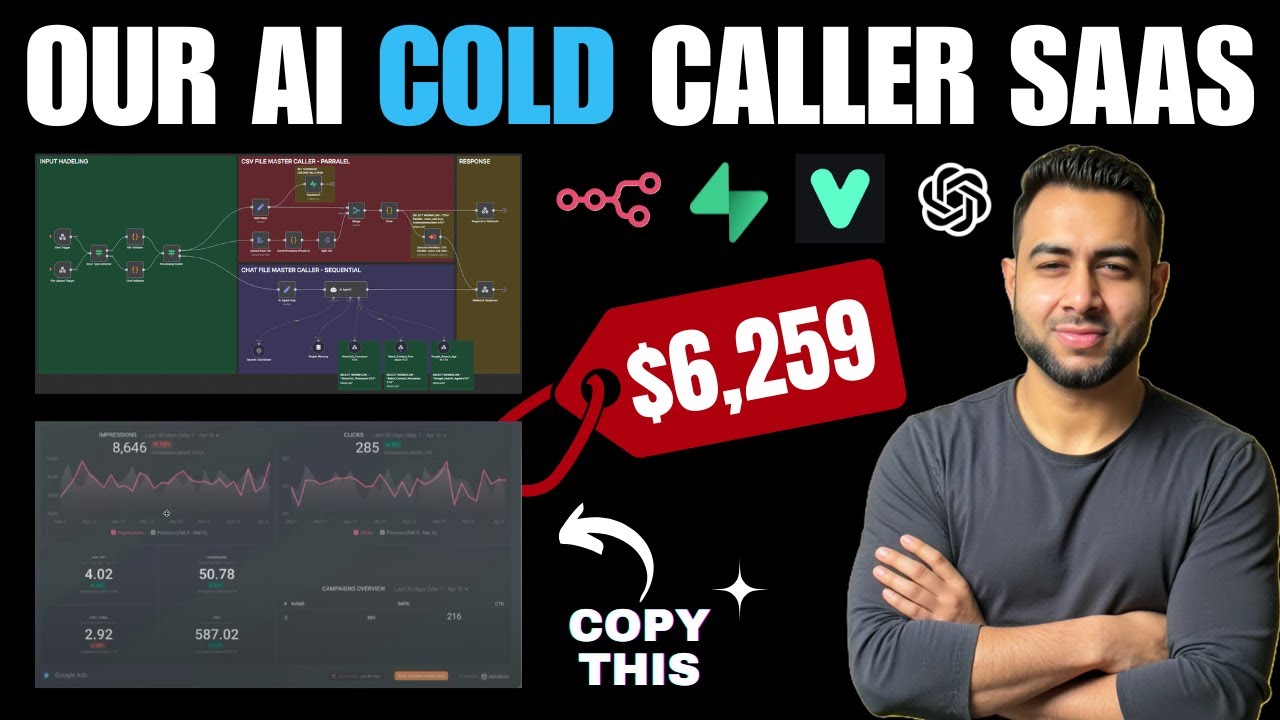
Unlock the Future of Outreach: AI Cold-Calling Platform Insights

In a world where effective outreach can make or break a business, the video “Build an AI Cold-Calling SaaS w/ n8n + Vapi | Dashboard with Real-Time Analytics | White-Label Ready” by Paresh offers invaluable insights into a revolutionary cold-calling platform. Here, we break down key features and actionable strategies that can enhance your lead generation efforts.
Key Points:
- Cold-Calling Platform Overview: This proprietary platform is designed for lead qualification, enrichment, outreach, and re-engagement, shaped by real-world usage and ongoing feedback.
- Complex Workflow System: Unlike basic automation tools, this platform has a sophisticated backend with a user-friendly dashboard, facilitating seamless business interactions with white-labeling options.
- Dashboard Functionality: Users can start campaigns by uploading CSV files or via chat, review past campaigns, access call transcripts, and monitor campaign progress and costs.
- Intelligent Data Handling: The system intelligently collects leads based on user-defined criteria and suggests improvements to data collection for cold outreach.
- Performance Analytics: Post-campaign analytics allow users to evaluate success rates and costs, enabling future strategy refinement.
Insights:
- Real-World Application: Focuses on actual business challenges, making it a vital tool for companies aiming to optimize outreach.
- Flexibility and Customization: The white-labeling feature allows for tailored branding and processes, promoting broader applications across industries.
- Community and Support: Emphasizes community resources and guides to aid users in implementing the system effectively.
Actionable Advice:
- Setting Up the Platform: Follow the video instructions to deploy the platform online or locally, customizing the dashboard to suit your needs.
- Optimizing Campaigns: Utilize the intelligent data collection features to acquire relevant leads and regularly analyze campaign data to enhance future strategies.
- Join a Community: Connect with other users to exchange experiences and access resources, templates, and workflows.
Supporting Details:
- The platform's development is based on real feedback and common cold-calling issues, illustrated through practical demos.
- The speaker’s insights directly reflect user experiences, shaping platform features for enhanced usability.
Personal Reflections:
The insights shared resonate with current trends in leveraging AI for business processes, especially in sales and marketing. The emphasis on data-driven decision-making highlights the necessity for adaptable tools in competitive landscapes. This content sparks ideas about further innovations in the cold-calling sector and greater opportunities for effective customer engagement strategies.
Watch the Full Video Here:
In conclusion, the cold-calling platform discussed is a pivotal asset for businesses aiming to streamline and enhance their outreach practices through advanced technology. By implementing the outlined strategies, you're on your way to optimizing your lead generation efforts.
Join us on this learning journey by following our social media accounts for more insights and updates!