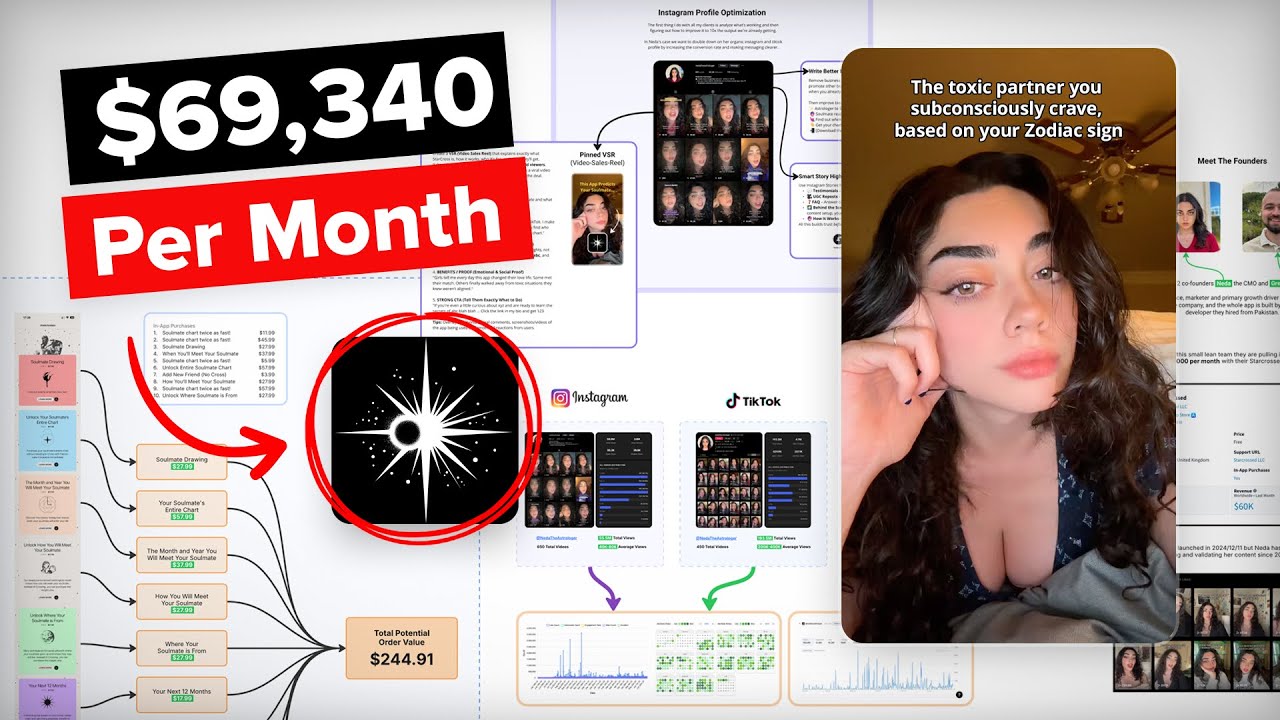
Key Insights from "How This Girl's Astrology App Makes $60K Per Month From TikTok"

Key Insights:
- Successful Monetization Strategy:
- Subscription Model: Starcross uses a $10 subscription that can escalate to over $240 per user through effective upselling.
- User Engagement: Personalization during onboarding plays a crucial role in retaining users and converting free users to paying subscribers.
- Organic Growth through Social Media:
- The app's growth is primarily fueled by organic marketing strategies on TikTok and Instagram, avoiding traditional paid advertising methods.
- Content should focus on high-quality, engaging material rather than relying solely on viral trends or memes.
- Viral Content Creation:
- Successful content incorporates emotional triggers, personalized messages, and relatable storytelling to resonate with viewers.
- Long-form videos featuring unique astrology advice have proven effective in driving user engagement and fostering community.
- Effective Onboarding Process:
- The onboarding experience is critical; a well-designed process can lead to higher user satisfaction and retention rates.
- The app’s onboarding is structured to compare favorably with other successful applications, enhancing user interactions right from the start.
- Growth Scaling Recommendations:
- Neta’s strategic content development should be paired with optimizing Instagram profiles to enhance brand visibility and independence.
- Future growth strategies might include diversifying content, exploring paid advertising opportunities, and targeting new market segments for revenue enhancement.
Actionable Advice:
- Focus on Organic Marketing: Prioritize creating authentic and high-value content on platforms like TikTok and Instagram to build a loyal user base.
- Optimize Onboarding: Design an engaging onboarding process that personalizes user experience, increasing the likelihood of conversion from free to paid subscriptions.
- Identify Emotional Triggers: Develop content that connects emotionally with the audience to enhance virality.
- Diversify Content Strategy: Explore various content formats and consider future paid advertising to capture broader audience segments without losing the brand's organic roots.
Supporting Details:
- Comparison with Other Apps: Drawing parallels with successful applications like Calai and Bible Chat AI underlines the effectiveness of these strategies.
- Real-World Success: The $60,000 per month revenue showcases the potential profitability of similar models and approaches for aspiring entrepreneurs.
Personal Reflection:
The discussed strategies resonate with current trends in digital marketing and user acquisition, highlighting the shift from paid advertising to organic engagement. The emphasis on personalized content aligns with my belief in the importance of creating relatable and meaningful connections with users, particularly in niche markets like astrology. This video serves as a valuable case study for anyone looking to launch digital products or apps, demonstrating the power of innovative marketing and the necessity for a strong onboarding process.
Conclusion:
In conclusion, the insights drawn from the video provide strategic frameworks for effectively launching and scaling digital applications in today's social media-driven marketplace, emphasizing the importance of engagement, personalization, and organic growth strategies.
For more in-depth understanding, watch the video here:
Join the learning journey by following my social media!