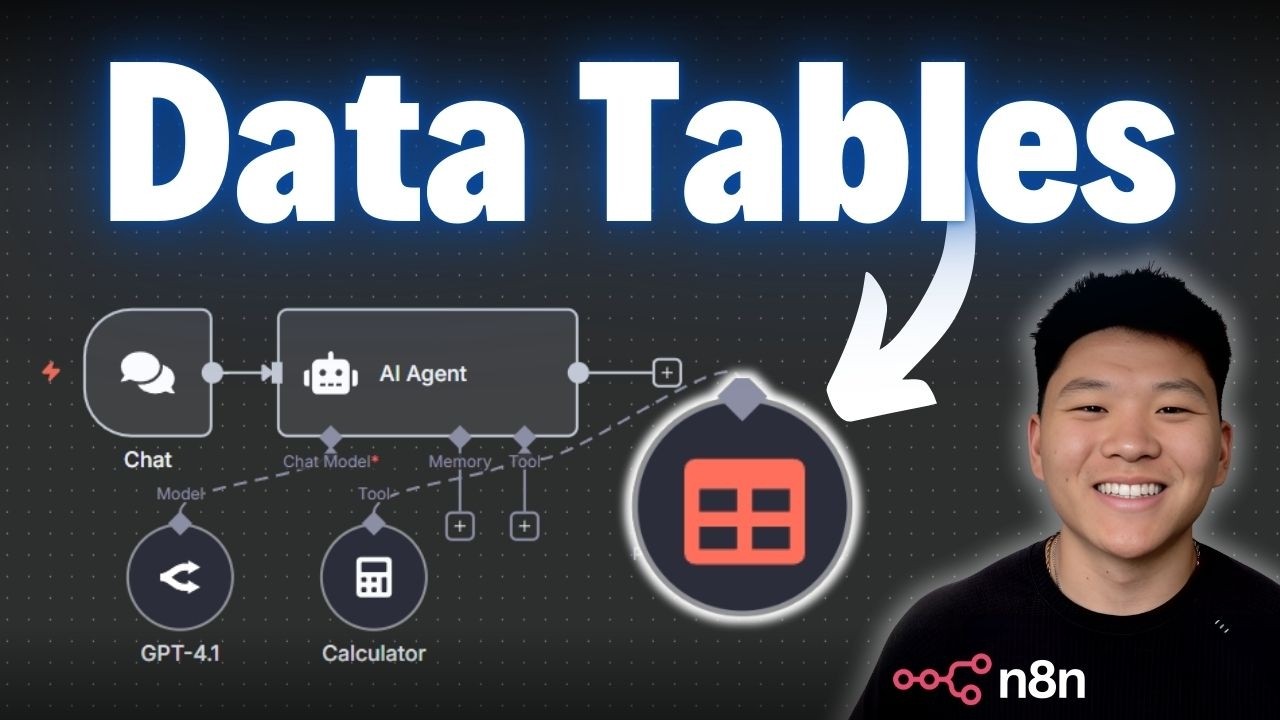
Unlocking Efficiency with N8n's Native Data Tables

In a world where data efficiency drives business success, n8n's exciting new feature—Native Data Tables—provides a groundbreaking tool for automating workflows and managing data. Drawing from insights from the YouTube video "n8n's NEW Native Data Tables Just Made Building Agents So Much Easier" by Nate Herk, this post breaks down key points, actionable advice, and personal reflections on enhancing data management with AI.
Key Points:
- Sales Data AI Agent: The AI agent retrieves sales data efficiently, such as determining total revenue—$546 for a Bluetooth speaker—by summing relevant sales rows.
- Data Tables Feature: The Nitn environment's "Data Tables" allows users to create and manage data natively, without API calls, including importing data from sources like Google Sheets.
- Workflow Automation: Users can automate email responses by personalizing them with data from the tables, boosting efficiency.
- Querying and Filtering: Enhanced querying capabilities help filter data efficiently, such as finding specific products sold on certain dates.
- Speed of Data Handling: Performance tests indicate that Nitn's native tables outperform Google Sheets for small datasets.
Insights:
- Efficiency in Data Management: New data tables provide quicker access to sales data, improving response times and reducing server reliance.
- Customization and Personalization: Integration of AI with data tables creates dynamic customer interactions, paving the way for enhanced engagement strategies.
- Scalability and Cost Management: Filtering data before sending to AI saves costs associated with token usage for AI queries, especially as data volumes grow.
Actionable Advice:
- Explore Data Tables: Create data tables with various data types and import existing sheets to become familiar with this useful feature!
- Utilize Query Conditions: Leverage conditional querying to streamline workflows and improve the processing efficiency of large datasets.
- Join Community Resources: Engage in community forums to learn best practices and enhance your data management skills.
Supporting Details:
- Example Implementation: The video showcases pulling contact data from Google Sheets into Nitn's data tables for AI-driven email responses.
- Case Study on Sales Data: Examples include querying sales on specific dates to illustrate the AI's capabilities in data processing.
- Resource Availability: Viewers are encouraged to join the free community for access to workflows and sample datasets.
Personal Reflections:
This content emphasizes the crucial integration of AI with data management tools for improved business operations and customer interactions. Faster data retrieval is necessary for companies seeking to adopt efficient data management solutions, enhancing overall effectiveness.
Conclusion:
With the introduction of native data tables in N8n, businesses can significantly enhance their data management strategies, leading to a more efficient and responsive operational framework.
Join our learning journey and stay connected! Follow me on:
- TikTok
- YouTube
- Email: isaiahdupree@techmestuff.com
- Discord
- Snapchat
- TechMeStuff
Don’t forget to watch the full video for more insights: