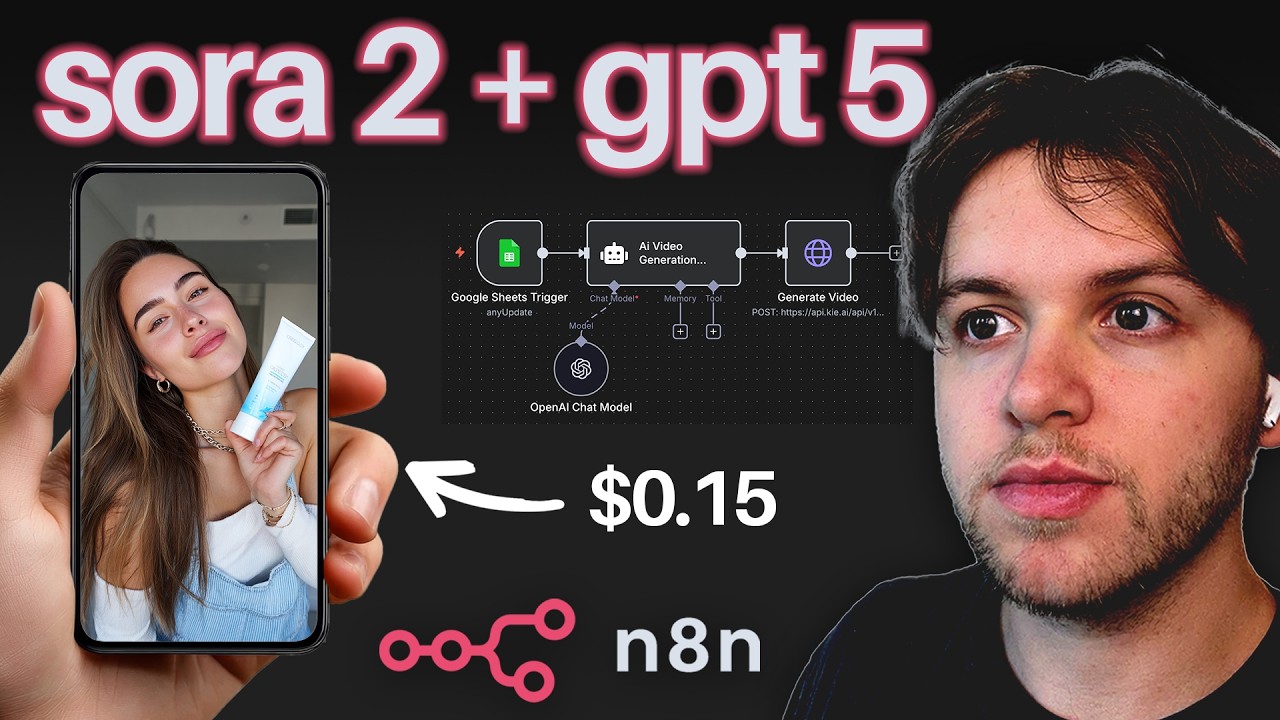
I Built a Viral UGC Ad Machine with Sora 2 + n8n AI Agents

In the enlightening video titled "I Built a Viral UGC Ad Machine with Sora 2 + n8n AI Agents (no code, free template)" by Kyle Friel | AI Software, several transformative insights into the world of AI-driven content creation are unveiled. Here is a breakdown of the key takeaways and actionable advice extracted from the discussion.
Key Points
- Shift in Creative Industries: The transformative impact of AI on creative sectors, particularly in marketing, has enabled individuals to monetize their knowledge in prompting video generation models to create high-quality User-Generated Content (UGC) ads.
- Cost-Effectiveness of AI: AI-generated content is highlighted as being significantly more economical than traditional methods involving studios and actors.
- Automation with AI Tools: The tutorial introduces an automated system using tools like GPT-5 and Sora to streamline video generation.
- Kai API Utilization: Kai API is presented as a cost-effective alternative to OpenAI for video generation.
- Step-by-Step Automation Process: Viewers are guided on setting up a Google Sheets workflow to ensure efficient video production.
Insights
- Opportunities in AI-Driven Marketing: Leveraging AI for content creation offers lucrative opportunities for marketers and content creators.
- Automation Reduces Workload: Automating content creation allows marketers to focus on strategy and creativity instead of the technical aspects of video production.
Actionable Advice
- Set Up an Automated Workflow: Create a Google Sheets trigger for generating UGC ads with minimal manual input.
- Use Cost-Effective Tools: Utilize Kai API and Sora 2 for high-quality video generation at lower costs.
- Organize Content Inputs: Input essential details in Google Sheets that the AI will use to create relevant video content.
- Practice Best Practices for Automation: Discard completed tasks and only process those marked as ‘ready’ to streamline operations.
Supporting Details
- Examples of Use: A practical example of a UGC video for a zero-calorie soda showcases the effectiveness of the automation.
- Potential Pitfalls: Common errors in AI automation setups are discussed with solutions provided to ensure a smoother experience.
Personal Reflections
The insights shared resonate deeply with ongoing shifts towards digital and AI-driven solutions in marketing. They encourage experimentation with AI tools, making it accessible for everyone, regardless of technical skills, to enhance their marketing strategies.
This efficient automation setup allows for the effective production of engaging UGC content, providing a valuable resource for marketers, agencies, and content creators seeking to modernize their processes.
Watch the Full Video
For more detailed insights, check out Kyle's full tutorial below:
Join the Learning Journey!
Stay connected and engaged by following me on social media: